


Elon Musk has finally unveiled Tesla's (TSLA) long-awaited second-generation Roadster, nearly a decade after it was announced. And apparently, building a high-performance electric sports car wasn't ambitious enough because Musk decided to make it fly.
At an event in Texas on Thursday, Tesla demonstrated a Roadster modified with SpaceX (SPCX) equipment that allowed it to lift off the ground and perform a flip over several other Tesla vehicles. The car also accelerated from zero to 60 miles per hour in less than a second.
It was an impressive spectacle. But I don’t think it has anything to do with selling cars.
The demonstration renewed speculation that Musk is preparing to merge Tesla and SpaceX, creating a massive company that combines electric vehicles, rockets, robotics, and artificial intelligence.
I've believed for months that a merger is eventually coming. Thursday's demonstration gives me another reason to think it's only a matter of time. But that doesn't mean Tesla shareholders should be celebrating just yet.
Tesla's Flying Roadster Is More Stunt Than Innovation
Tesla isn't about to put flying cars in America's driveways.
According to the Los Angeles Times, the Roadster uses cold-gas thrusters developed with SpaceX technology to lift itself off the ground briefly. The special version, called the Rocket package, won't be available to the general public and isn't approved for public roads. Tesla is continuing to accept reservations for other Roadster configurations that won’t have rockets, but those will likely be high-end vehicles with hefty price tags.
So, the rocket Roadster is cool, but it’s hardly a practical advancement in personal transportation.
And there's another issue. Tesla originally unveiled the second-generation Roadster in 2017, promising production would begin in 2020. Now Musk says production won't start until 2028. That’s a big delay — and Musk isn’t necessarily known for keeping to timelines.
Meanwhile, Tesla has growing competition in the EV market, while Musk shifts his attention (and the company’s focus) to autonomous driving, humanoid robots, and artificial intelligence.
In fact, Tesla has discontinued its Model S and Model X vehicles while preparing to manufacture Optimus robots at its Fremont factory.
It seems Musk is becoming less interested in building conventional automobiles and more interested in combining his companies' technologies. That's a much bigger ambition than selling electric cars.
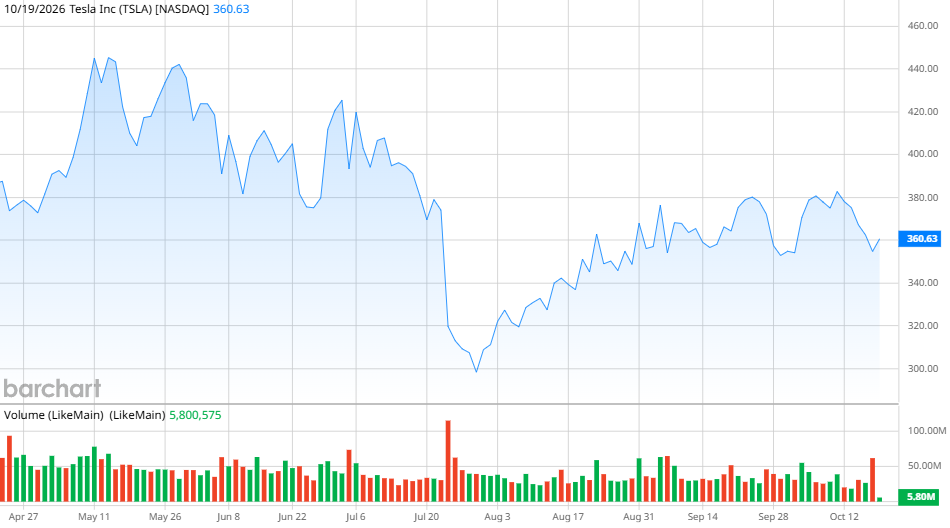
Why a Tesla-SpaceX Merger Makes Sense
Merger speculation between Tesla and SpaceX isn't new. In June, Wedbush analyst Dan Ives estimated an 80% probability that Tesla and SpaceX would merge within a year. SpaceX President Gwynne Shotwell has also acknowledged potential advantages to combining the companies.
And there are legitimate business reasons to bring them together. Tesla is developing autonomous vehicles and Optimus robots, both of which depend heavily on artificial intelligence. SpaceX, meanwhile, operates the Starlink satellite network and absorbed Musk's xAI business. Combining those operations could allow the companies to share computing resources, engineering talent, and AI technology more efficiently.
The Roadster demonstration offers a visible example of that cooperation. Tesla provided the vehicle, while SpaceX supplied technology that an ordinary automaker couldn't easily replicate.
But there's a big difference between sharing technology and combining two publicly traded companies.
SpaceX is currently valued at $1.96 trillion, while Tesla carries a valuation of $1.42 trillion. Any merger would require determining how much each company is worth, how shares would be exchanged, and what rights existing shareholders would receive.
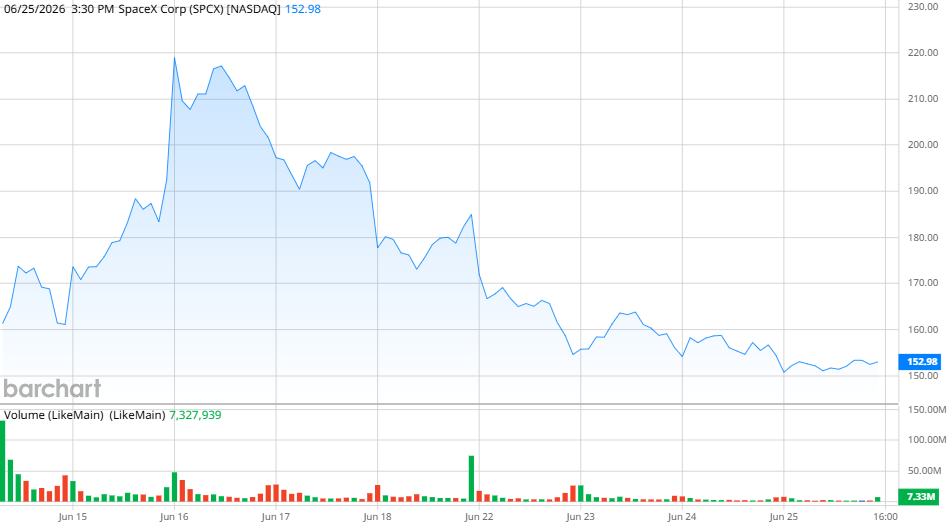
There's also the issue of profitability.
Tesla reported revenue of $20 billion in the second quarter, with net income of $1.12 billion. SpaceX had revenue of $7.8 billion, but posted a net loss of $541 million as it builds its AI platform and rocket business. SpaceX is eventually going to turn a profit, and its growth potential is seen as more dramatic than Tesla’s, but current Tesla shareholders would have to accept that the combined company will likely run in the red for a couple more years.
Those are serious issues that won't disappear because Musk made a sports car jump over a few Teslas.
What Should Tesla Investors Think?
Both companies are reporting third-quarter earnings this week, so perhaps Musk will shed more light on a possible merger (SpaceX reported on Oct. 20, Tesla reports today). But I believe Tesla and SpaceX will eventually merge; their growing dependence on artificial intelligence, Musk's control over both businesses, and the increasing cooperation between their engineering teams make that outcome increasingly plausible.
The flying Roadster was a cool stunt, but that’s all it is. It doesn’t solve Tesla's automotive challenges, improve its profitability, or establish that its robotics ambitions will become commercially successful.
And while a merger could create an extraordinary technology company, shareholders would also inherit exposure to SpaceX's substantial spending requirements and the complications of combining two very different businesses.
For me, the Roadster reveal says more about Musk's priorities than Tesla's automotive future. He's increasingly focused on robots, rockets, and artificial intelligence. Cars seem to be becoming a smaller part of his ambitions.
That may explain why a Tesla-SpaceX merger is coming, but it’s unclear if the merger will be a good deal for investors.
On the date of publication, Patrick Sanders did not have (either directly or indirectly) positions in any of the securities mentioned in this article. All information and data in this article is solely for informational purposes. For more information please view the Barchart Disclosure Policy here.