


The Zhitong Finance App learned that as international oil prices surged to a five-month high of 110 US dollars per barrel, gas prices in Asia and Europe, which continued to rise, hit the highest level since December 2022. This sharp impact on energy costs is affecting household budgets around the world.
Needless to say, rising energy prices are being transmitted to daily consumption along transportation, heating, fertilizer, and packaging costs, and increasing the housing finance burden through inflation and interest rates. During the Asian session on October 22, Brent crude oil was reported to be around 111.60 US dollars/barrel, with a sharp rise of nearly 2% during the day; based on the closing of 72.48 US dollars on February 27, the last trading day before the outbreak of the Iran war, the cumulative sharp increase was about 52.8%.
Judging from a series of statistics, the energy shock has clearly intensified the upward trend in US inflation indicators. In September, CPI rose 0.6% month-on-month and rose sharply by 3.7% year over year; gasoline prices rose 9.1% month-on-month, contributing more than half of the overall monthly increase. The core CPI rose 0.3% month-on-month and 2.6% year-on-year, but food prices unexpectedly remained flat during the month, and the further transmission of price increases in transportation, fertilizer, and packaging to terminal foods is still the subsequent upward pressure on inflation.
Oil and gas shock penetrates household accounts, and geographical premiums return to market pricing
In addition to driving up transportation and heating costs, the crazy rise in energy prices since this year has also increased the upward pressure on food, clothing, and packaging prices, and has boosted the US and even the global inflation index and borrowing costs to remain high. As a result, market expectations for interest rate hikes by global central banks, including the Federal Reserve, the European Central Bank, and the Reserve Bank of Australia, have continued to heat up. This resurgent inflation frenzy and AI-related debt issuance fanaticism under the unprecedented trend of AI infrastructure expansion has driven the yield on US bonds of 10 years or more to the highest level in more than 20 years.
European gas also crossed an important threshold: Dutch TTF futures recently reported 90.10 euros/megawatt-hour intraday on the 20th, breaking through 90 euros for the first time since December 2022; fell back to 87.40 euros on the 21st, but still rose by about 20.8% from the end of September. The latest risk comes from the Houthis attacking Saudi airports and large oil and gas fields, as well as Iran's claim that several large transport vessels in the Persian Gulf and near Hormuz have been hit by arms or lightning, putting pressure on energy supply and shipping safety once again.
International shipping costs are also rising sharply against the backdrop of rising crude oil and natural gas prices and geopolitical crisis, and surging shipping costs are also rapidly penetrating into various industries along with energy inflation. The risk of attacks on ships in the Strait of Hormuz, increased ship-to-ship transfers, and tight availability of tankers are jointly driving up transportation costs, further transforming the geographical conflict into a major pressure on energy arrival costs in importing countries such as China, Japan, South Korea, and India.
According to the latest public data that can be verified as of October 22, the Drewry World Container Freight Index (Drewry WCI) reported 4,485 US dollars per 40-foot container on October 15, up about 102.7% from $2,213 on December 25 at the end of 2025, or about double. More directly related to energy costs, the 270,000-ton Middle East Gulf - China crude oil transportation reference route TD3C announced by the Baltic Sea Exchange has risen from WS74.17 on January 9 this year to WS1281.25 on October 16, with a cumulative increase of about 1,627%, reaching 17.3 times that point at the beginning of the year.
Regarding the Russian-Ukrainian war situation, the Kremlin said that Putin agreed to resume peace talks brokered by the US in November as soon as possible; however, Ukraine had previously resumed attacks on Russian refineries, causing damage to production capacity, limited export surpluses, and transportation costs in the Black Sea, which still limited the resumption of Russian diesel supply. Negotiations are expected to reduce risk premiums, but actual supply repair will take time.
Furthermore, the diesel cracking price spread is still in a historically high range, which also means that the heavy pressure of refined oil inflation may continue to expand infiltratively into actual global production and consumption for some time to come. The US related price spread reached 118.62 US dollars/barrel on September 14; recently, the New York Port distillate cracking price difference still exceeds 100 US dollars, while the European ICE diesel cracking price difference has fallen back to 78.77 US dollars, but it is still at an all-time high level. This trend also continues to show the pressure on fuel costs that residents continue to bear, and is also due to a shortage of expensive crude oil and refined oil products.
Under the heavy pressure of continuing to heat up, the US bond market and even the global financing cost benchmark showed high fluctuations: the 10-year yield once reached 5.34% in early October and fell back to about 5.11% during the Asian session on the 22nd, reflecting the clash and confrontation between inflationary pressure and safe-haven buying. Strong performance and future prospects in the technology industry, led by AI and commercial space leader SpaceX, drove the NASDAQ to close higher on the 21st, yet the Asian market continued to be under pressure on the 22nd. From this perspective, the growing demand for a range of AI applications, such as AI agents, still needs to be continuously redeemed as profit and cash flow to absorb the heavy pressure of high AI financing costs; for data center companies that rely on borrowing to expand, energy and interest rate pressure will jointly raise the project return threshold.
From groceries to housing loans: high oil prices permeate people's daily lives
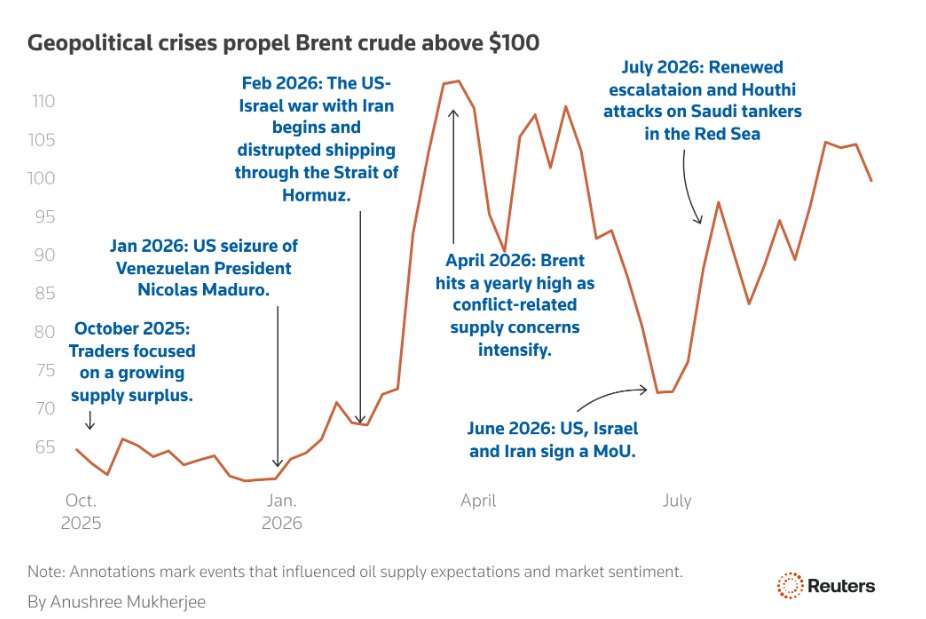
The following charts can be described as a comprehensive illustration of some of the ways this round of rising energy prices is affecting daily life around the world.
The geopolitical crisis pushed Brent crude oil to break through the important $110 mark, and may even further impact near the all-time high oil price point of $120 during the outbreak of the Russian-Ukrainian conflict in 2022.
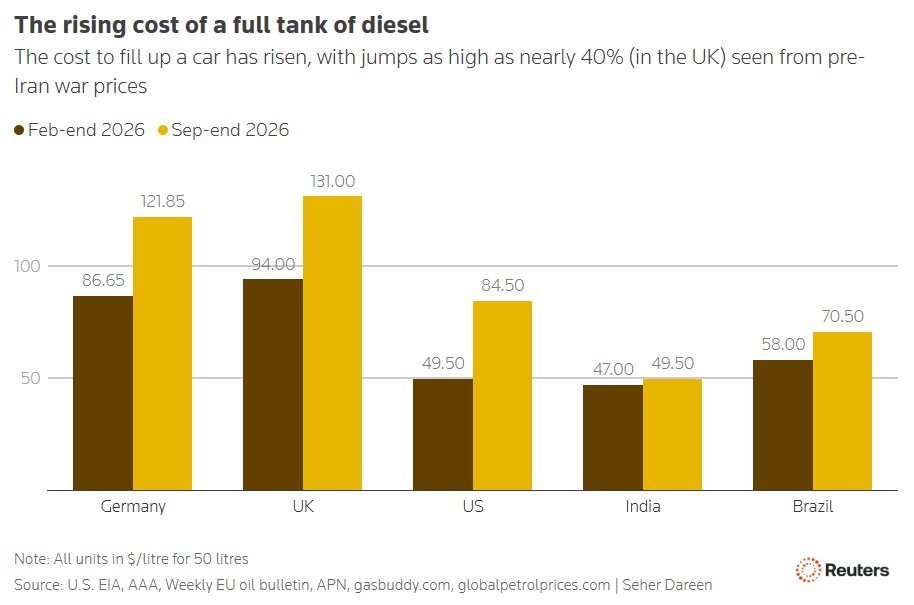
The war in Iran has pushed global diesel prices to record highs. This month, the average retail price of diesel at gas stations in the UK reached £2.00 ($2.64) per litre for the first time; the US diesel price reached a record high of $6.53 per gallon in September.
To that end, US President Donald Trump allowed everyone to use red dyed diesel until the end of this year. This diesel is commonly used in vehicles and equipment that do not drive on public roads, and is exempt from road taxes.
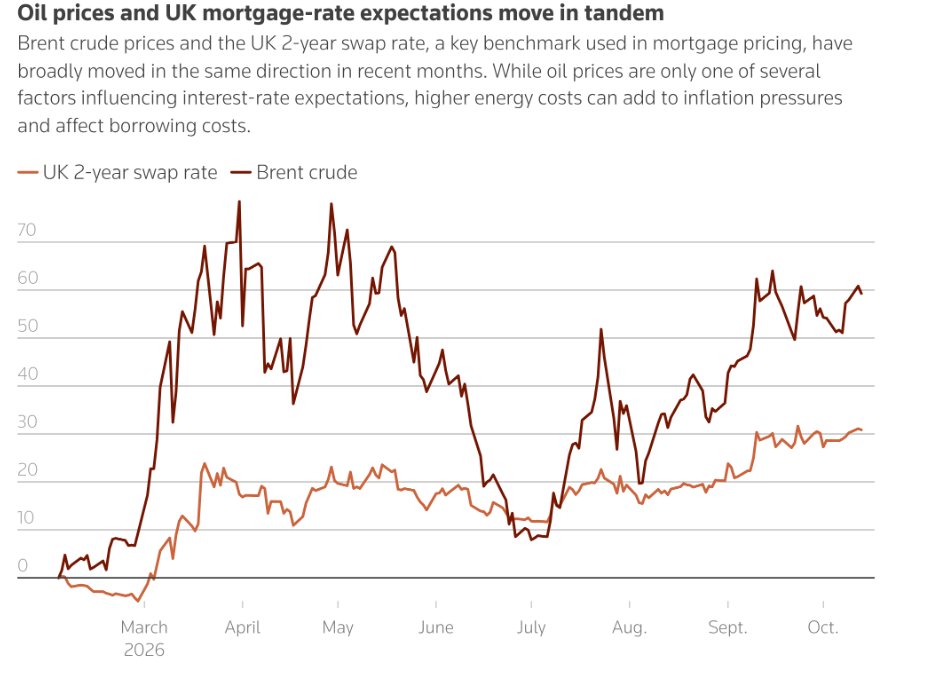
The impact also extends to the global mortgage benchmark interest rate — rising energy prices are driving up inflation, which is being curbed by major central banks by raising interest rates. The chart shown below shows oil price trends and simultaneous changes in UK mortgage interest rate expectations.
The increase in UK inflation and the size of government borrowing last month both exceeded expectations. The UK Office for National Statistics said that the rise in September was driven by increased gasoline and diesel costs, bringing the inflation rate to its highest level since October 2025.
The Reserve Bank of Australia raised cash interest rates to the highest level in 15 years last month, driving the country's housing loan interest rates, which are mainly floating interest rates, to rise simultaneously and put pressure on housing prices.
Buying a home with an average loan amount of 731,000 Australian dollars (513,966 US dollars) and a 30-year term, the interest rate will rise from 5.5% in 2025 to 6.2% at present, which will significantly increase the annual repayment amount by about 3,900 Australian dollars (2,742 US dollars).
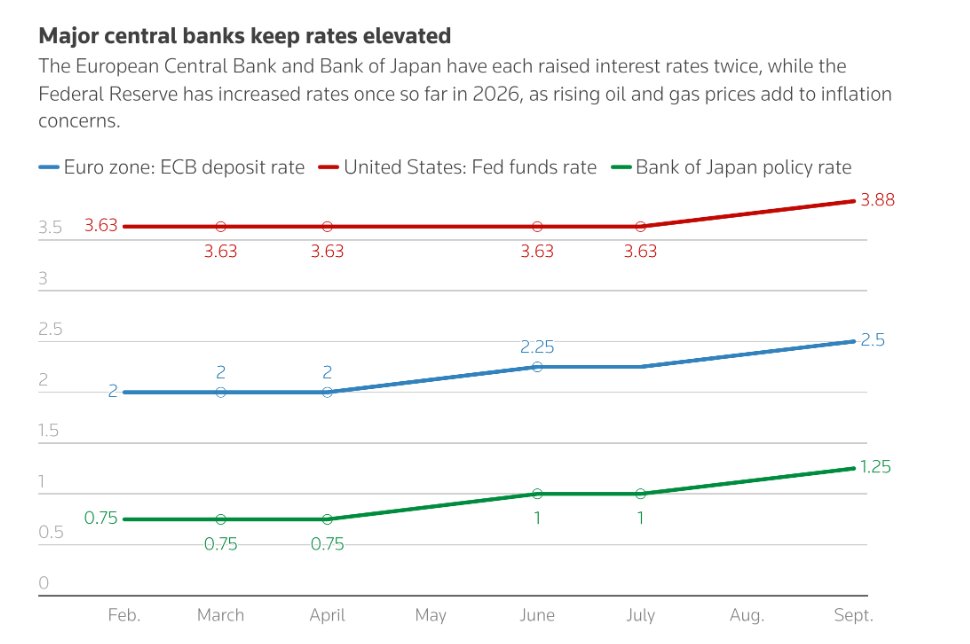
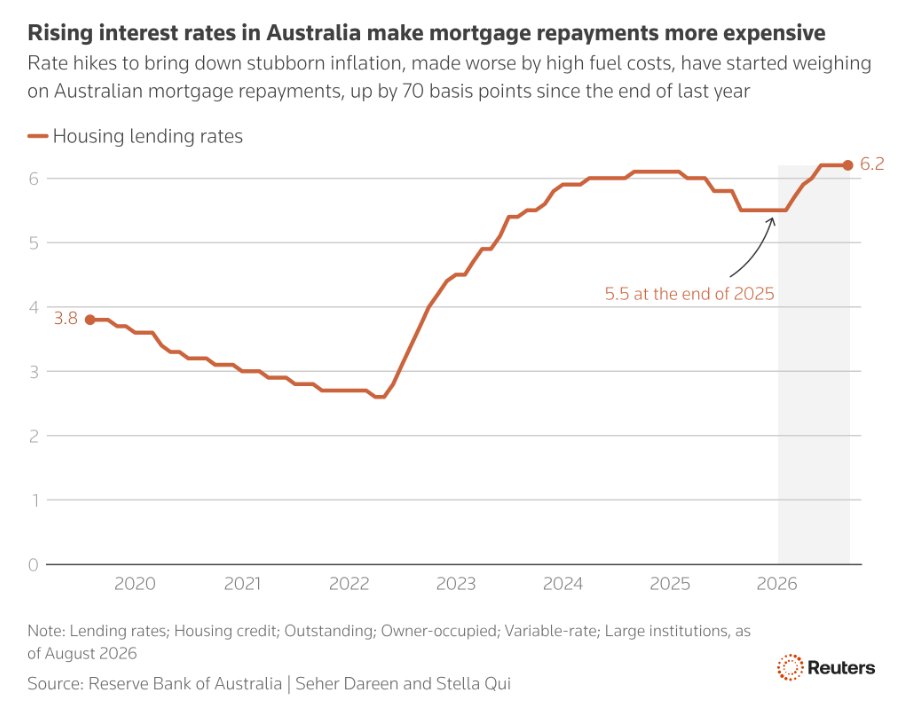
As shown in the above chart, central banks around the world, including the Federal Reserve and the European Central Bank, have entered a new cycle of interest rate hikes; interest rate hikes to curb stubborn inflation, which is increasing high fuel costs, have begun to increase the burden of Australian mortgage repayment.
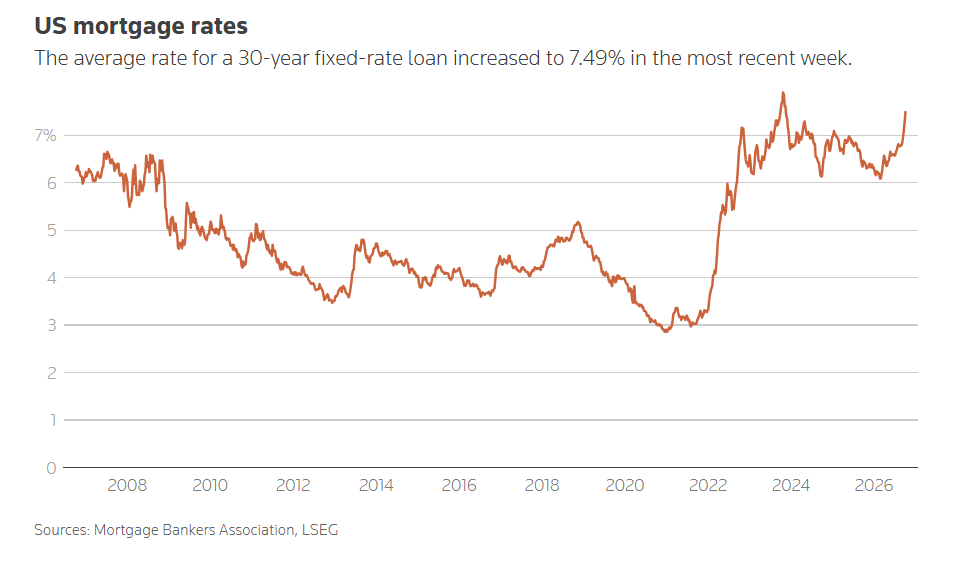
Meanwhile, interest rates on 30-year mortgages in the US rose from about 6.1% to about 7.5%, increasing the borrowing costs for potential buyers, and the resulting weakening of home purchase loan activity. Most borrowers choose a fixed interest rate.
Other parts of household budgets have also been hit, particularly those that rely on heating oil for the winter.
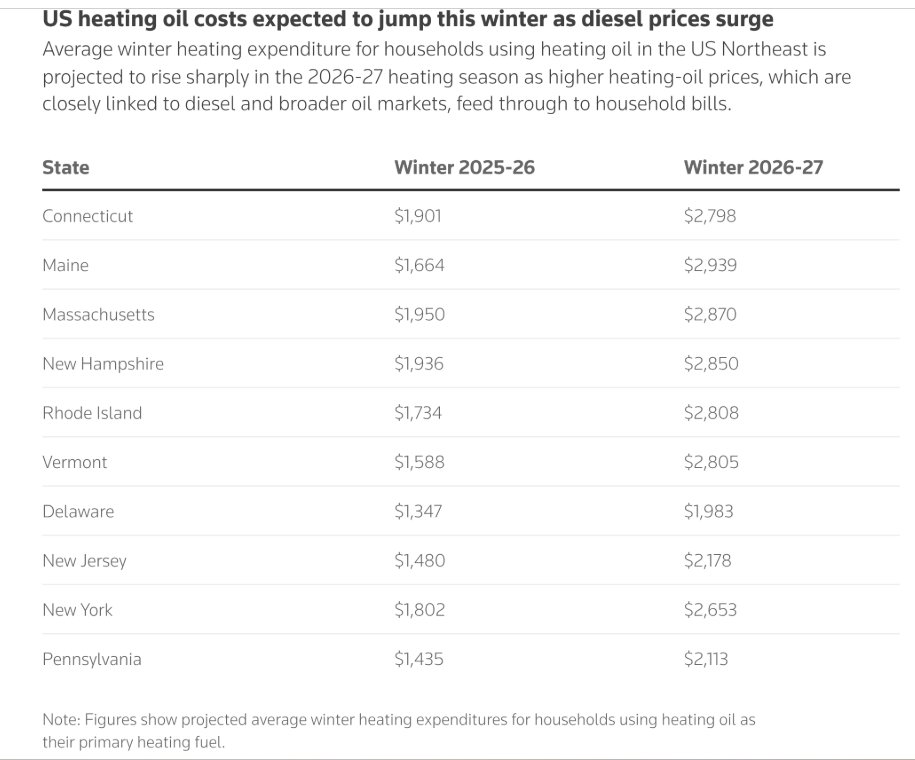
New York State heating bills are likely to rise 47% from last year, according to data from the National Association of Energy Assistance Supervisors. As shown in the chart above, diesel prices have soared, and US heating oil spending is expected to increase dramatically this winter.
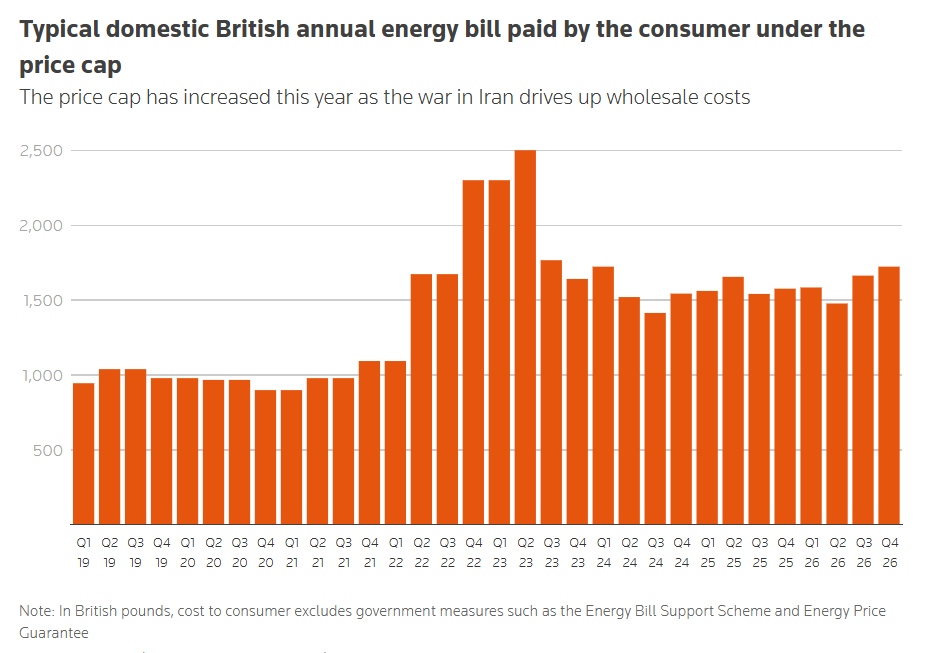
The UK mainly uses natural gas for heating. The British Energy Association estimates that household energy bills could rise 10% year over year this quarter.
Most plastics use petroleum or natural gas as raw materials and are processed to form polymers, which are used to make various products, from bottles to sneakers, and polyester fabrics used in clothing, so the impact of crude oil price increases is more widespread.
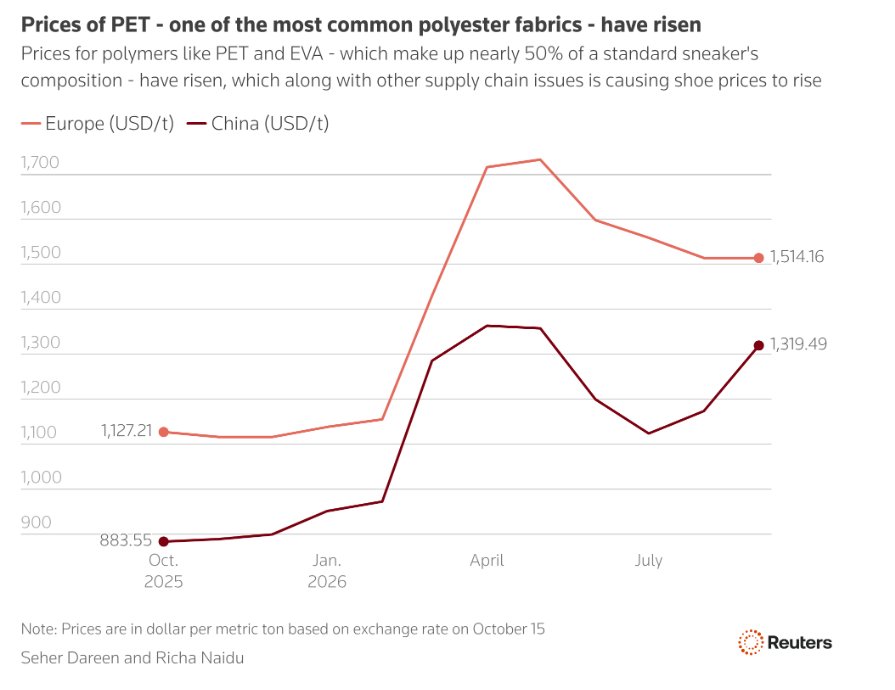
Consulting firm MAT said that for common groceries, whether plastic, paper or glass, packaging usually accounts for 5% to 15% of the product's manufacturing cost. As shown in the image above, the price of PET, a common polyester fabric material, has risen.
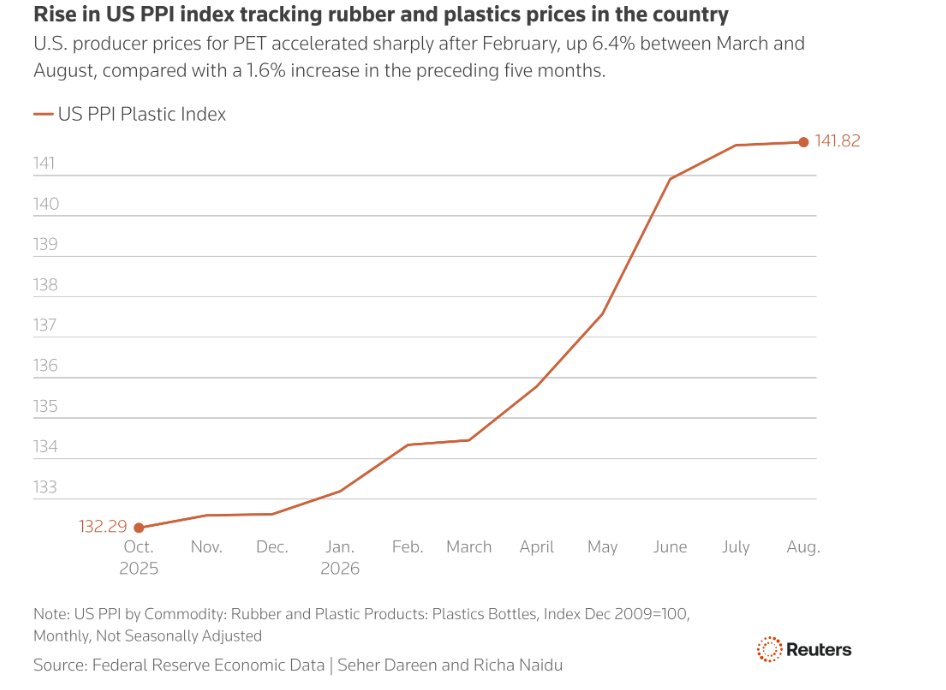
Plastic prices in the US rose 7% in August compared to October 2025. Consumer prices in the US accelerated in September, with surging gasoline prices contributing more than half of the increase. As shown in the chart above, the producer price index, which tracks the price of rubber and plastics in the US, continues to rise sharply.
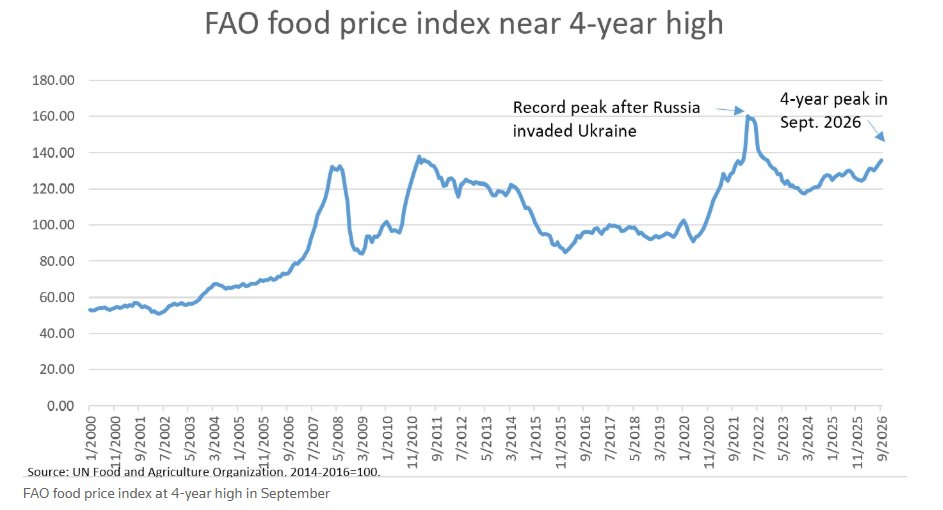
According to data from the Food and Agriculture Organization of the United Nations, the blocking of shipping and rising costs of chemical fertilizers, which also use natural gas as a raw material, will further accelerate global food inflation and continue until late 2027. As shown in the chart above, the FAO Food Price Index hit a four-year high in September.