


The Zhitong Finance App learned that the World Gold Council released a report saying that gold ETFs in the Chinese market grew for the third month in a row, with an inflow of 11 billion yuan (about 1.6 billion US dollars) in September. However, the fall in gold prices during the month offset the increase brought about by capital inflows. The total asset management scale (AUM) of gold ETFs in the Chinese market still fell 2% to 276 billion yuan (about 41 billion US dollars), and total holdings increased by 11 tons to 304 tons, reaching a record high at the end of the month. In the third quarter, gold ETF capital inflows to the Chinese market were 27 billion yuan (about 3.9 billion US dollars), driving a 13% increase in total asset management (AUM) and an increase of 27 tons in total holdings during the quarter.
Main influencing factors: The sharp decline in the domestic stock market prompted investors to further diversify their portfolios to drive demand for gold ETFs; Chinese treasury bond yields continued to decline, reducing the opportunity cost of holding gold and providing support for demand; the People's Bank of China continued to announce increases in gold holdings, further boosting investors' interest in gold ETFs.
It is worth noting that strong capital inflows in the third quarter offset outflows in the second quarter, making the annual net capital inflow of gold ETFs in the Chinese market expected to set a historical record. At the beginning of October, the domestic stock market continued to weaken. Investors continued to diversify their portfolios by increasing their holdings of gold ETFs, and related demand continued.
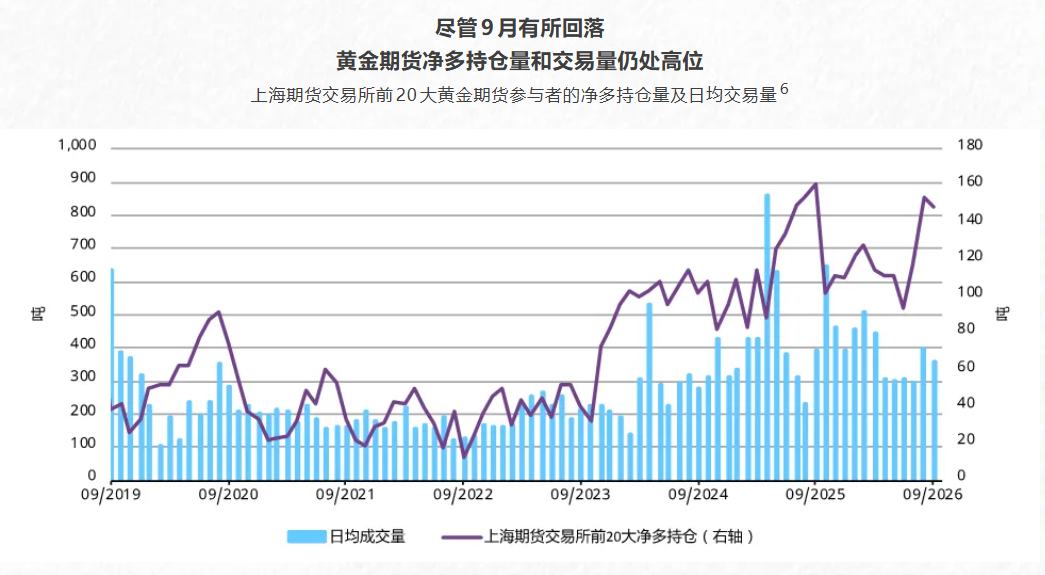
In September, the average daily trading volume of gold futures on the Shanghai Futures Exchange fell 9% month-on-month to 360 tons. According to available data, the net long holdings of the top 20 gold futures participants decreased by 5 tons to 149 tons compared to the end of August. As gold prices and volatility both declined during the month, the decline in trading volume and net long positions reflected a cooling in market sentiment.
Despite a fall in September, net long gold futures holdings increased sharply by 59% in the third quarter. Trading volume increased 18% during the quarter. The improvement in gold price performance after the second quarter, particularly the strong rebound in August, was an important factor driving these changes.
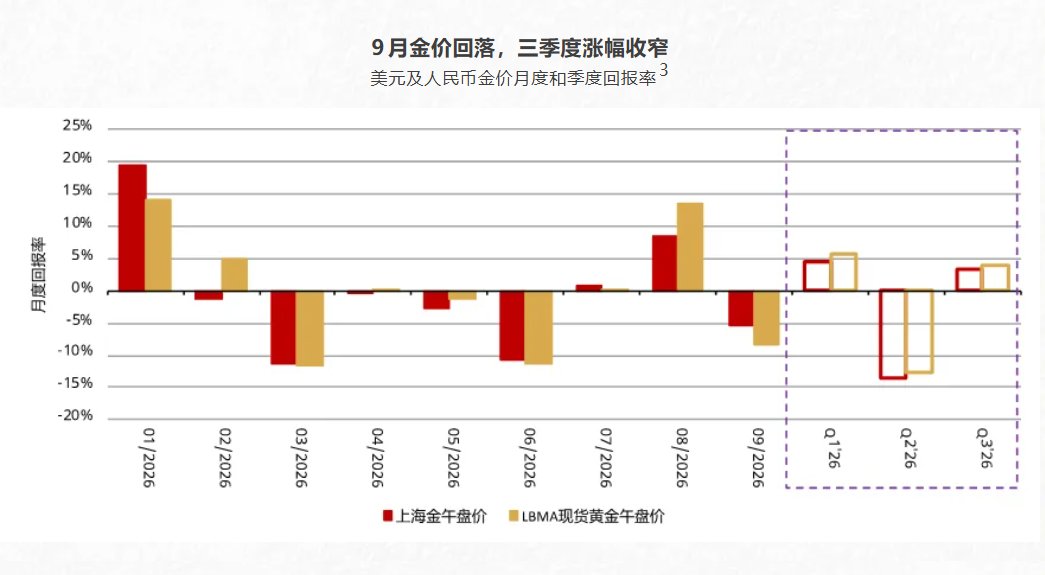
Despite the correction in gold prices in September, the London midday gold price in US dollars and the Shanghai midday benchmark gold price in RMB rose in the third quarter. The decline narrowed from the beginning of the year to September, and the price of gold stabilized in early October. In September, there was a steady inflow of gold ETFs in the Chinese market, bringing the third quarter to a successful conclusion, driving growth in the overall scale of asset management and total holdings.
Gold futures market activity declined in September, but overall trading remained active in the third quarter. At the beginning of October, investors continued to increase their holdings in gold ETFs.
Boosted by seasonal factors, gold shipments from the Shanghai Gold Exchange were supported in September, but weak jewellery demand dragged down overall performance in the third quarter.
In September, the People's Bank of China increased its gold holdings by 23 tons, making it the largest monthly gold purchase since October 2023, driving the total amount of gold purchases in the third quarter to 63 tons.
Gold prices recovered in September, and the London midday gold price in US dollars and the Shanghai midday benchmark gold price in RMB fell by 8.5% and 5.5%, respectively.
The World Gold Council's short-term gold price performance attribution model (GRAM) shows that two major factors are putting pressure on gold prices: US Treasury yields have risen sharply against the backdrop of the Federal Reserve's tightening monetary policy; and the strengthening of the US dollar (as the dollar appreciates, international gold prices denominated in dollars are generally weaker than gold prices denominated in other currencies).
In the third quarter, the price of gold denominated in RMB rose 3%, narrowing the year-to-date decline to 7%. The intensification of the US-Iran conflict continued to raise investors' concerns about inflation and boosted market expectations for further interest rate hikes by the Federal Reserve.
With multiple factors offsetting each other, gold prices closed slightly higher in the third quarter: the Federal Reserve raised interest rates by 25 basis points in September; US economic growth showed resilience beyond expectations, driving short-term US bond yields to rise sharply; long-term US bond yields also rose due to fiscal concerns driving up maturity premiums.
After entering the fourth quarter, gold prices stabilized in early October. Domestic gold prices in RMB hovered around 900 yuan/gram, while international gold prices remained above 4,100 US dollars/ounce.
Key factors influencing short-term gold price trends: geopolitical tension and its impact on energy prices; investors' expectations for inflation and the Fed's future interest rate path.
Banks, jewellers and other market participants withdrew 92 tons of gold from the Shanghai Gold Exchange in September, an increase of 48% over the previous month.
The reason for the phased recovery in demand: seasonal replenishment before the National Day holiday in early October will boost demand in the jewellery industry, because the National Day holiday often marks the beginning of the fourth quarter gold price recovery; the pullback in gold prices also provided support for demand. Other evidence shows that gold bar and coin sales have also improved. Many investors see lower gold prices as a better time to enter the market; the domestic stock market fell sharply, boosting investors' safe-haven demand; treasury bond yields continued to decline, reducing investors' opportunity cost of holding gold. The People's Bank of China continues to announce an increase in gold holdings, which has further encouraged private investment in gold.
However, despite the phased recovery in demand, gold shipments from the Shanghai Gold Exchange in September were still lower than in previous years due to significantly weaker gold consumption than in previous years, down 22% year on year.
In September, the People's Bank of China announced an increase in its gold holdings by 23 tons, making it the largest monthly purchase since October 2023. After this increase in holdings, China's official gold reserves reached 2,410 tons as of the end of September, accounting for 8.5% of total foreign exchange reserves. Due to the decline in foreign exchange assets, total official reserve assets fell 2% to 3.8 trillion US dollars in the same month.
The total amount of gold purchased by the People's Bank of China in the third quarter reached 63 tons, the highest quarterly level since the third quarter of 2023. Since this year, the People's Bank of China has increased its gold holdings by 103 tons, making it one of the most active central banks in the world.
The Mid-Autumn Festival long weekend at the end of the month and the seven-day National Day holiday in early October usually help boost gold sales. The pre-holiday gold price correction attracted investors to buy on dips, which led to a marked improvement in demand for gold jewellery, bars and coins. Looking ahead, the current macro environment may continue to support gold bar and coin investment. At the same time, the traditional peak sales season in the fourth quarter is expected to boost jewellery consumption seasonally, but maintaining a relatively high level of gold prices may continue to suppress demand in tonnage.