


Lockheed Martin’s fresh 10-year framework for up to 850 F-35 jets has put defense contractors back in the spotlight, because it hints at long runway visibility for whoever feeds that program and its supply chain. Investors who ignore that kind of contract pipeline risk missing where future cash flows might concentrate. This article unpacks how three U.S. Defense & Aerospace stocks could be positioned, for better or worse, in that backdrop.
The stocks profiled below are just a small sample, since the full screen surfaced 20 more U.S. Defense and Aerospace contractors with business models and risk profiles that are just as compelling to analyze.
If you want to identify which of those suppliers best fits your own risk, return and cash flow preferences, head straight into the U.S. Defense & Aerospace Contractors screener to filter and analyze the highest conviction plays in this theme.
ATI (ATI)
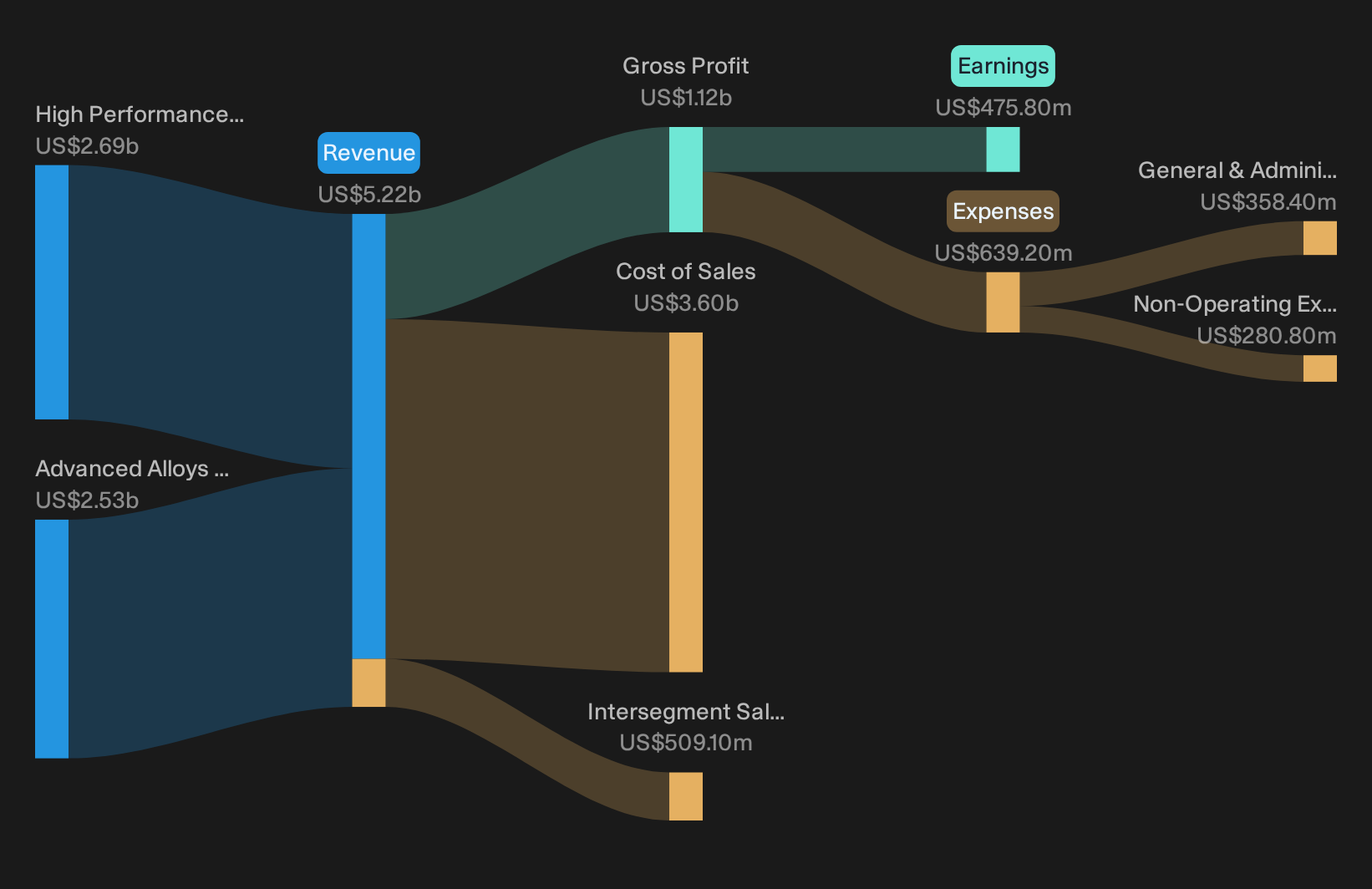
Overview: ATI makes high performance titanium, nickel and specialty metal products that feed into aerospace, defense and other industrial supply chains.
Operations: ATI generates about US$2.7b from High Performance Materials & Components and US$2.5b from Advanced Alloys & Solutions, largely in the United States.
Market Cap: US$24.9b
ATI matters in this defense and aerospace screen because it sits one step behind the primes, supplying the specialty metals those aircraft and engines cannot operate without.
"Recent long-term contract expansions with major airframe customers that include titanium alloy sheet supply, broader product offerings, volume minimums and inflation pass through are still ramping and can continue to support higher price realization, steadier aerospace volumes and a stronger earnings base for ATI as they flow through revenue and EBITDA over time."
What happens to ATI’s margins if a single unseen pressure on that contract mix shifts direction is likely to be worth watching closely.
That pressure point is exactly what the full narrative for ATI unpacks. It shows how ATI’s contract mix, capital intensity and aerospace exposure could be decoupling from headline expectations.
Timken (TKR)
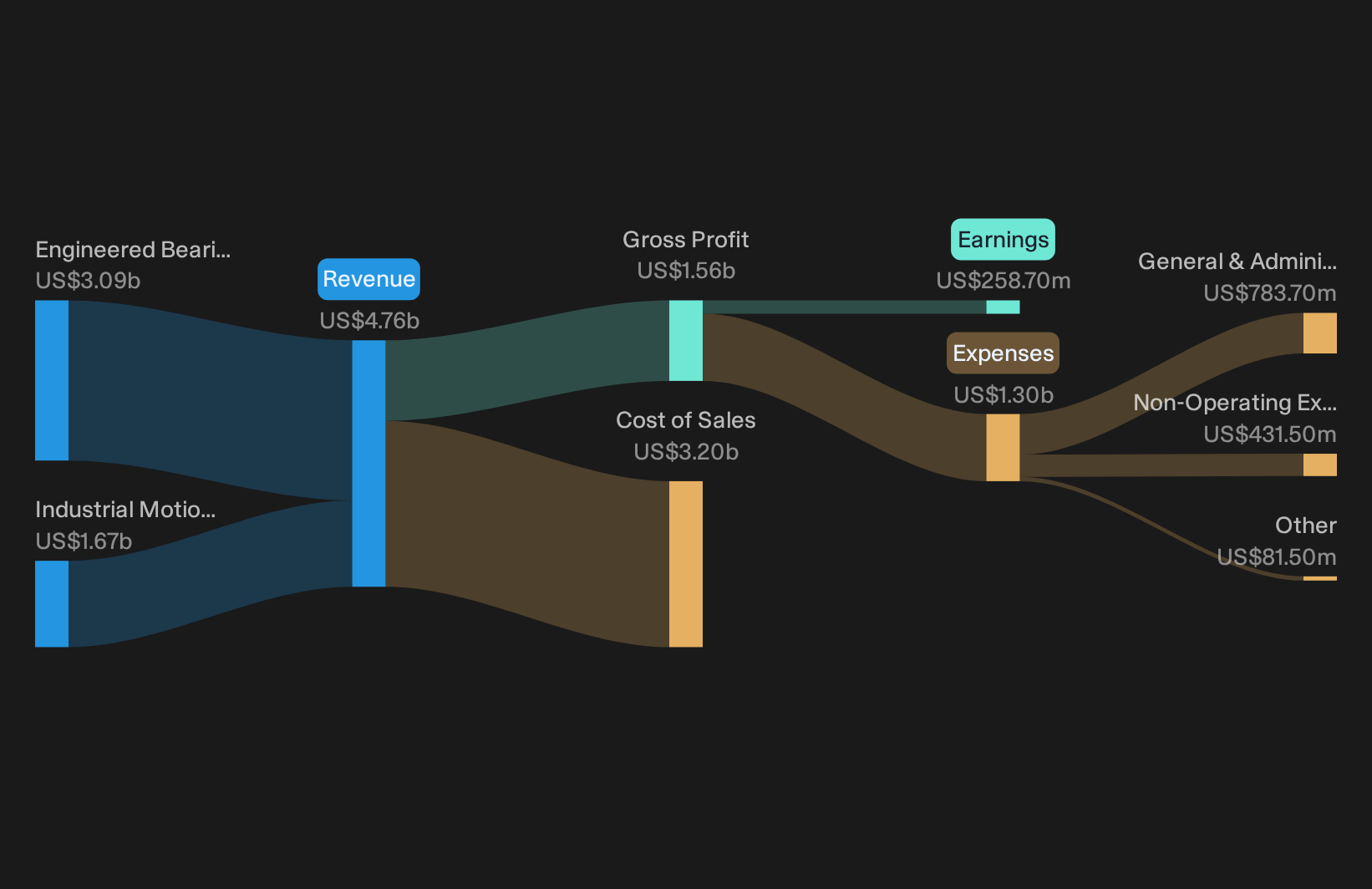
Overview: Timken designs and sells engineered bearings and industrial motion systems used across sectors including aerospace and defense, giving investors indirect exposure to defense procurement cycles.
Operations: Timken generates about US$3.1b from Engineered Bearings and US$1.7b from Industrial Motion, with roughly US$2.1b of sales in the United States.
Market Cap: US$7.9b
Timken matters in this screen because its bearings and motion products help keep aircraft, defense platforms and related infrastructure running, so improvements in how the business is run can feed directly into how much profit is ultimately earned on that linked demand.
"Timken is rolling out its Elevate to Outperform and 80/20 simplification program across the full revenue base, with SKU and customer rationalization and stranded cost removal tied to a planned 500 bps uplift in adjusted EBITDA margin to a range of 21 to 23% by 2028, which could support higher earnings."
What happens if a single assumption in that efficiency push clashes with the extra investment needed to support aerospace and defense capacity?
That collision of cost cuts and capacity needs is exactly what the full narrative for Timken unpacks, revealing how Timken’s margin ambition could accelerate or stall under real defense demand.
Graham (GHM)
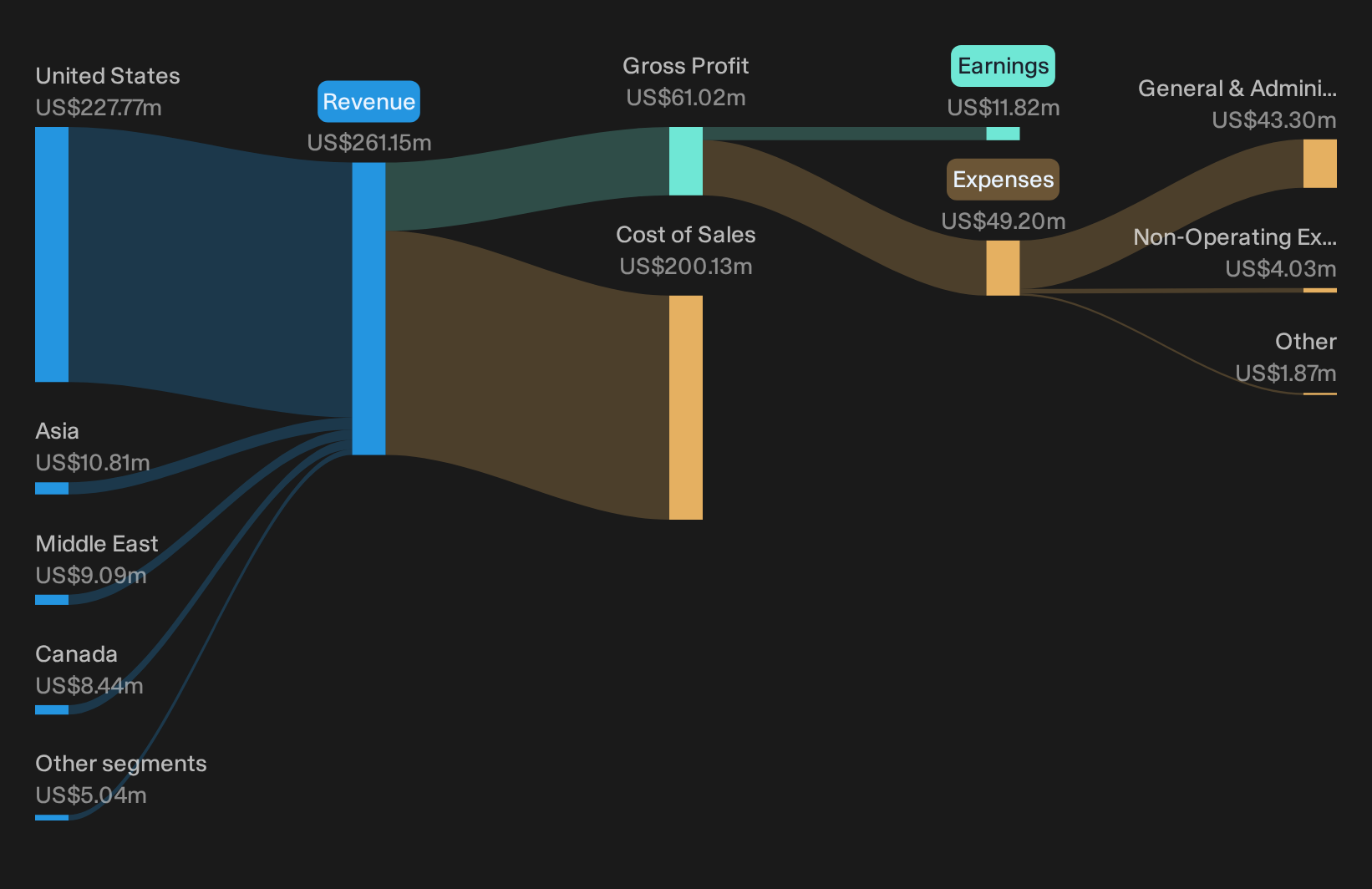
Overview: Graham Corporation supplies engineered heat transfer, vacuum, propulsion and life support systems that directly support U.S. defense and space programs.
Operations: Graham generates about US$261 million by designing and manufacturing heat transfer and vacuum equipment, with roughly US$228 million of revenue in the United States.
Market Cap: US$806 million
Graham draws interest in this U.S. Defense and Aerospace Contractors screen because its equipment is tied into long running Navy and space programs where reliable suppliers can matter as much as the primes themselves.
"Record backlog of about $557 million with roughly 35% to 40% expected to convert within 12 months, together with about 85% of that backlog tied to defense, points to multi year revenue visibility that some investors may not be fully reflecting in Graham’s current valuation, with potential future support for earnings stability."
What happens if a single key assumption about how that long dated defense work translates into future margins quietly shifts in either direction?
If that shift is what you care about, the full narrative for Graham shows where Graham’s backlog, cash flows and risk could be quietly decoupling.
Seeking Alternatives Before The Crowd?
Fresh themes can start to break out while most attention stays glued to yesterday’s winners. Do not get caught reacting after momentum has already flown. Consider acting before trends become widely followed.
- Identify early movers with strong balance sheets before they leave the bargain bin by running the 33 high quality undervalued stocks while it still flies under the radar.
- Follow structural shifts in automation and factory upgrades by scanning the curated 93 robotics and automation stocks to assess potential opportunities linked to capital spending.
- Monitor where electricity demand and grid upgrades are building by screening the 42 power grid technology and infrastructure stocks and evaluating developments before infrastructure headlines broaden.
Have feedback on this article? Concerned about the content? Get in touch with us directly. Alternatively, email editorial-team@simplywallst.com