


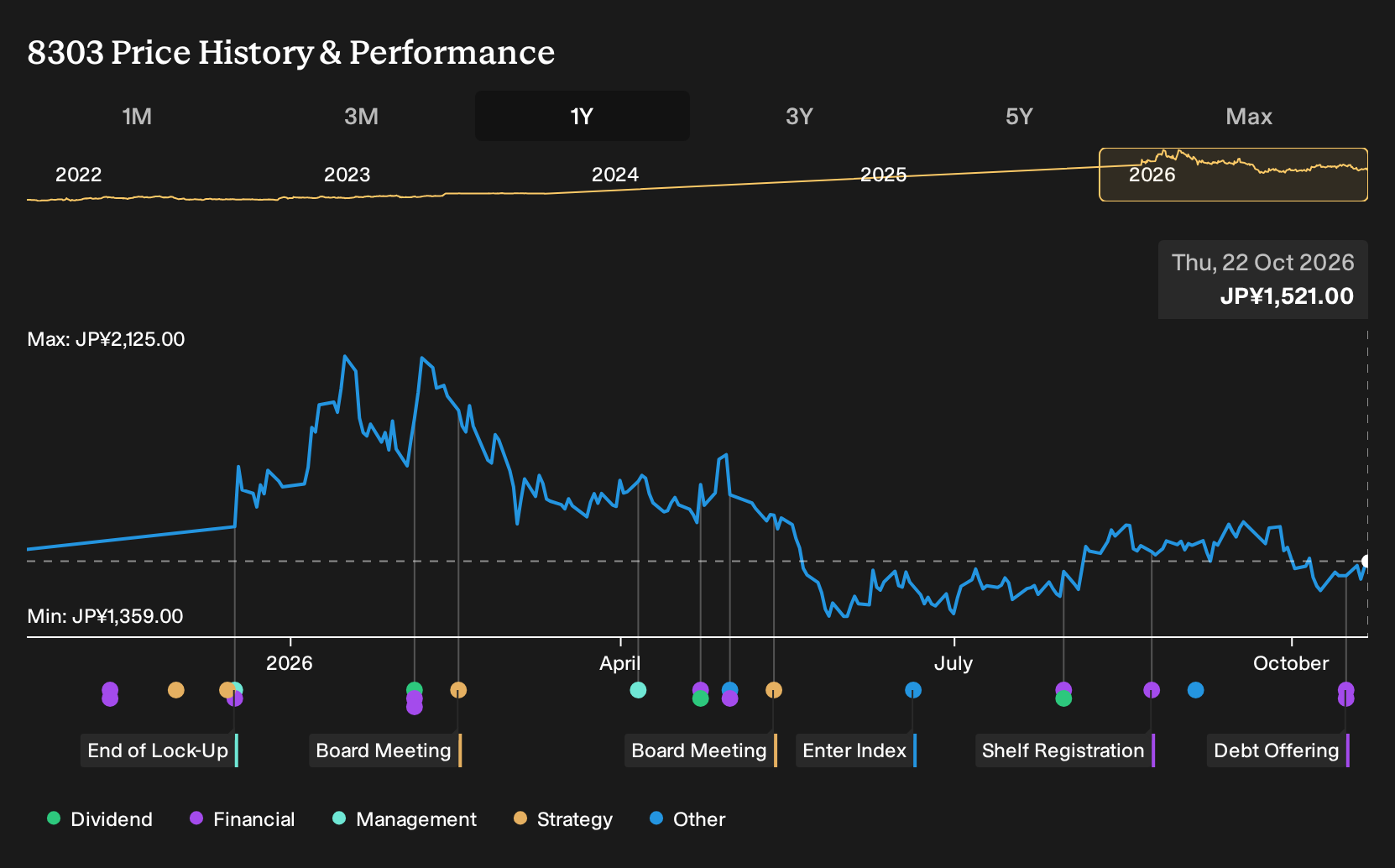
- SBI Shinsei Bank issued two unsecured straight corporate bonds in October 2026, totaling ¥54.0 billion, with maturities in 2029 and 2031.
- The unsecured structure and staggered maturities provide a clear signal of how SBI Shinsei Bank is shaping its funding profile and liability mix.
- Attention now turns to how SBI Shinsei Bank's investment narrative incorporates this ¥54.0 billion unsecured bond financing and its balance sheet implications.
Compare how SBI Shinsei Bank's new unsecured funding stack aligns with the broader sector using a curated set of list of solid balance sheet and fundamentals (22 results)
What Is SBI Shinsei Bank's Investment Narrative?
SBI Shinsei Bank is essentially a funding and credit machine that has to keep proving it can price risk well, control costs and fund itself on reasonable terms. The ¥54.0b of new unsecured bonds due 2029 and 2031 fit that story as a relatively plain piece of liability management. They extend the debt ladder and, because they are unsecured, underline that the lender is comfortable relying on its overall credit profile rather than specific collateral.
In the short term, the real swing factors remain execution in core lending, how it manages a capital intensive balance sheet and whether earnings growth near 4.2% can offset an expected revenue decline of 7.6% a year. Funding costs on this new paper feed into that equation but do not redefine it. Earnings quality is described as high, yet return on equity near 8.7% and recent shareholder dilution keep the risk side of the story very real.
That said, there is a less comfortable thread in SBI Shinsei Bank's recent history that raises a different kind of question entirely.
There's only one way to know the right time to buy, sell or hold SBI Shinsei Bank. Head to Simply Wall St's company report for the latest analysis of SBI Shinsei Bank's Fair Value.
The Verdict Is Yours
Disagree with this assessment? Extraordinary investment returns rarely come from following the herd, so consider your own analysis and judgement.
- A great starting point for your SBI Shinsei Bank research is our analysis highlighting 4 key rewards and 2 important warning signs that could impact your investment decision.
- See our latest analysis for SBI Shinsei Bank. The report includes a comprehensive fundamental analysis summarized in a single visual, the Snowflake, making it easy to evaluate SBI Shinsei Bank's overall financial health at a glance.
Looking For More SBI Shinsei Bank Style Ideas?
If you want to put SBI Shinsei Bank in context, it helps to line it up against other listed businesses with similar strengths or different risk profiles. The Simply Wall St Screener lets you do exactly that in a structured way rather than jumping between tickers at random.
- For investors who care most about financial resilience and clean balance sheets, start with this curated list of solid balance sheet and fundamentals (22 results) that emphasises low leverage and stronger fundamentals.
- If you are hunting for shares that combine quality fundamentals with potentially attractive pricing, focus your search using a hand picked 14 high quality undervalued stocks that already filters for both.
- Income focused investors who prioritise steady cash returns can zero in on companies offering robust payouts by screening through a targeted 28 dividend fortresses geared toward higher yielding options.
Have feedback on this article? Concerned about the content? Get in touch with us directly. Alternatively, email editorial-team@simplywallst.com