


- Cincinnati Financial is set to report Q3 2026 results, with analysts forecasting earnings of $1.99 per share and revenue 5.5% higher year over year, alongside a projected property casualty combined ratio of 96.4%.
- The focus on metrics such as investment income, segment earned premiums and loss expense ratios indicates that underwriting discipline and portfolio returns are under close scrutiny ahead of the release.
- The review will examine how Cincinnati Financial's investment narrative is influenced by expectations for Q3 revenue growth and the possibility of an earnings beat.
Compare Cincinnati Financial's setup ahead of Q3 with a curated 30 resilient stocks with low risk scores that may suit investors who care about underwriting discipline and steadier risk profiles.
Cincinnati Financial Investment Narrative Recap
To stay invested in Cincinnati Financial, you need to be comfortable with a profit-first underwriting mindset that leans on a long track record of underwriting gains, high quality earnings and a sizeable investment portfolio. The key near term catalyst is whether Q3 shows progress on loss and expense ratios after Q2’s 100.8% combined ratio and softer personal lines premiums.
The biggest risk right now is catastrophe and weather related volatility keeping the property casualty combined ratio closer to or above 100%. If Q3 lands with a 96.4% combined ratio as projected, that would point to some near term improvement, but a single quarter on its own does not materially change the longer term risk profile.
The most relevant piece of recent context is the fixed income book. In Q2 2026, Cincinnati Financial reported a 5.08% yield on the fixed maturity portfolio, new bond purchases yielding 5.66% on average and a US$8.6b net appreciated investment position supporting record book value of US$108.64 per share.
Going into Q3, that investment income backdrop matters because the current quarter is expected to show a 30.2% year on year EPS decline to US$1.99 alongside 5.5% revenue growth. For shareholders focused on underwriting discipline, the combination of investment returns, catastrophe exposure and expense control forms the real catalyst to watch rather than the potential for a single earnings beat.
Cincinnati Financial's current analyst narrative points to forecast revenue of US$12.3b and earnings of US$874.7m by 2029, with revenue expected to decline 4.1% per year and earnings projected to fall by about US$2.4b from US$3.3b today.
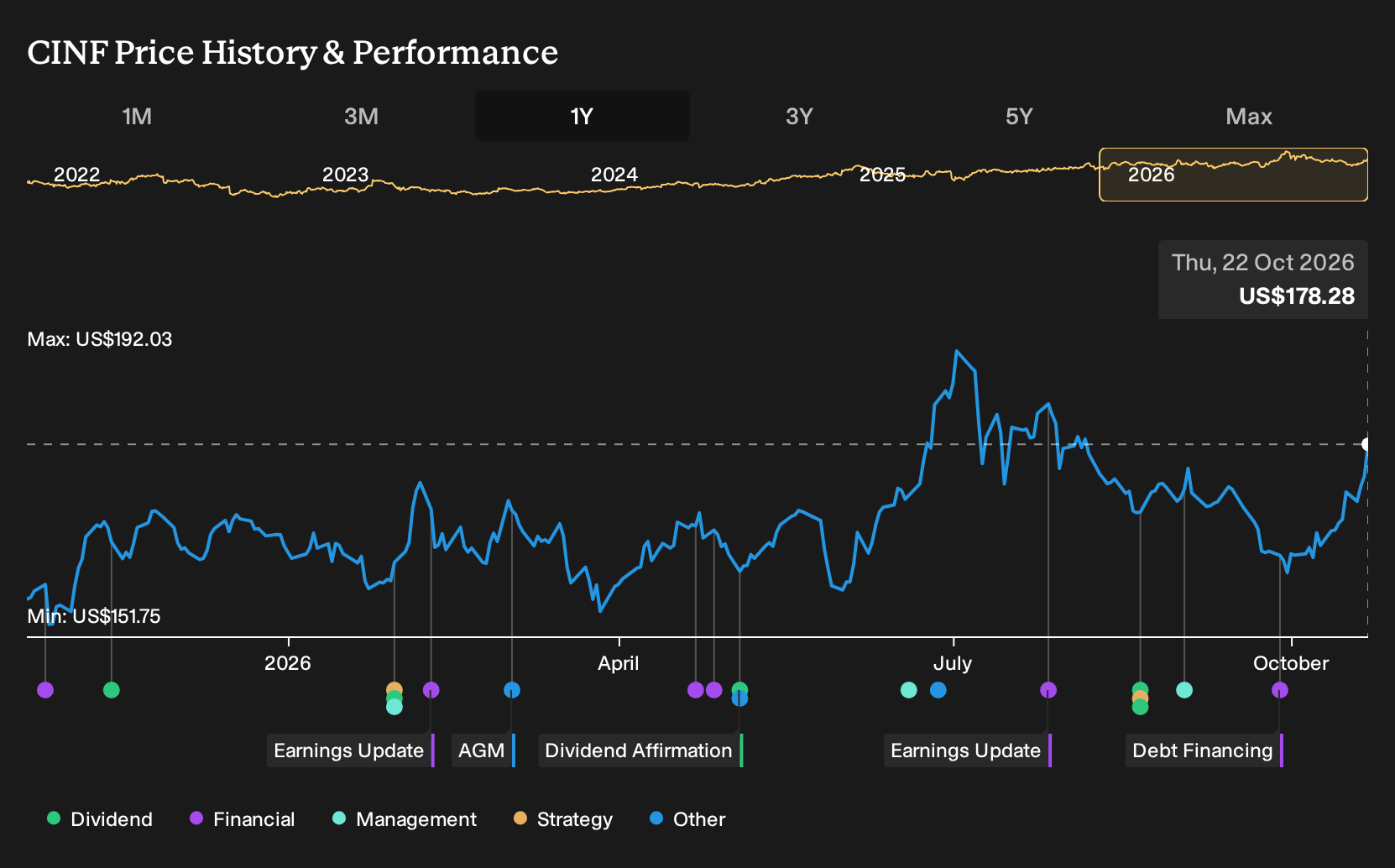
Uncover how Cincinnati Financial's fair value indicates an 8% potential upside to its current price that could narrow quickly if Q3 surprises are well received.
Exploring Other Perspectives
The Simply Wall St Community contributes three fair value estimates for Cincinnati Financial, ranging from about US$139 to almost US$192, which highlights a wide range of expectations. When you consider the risk of higher catastrophe losses or a Q3 earnings surprise affecting sentiment, it becomes clear how far investor views can differ.
Explore 2 other Cincinnati Financial fair value estimates, including one that suggests there may be as much as 8% upside from the current price.
Decide For Yourself
Disagree with existing narratives? Extraordinary investment returns rarely come from following the herd, so go with your instincts.
- A great starting point for your Cincinnati Financial research is our analysis highlighting 3 key rewards and 1 important warning sign that could impact your investment decision.
- See our latest analysis for Cincinnati Financial. The report includes a comprehensive fundamental analysis summarized in a single visual, the Snowflake, making it easy to evaluate Cincinnati Financial's overall financial health at a glance.
Looking For More Ideas Beyond Cincinnati Financial?
If the setup around Cincinnati Financial has sharpened your thinking about risk and return, it can help to compare it with other companies that match different priorities. The Simply Wall St Screener lets you filter by balance sheet strength, income potential, or undervaluation so you can build a watchlist that actually fits how you like to invest.
- If capital preservation comes first for you, start with a list of solid balance sheet and fundamentals (26 results) that highlights businesses with stronger financial footing.
- For investors hunting for mispriced opportunities, check a curated 30 high quality undervalued stocks that filters for quality combined with more appealing valuations.
- If portfolio income is your focus, scan a 6 dividend fortresses that concentrates on companies with higher yields and sturdier payout profiles.
Have feedback on this article? Concerned about the content? Get in touch with us directly. Alternatively, email editorial-team@simplywallst.com