


The Zhitong Finance App learned that the sell-off in technology stocks has deepened, and investors are flocking to traditional safe-haven assets including yen, Japanese treasury bonds, and US treasury bonds. The yen continued its gains, rising to its strongest level in more than a month.
After remaining in a narrow range against the US dollar for several weeks, the yen has broken through the range in the past 24 hours and is currently trading at the level it has been since September 18 — the day the Bank of Japan raised interest rates. On Friday, the yen rose 0.4% to the dollar against 156.08 yen, after rising 0.9% on Thursday.
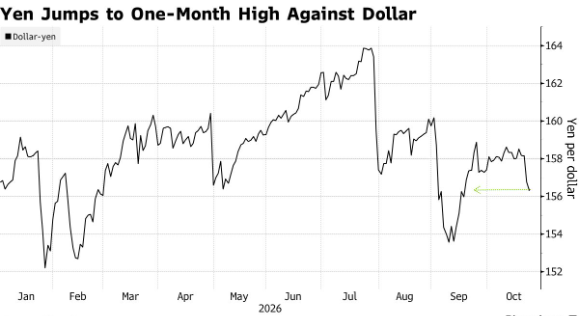
The Asian stock market followed the decline in US stocks, and investors continued to rotate out of technology stocks. Japan's benchmark 10-year treasury bonds surged, driving yields down 10 basis points to 2.78%, and 20-year yields falling 6 basis points; US bonds held most of Thursday's gains. The yield on Japanese treasury bonds declined across the board on Friday.
Why did the yen become a safe-haven asset again
“This week's earnings reports from major US tech companies cast doubt on the AI-led US growth narrative, and the yen is therefore more popular as a safe-haven asset than the dollar,” Commonwealth Bank of Australia strategist Carol Kong said. She added that if the liquidation of positions in technology stocks intensifies, the dollar may continue to fall against the yen.
This round of change is a shift for the currency — in recent years, it has been difficult for the yen to continue to benefit from its traditional safe-haven status. When the market is under pressure, wide interest spreads and Japan's large-scale overseas investment flows often overwhelm demand for yen. Furthermore, there are reports that Bank of Japan officials are inclined to keep interest rates unchanged at this month's meeting, which also dampened expectations of recent tightening.
The latest round of sell-off “American attributes” may be changing this dynamic. “Dollar selling, driven by the ebb of 'American exceptionalism', is offsetting safe-haven dollar buying,” said Tom Nakamura, head of fixed income and foreign exchange at AGF Investments Inc. He expects the yen to strengthen to 156 yen against the dollar in the short term.
Bond Market: Bonds are acting like bonds again
“Bonds are acting like bonds again,” said Masahiko Loo, a senior fixed income strategist at State Street Investment Management in Tokyo. “When risk assets fluctuate, they provide diversification over a long period of time, and investors can finally get coupon returns while they wait.”
The yield on Japanese treasury bonds rose to a decades-long high earlier this month due to concerns about inflation, fiscal spending, and the sell-off in the global bond market, and has been declining ever since. The rise in the bond market on Friday also occurred when data showed that Japan's key inflation indicator surpassed the Bank of Japan's 2% target for the first time this year — this data should have supported the widely anticipated December rate hike. Loo said that as the market shifts its focus to growth risks and concerns surrounding AI, inflation data has taken a back seat.
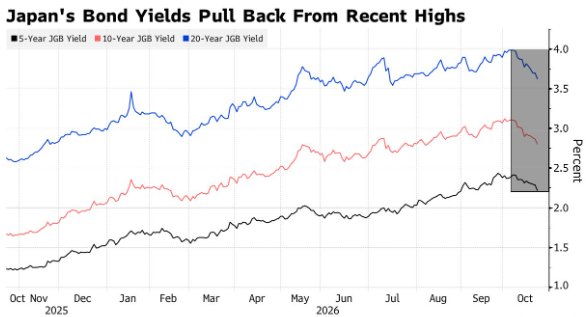
“Today's sharp drop in short- and medium-term interest rates also shows that if the fall in AI stocks and concerns about European debt cause a continuing impact on the financial market, the market is predicting that the Bank of Japan may postpone interest rate hikes,” said Ryutaro Kimura, senior asset management bond strategist at BNP Paribas.
The analysis points out that as the yield curve continues to flatten, new (active) Japanese treasury bonds can no longer find a yield of 4%; demand for safe assets has overtaken the impact of CPI data. He also mentioned that the dollar is falling against the yen and that the 155 mark is already in sight.
Cross orders and options
The yen's appeal was not limited to the US dollar: it rose 0.3% against the Swiss franc; it also rose 0.3% against the euro, as French fiscal concerns and high energy prices dragged down the euro.
Options traders have also turned more optimistic about the yen, which is reflected in the one-month risk reversal of the dollar against the yen. This change shows that investors are increasingly planning for the short-term rise of the yen — although strategists are still debating, the recent strength is mainly driven by risk aversion, or is it supported by emerging capital flows within Japan.
Next test: two central banks next week
This round of rise comes before Japan and the Bank of America discuss interest rates next week, which will provide another test for the yen. The market generally expects the Bank of Japan to keep interest rates unchanged, and overnight index swap (OIS) pricing shows that the probability of raising interest rates by December is about 67%.
However, some analysts cautioned that the latest trend does not necessarily mean the starting point for a trend of continued appreciation of the yen. “Considering the central bank meeting next week and the midterm elections later, I don't think this will develop a trend where the yen will continue to appreciate,” said Hirofumi Suzuki, chief foreign exchange strategist at Sumitomo Mitsui Bank.