


- Amgen and AstraZeneca reported full Phase 3 CROSSING data showing Tezspire achieved statistically significant, clinically meaningful and sustained benefits in eosinophilic esophagitis, including higher histologic and endoscopic remission rates versus placebo with a safety profile consistent with prior use.
- The ability of Tezspire to address symptomatic and uncontrolled eosinophilic esophagitis highlights another potential use case within Amgen's targeted biologics portfolio. This points to broader utilization of an existing asset rather than reliance on entirely new launches.
- We will now look at how Amgen's wider investment narrative could be influenced by Tezspire's positive Phase 3 data in eosinophilic esophagitis.
Amgen Investment Narrative Recap
To own Amgen, you need to be comfortable with a large, mature biopharma that is leaning on a mix of cardiometabolic drugs, oncology assets, rare disease therapies and biosimilars to offset pricing pressure and loss of exclusivity on older products. The key near term swing factor remains execution on those newer growth drivers and how well they support earnings against U.S. pricing headwinds.
The biggest operational risk is that pricing pressure, 340B discounting and biosimilar competition outpace contributions from newer assets like Tezspire, Repatha and MariTide. The recent Tezspire eosinophilic esophagitis data reinforces the breadth of Amgen's pipeline, but it does not change the fact that obesity and cardiometabolic outcomes and pricing policy are still the main near term watchpoints.
The Phase 3 CROSSING readout for Tezspire in eosinophilic esophagitis ties directly into one of Amgen's stated catalysts: deeper penetration in large, under treated populations through targeted biologics. Positive histologic, endoscopic and symptom outcomes at both 24 and 52 weeks support management's focus on expanding indications for existing biologics rather than relying only on brand new launches.
For you as an investor, the Tezspire update sits alongside other pipeline drivers like MariTide and Repatha and the growing biosimilars portfolio. Together, these programs speak to execution risk and opportunity on the rare disease and autoimmune side, which can either help offset pricing and biosimilar headwinds or leave Amgen more exposed if uptake or regulatory outcomes fall short.
Amgen's current analyst narrative points to revenues of US$42.4b and earnings of US$10.7b by 2029, built on an assumed 3.6% yearly revenue growth rate and an earnings increase of about US$2.0b from US$8.7b today.
Uncover why Amgen's fair value indicates a 13% potential downside to its current price, which leaves little room for error.
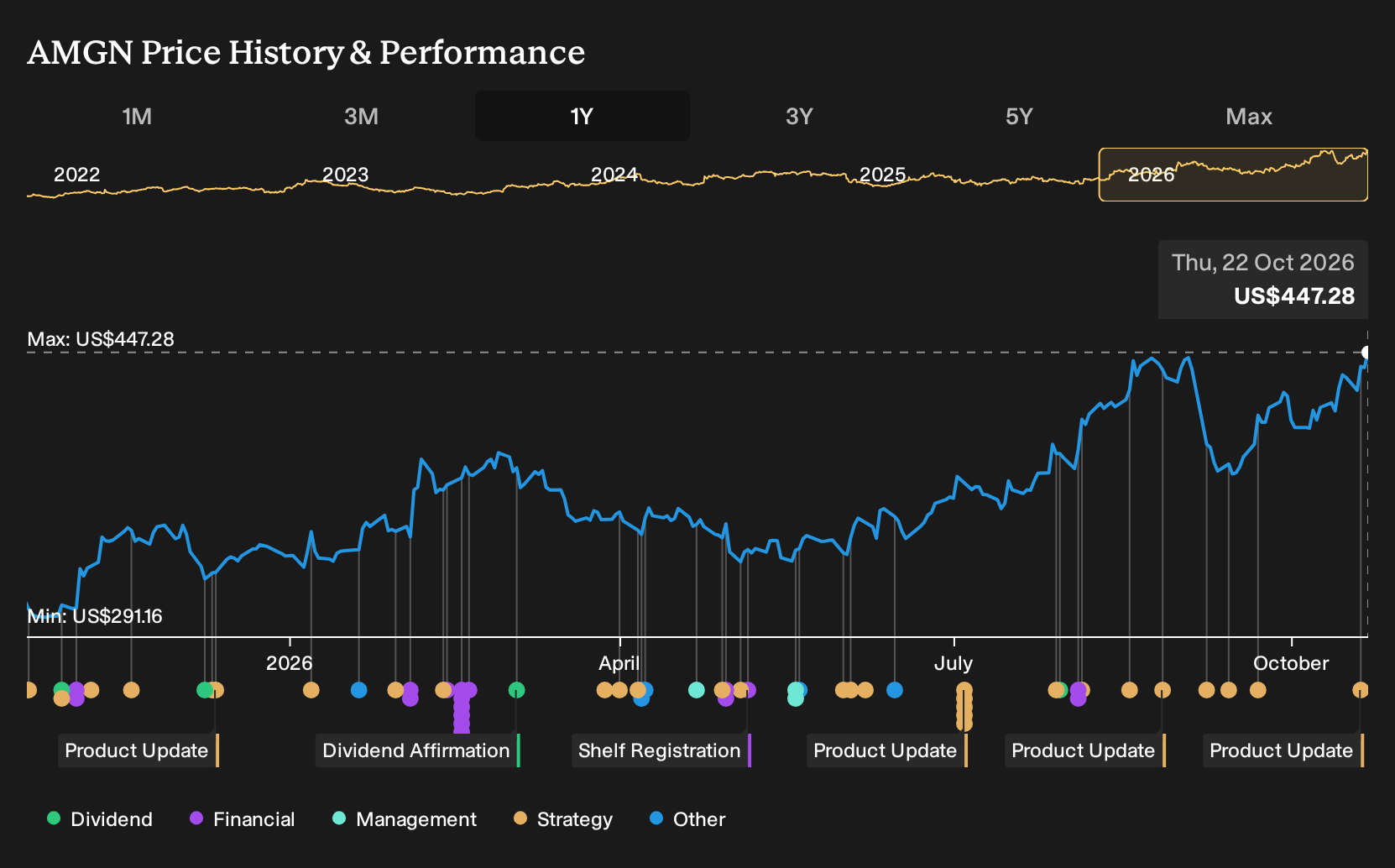
Exploring Other Perspectives
One bearish angle you might explore focuses on pricing pressure rather than Tezspire’s rare disease potential. The most pessimistic analysts were modeling roughly flat revenue near US$39.0b and earnings of US$8.6b by 2029, which underpins a much lower US$267.68 price target. Those views were set before this EoE data, so opinions could shift meaningfully from here.
Explore 4 other Amgen fair value estimates, including one that suggests as much as 20% downside from the current price.
Decide For Yourself
Disagree with existing narratives? Extraordinary investment returns rarely come from following the herd, so go with your own research process and conclusions.
- A great starting point for your Amgen research is our analysis highlighting 4 key rewards and 1 important warning sign that could impact your investment decision.
- See our latest analysis for Amgen. The report includes a comprehensive fundamental analysis summarized in a single visual, the Snowflake, making it easy to evaluate Amgen's overall financial health at a glance.
Looking for more Amgen investment ideas?
If you want to put Tezspire's rare disease story in context, it can help to line Amgen up against other businesses with different strengths and risk profiles using the Simply Wall St Screener.
- For investors who want potential upside with a margin of safety, scan a curated 29 high quality undervalued stocks that combine quality fundamentals with discounted market prices.
- If resilience matters more to you than aggressive growth, filter for 30 resilient stocks with low risk scores that aim to keep volatility and risk scores in check.
- For those who care most about balance sheet strength, start with a list of solid balance sheet and fundamentals (26 results) and compare how financial foundations stack up against Amgen.
Have feedback on this article? Concerned about the content? Get in touch with us directly. Alternatively, email editorial-team@simplywallst.com