


AFTER its privatisation, UEM Edgenta Bhd is prioritising margin recovery and operational efficiency.
The asset management and infrastructure solutions group is seeking to strengthen its earnings base before pursuing its next phase of growth.
The group, which went private in July this year, is looking to explore opportunities to deepen its presence in existing markets, including Sabah and Sarawak, and the Middle East.
However, with geopolitical tensions disrupting business conditions and raising operating costs, management is taking a cautious approach to expansion, emphasising that growth must ultimately translate into stronger commercial returns.
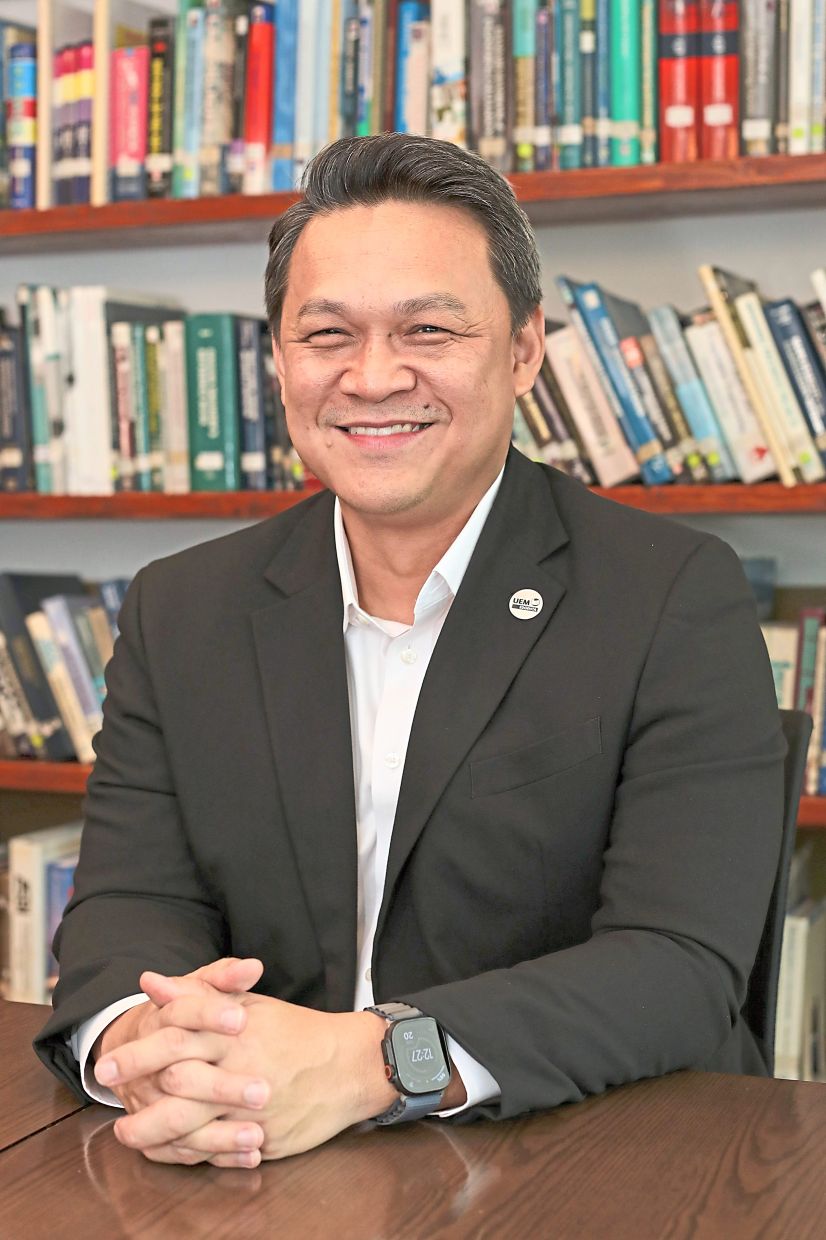
Managing director and chief executive officer Shaiful Subhan says the group’s immediate priorities remain strengthening its core businesses, improving margins and delivering on commitments to customers.
UEM Edgenta’s privatisation did not change the group’s mandate, he says. Instead, it provided greater flexibility to review its business portfolio outside the scrutiny of public markets.
It’s worth noting that before privatisation, UEM Edgenta undertook a substantial restructuring and reorganisation, including streamlining business units, reviewing resource allocation and addressing inefficiencies in its operations.

“Privatisation is a shareholder matter, but from a business point of view, the custodian remains the same. Maintaining the core business, looking at extra margins, delivering value – it takes a certain level of ambidexterity,” he tells StarBiz 7.
He credits the team for setting the foundations that the group has now, and is hopeful this will allow them to springboard forward.
Speaking of forward looking, Shaiful says plans for Sabah and Sarawak are shaping up nicely.
The group has had the privilege of being part of some of Sarawak’s larger infrastructure projects such as the Pan Borneo Highway, the Sarawak Coastal Road and Second Trunk Road.

The group’s order book also includes airport civil works, infrastructure engineering consultancy and project management contracts.
Shaiful adds that more than 70% of its staff in Sarawak are locals – further cementing the fact that job opportunities and elevation of competencies within the state is vital for the group to be there for the long haul.
Acknowledging that UEM Edgenta has always been a part of nation building, Shaiful says an important part of their job there is to ensure assets built are designed well, properly managed and through its life cycle, assets can retain and enhance the value.
“We have completed quite a few contracts in Sarawak, and we are in the process of bidding for more. We are in talks currently with a number of agencies and local business partners to see how we can expand,” he explains.
Shaiful says this definitely does not mean the group is deprioritising Peninsular Malaysia, but rather, that there are opportunities in Sarawak that it hopes to support.
As for Sabah, the group’s presence includes highway projects and an investment in a company providing hospital support services.
Healthcare is a significant contributor to UEM Edgenta’s revenue. Shaiful points out the group not only maintains government hospitals in Peninsular Malaysia, but also provides maintenance services to private hospitals.
“We provide this service not only in Malaysia, but also in Singapore where we have a dominant position and in Taiwan. We have started making inroads in providing healthcare support services in the Middle East as well.
“So, it’s a stronghold in Malaysia, Singapore and Taiwan, and baby steps in Saudi Arabia,” he says.
Beyond its domestic operations, the Middle East remains an important market, although the regional conflict has tempered its growth prospects.
UEM Edgenta has two operating subsidiaries and a joint venture in the United Arab Emirates, alongside a majority-owned operating company in Saudi Arabia.
When speaking on the region, Shaiful signals his concern on the ongoing conflict.
He says the uncertainty and volatility does weigh on him heavily, especially since the group has been there for over a decade and does not plan to fold operations.
With business continuity protocols in place, Shaiful says working remotely for non-critical and non-operational staff is in place, alongside counselling and support for those who need them.
“It is not only about physical well-being but mental health and the ability to be clear headed when coming to work.
“On one hand, business operations are unaffected, but growth trajectory has been impacted,” he notes.
Shaiful says that when the war broke out, the government had to re-prioritise spending – resulting in the property market slowing down.
However, Shaiful says unsurprisingly, the people of the region have been strongly resilient and tough.
“When I visited Dubai about a month ago, the roads were busy and restaurants were full. It was encouraging to see domestic spending remained strong,” he says.
With so much happening around the world, Shaiful admits that having everything so interlinked has made him sit and ponder at how best to go forward.
“The truth is, nothing lasts forever. But one thing I’ve been cognisant of is the need to continue spending on capacity building, whether its certain competencies or softwares and tools. If we scrimp or cut back on essential spending, people will remember this,” he says.
Reiterating that the group will continue making decisions based on the best available set of data, Shaiful says the group expects earnings to be better for financial year 2026 (FY26).
“Our expectation is to drive the margins back up this year. The forecasts for next year will require a lot of care in terms of assumptions. For now, I can simply hope for the best and believe that a rebound is on the horizon.”