


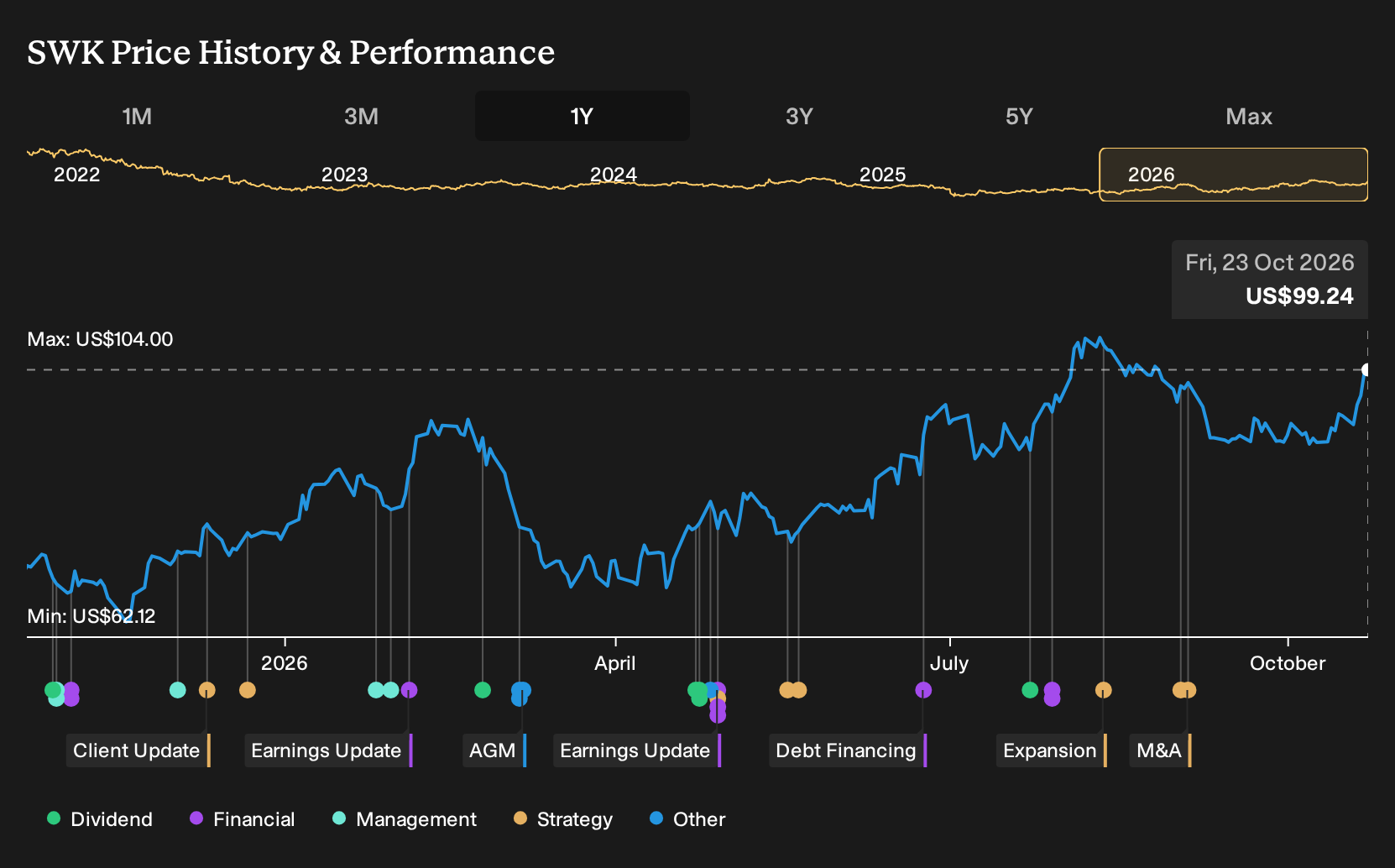
- Stanley Black & Decker is set to report its fiscal Q3 2026 results after a prior quarter that included solid Q2 performance, higher full year 2026 guidance, and steps to reduce debt and repurchase shares.
- Recent lobbying activity around tariffs, Foreign Trade Zones, and trade actions under Sections 232 and 301 highlights that trade policy and input costs remain an important operating concern alongside the upcoming earnings release.
- We will now look at how Stanley Black & Decker's investment narrative could be influenced by the upcoming Q3 earnings and guidance.
Stanley Black & Decker Investment Narrative Recap
To own Stanley Black & Decker, you need to believe the tools and outdoor franchise can turn operational progress into sturdier margins while demand in DIY and pro channels stays at least stable. The upcoming Q3 report is mainly about confirming that supply chain work, cost actions, and mix shift are still moving in the right direction.
The near term swing factor is whether management can sustain earnings quality while end markets remain mixed and tariffs remain a drag. The biggest risk is that price increases and trade costs keep squeezing volumes, which would cap margin progress. The latest news does not materially change that risk reward balance yet.
The most relevant recent development is the combination of solid Q2 2026 results, higher full year guidance, and ongoing debt reduction with share repurchases. That package indicates that management is leaning into earnings recovery while working to tidy up the balance sheet. Q3 will test how durable that pattern really is.
If the next print backs up that earlier guidance with cleaner margins and continued deleveraging, it supports the thesis that Stanley Black & Decker can gradually move past a heavy rebuild phase. If trade costs or DIY weakness show up more sharply, the earlier optimism looks early and the stock narrative shifts back toward balance sheet and tariff risk management.
Stanley Black & Decker's current analyst framework points to revenues of US$16.4b and earnings of US$1.1b by 2029, based on an assumed 2.5% yearly revenue growth rate and a shift in earnings from US$620.5m today, which implies an increase of roughly US$479.5m in profit.
Uncover why Stanley Black & Decker's fair value indicates a value that is roughly in line with its current price.
Exploring Other Perspectives
One alternate view puts long term demand risk front and center for Stanley Black & Decker. The most cautious analysts were penciling in flat revenue at about US$15.4b by 2029, yet still US$1.1b in earnings. That is a tighter story than consensus. With Q3 results pending, you can compare both paths and decide which feels more realistic to you.
Explore 3 other Stanley Black & Decker fair value estimates, including one that suggests there may be as much as 9% downside from the current price.
Decide For Yourself
Don't just follow the ticker; dig into the data and build a conviction that's truly your own.
- A great starting point for your Stanley Black & Decker research is our analysis highlighting 4 key rewards and 1 important warning sign that could impact your investment decision.
- See our latest analysis for Stanley Black & Decker. The report includes a comprehensive fundamental analysis summarized in a single visual, the Snowflake, making it easy to evaluate Stanley Black & Decker's overall financial health at a glance.
Looking For More Investment Ideas Beyond Stanley Black & Decker?
Once you have a view on Stanley Black & Decker, it can help to compare that thesis with other companies that share similar strengths or offer different trade offs on quality, income, and risk. The Simply Wall St Screener lets you line those options up quickly so you can see where the most compelling setups sit for your portfolio.
- If capital preservation sits high on your list, start with a basket of companies that score well on resilience and balance sheet strength through the 30 resilient stocks with low risk scores.
- If you are hunting for quality at a reasonable price, broaden your watchlist with a curated group of potential mispriced opportunities via 27 high quality undervalued stocks.
- If income streams matter to your plan, scan for stocks that combine higher yields with sturdier fundamentals by using 5 dividend fortresses.
Have feedback on this article? Concerned about the content? Get in touch with us directly. Alternatively, email editorial-team@simplywallst.com