


- Universal Display's subsidiary Universal Vapor Jet Corporation has launched NovaJet, a commercial system using its proprietary UVJP platform to deposit functional materials onto substrates such as silicon wafers, glass, polymers and metals for advanced semiconductor and electronics manufacturing.
- The NovaJet platform brings multiple thin film development stages into a single dry process, which can reduce complexity for customers working on semiconductor advanced packaging, perovskites, solar, biomedical and sensor applications.
- We will monitor how Universal Display's investment narrative develops as NovaJet's solvent free deposition platform enters commercial use.
Universal Display Investment Narrative Recap
To own Universal Display, you need to believe its OLED material and IP engine can translate new technologies into steadier, broader demand beyond smartphones. Recent data shows sales declining 1.3% annually over two years and EPS growth of 1.1% a year over five years, so execution is not on autopilot. The core near term swing factor remains how quickly material orders stabilize as handset demand stays soft and customers manage inventory cautiously.
NovaJet does not directly fix that short term issue, and the impact on 2026 guidance, already cut to US$630m to US$670m, looks limited for now. The bigger immediate risk is that erratic OLED material orders persist after sales fell from US$89m to US$66m between Q2 2025 and Q2 2026. If volumes stay choppy, pressure on margins and earnings could continue even as Universal Display invests in adjacent deposition platforms.
The recent recognition of Universal Display in Newsweek’s America’s Greenest Companies 2027 list connects to the same story investors are watching with NovaJet. Customers in displays, semiconductors and advanced electronics are paying close attention to both efficiency and environmental profile when choosing materials and tooling. A solvent free deposition system lines up neatly with that sustainability messaging and may help Universal Display stay relevant with large manufacturers that tie capex decisions to ESG frameworks.
That award does not change the financial trajectory by itself, yet it feeds into the longer term catalyst that matters most. Universal Display is trying to turn OLED materials, phosphorescent blue, new architectures like OLEDX, and now UVJP into a broader ecosystem that supports royalty streams and equipment demand across several industries. Your call is whether that ecosystem can offset weaker smartphone driven orders and translate the current product pipeline into steadier revenue and earnings over time.
Universal Display's narrative uses analyst forecasts that project US$807.3 million in revenue and US$269.5 million in earnings by 2029. This implies 10.0% yearly top line growth and an earnings increase of about US$73.9 million from the current US$195.6 million base.
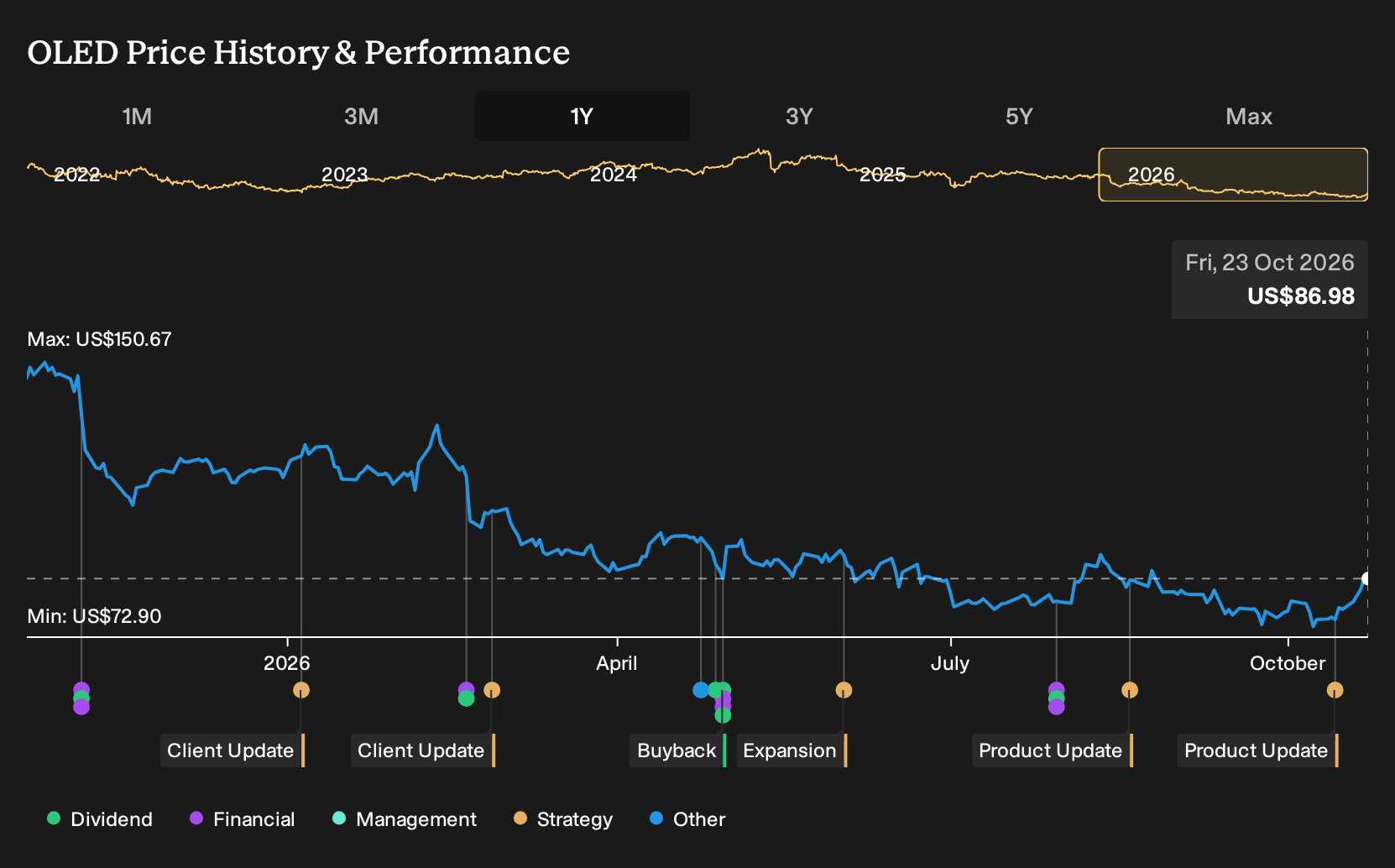
Uncover why Universal Display's fair value indicates a 33% potential upside to its current price, which could narrow quickly.
Exploring Other Perspectives
Some of the lowest analysts focus on execution risk rather than NovaJet style upside. They frame Universal Display around choppy ordering and slower product adoption, even while modeling revenue of about US$811.3 million and earnings near US$295.2 million by 2029. Those estimates, set before this launch, could shift meaningfully as views evolve.
Explore 4 other Universal Display fair value estimates, including one that suggests as much as 56% downside from the current price.
Form Your Own Verdict
Don't just follow the ticker. Dig into the data and build a conviction that's truly your own.
- A great starting point for your Universal Display research is our analysis highlighting 4 key rewards and 1 important warning sign that could impact your investment decision.
- See our latest analysis for Universal Display. The report includes a comprehensive fundamental analysis summarized in a single visual, the Snowflake, making it easy to evaluate Universal Display's overall financial health at a glance.
Looking For More Investment Ideas Beyond Universal Display?
Once you have a handle on Universal Display, it can help to compare it with other businesses that share similar quality markers or risk profiles. The Simply Wall St Screener lets you quickly scan for companies that line up with the kind of balance sheet strength, income potential, or risk level you want in your portfolio.
- If you want potential upside without ignoring fundamentals, start with a 21 high quality undiscovered gems that combines quality metrics with quieter market attention.
- For investors who care most about resilience, filter for companies on a 30 resilient stocks with low risk scores so you can focus on stocks with stronger risk profiles.
- If capital preservation and financial strength are priorities, build a watchlist from a list of solid balance sheet and fundamentals (25 results) and keep your shortlist anchored to sturdier foundations.
Have feedback on this article? Concerned about the content? Get in touch with us directly. Alternatively, email editorial-team@simplywallst.com