


- Neurocrine Biosciences reported that an international expert group published perspectives on hyperphagia in Prader Willi syndrome, describing it as a complex neurobiological condition and citing VYKAT XR as the first FDA approved treatment for this symptom within multidisciplinary, lifelong care.
- The expert framing of hyperphagia as multidimensional and lifelong positions VYKAT XR as a cornerstone of comprehensive PWS management. This framing aligns with Neurocrine Biosciences’ rare disease focus and illustrates how its newer therapies may fit into real world treatment pathways.
- This development raises the question of how expert validation of VYKAT XR’s role in PWS care might influence Neurocrine Biosciences’ broader investment narrative.
Scan how Neurocrine Biosciences fits into the wider rare disease and specialist treatment story by reviewing a curated 21 high quality undiscovered gems that may also be flying under the radar.
Neurocrine Biosciences Investment Narrative Recap
To own Neurocrine Biosciences, you need to believe its multi asset model can offset INGREZZA pricing pressure while newer launches mature. The short term focus stays on INGREZZA volumes versus Medicare headwinds and on how efficiently the company converts its roughly US$3.4b of annual revenue into cash to reinvest in CNS and endocrine programs.
The latest expert publication on hyperphagia helps VYKAT XR from a medical positioning angle but does not change the near term swing factors. The biggest risk remains deeper than expected pricing and rebate pressure on INGREZZA, alongside any further regulatory or safety overhang for VYKAT XR that could temper its diversification role.
The recent VYKAT XR expert perspectives are tightly linked to this story. Framing hyperphagia in Prader Willi syndrome as a lifelong, multidimensional condition and naming VYKAT XR as the first FDA approved treatment supports Neurocrine Biosciences’ rare disease thesis and may help clinicians see the therapy as part of structured, multidisciplinary care rather than a stand alone add on.
For investors tracking catalysts, the key question is execution. Management still has to manage prior physician letters about serious adverse events, monitor real world discontinuation, and respond to any regulatory feedback. If uptake stabilizes with appropriate safety monitoring, VYKAT XR can play a more reliable role alongside INGREZZA and CRENESSITY in funding the late stage psychiatry and muscarinic pipeline.
Neurocrine Biosciences' current analyst narrative points to revenues of US$5.1b and earnings of US$1.3b by 2029, built on forecast top line growth of 14.6% a year and an earnings increase of about US$594.5m from US$705.5m today.
Discover why Neurocrine Biosciences' fair value indicates a 45% potential upside to its current price that could close more quickly than you might expect.
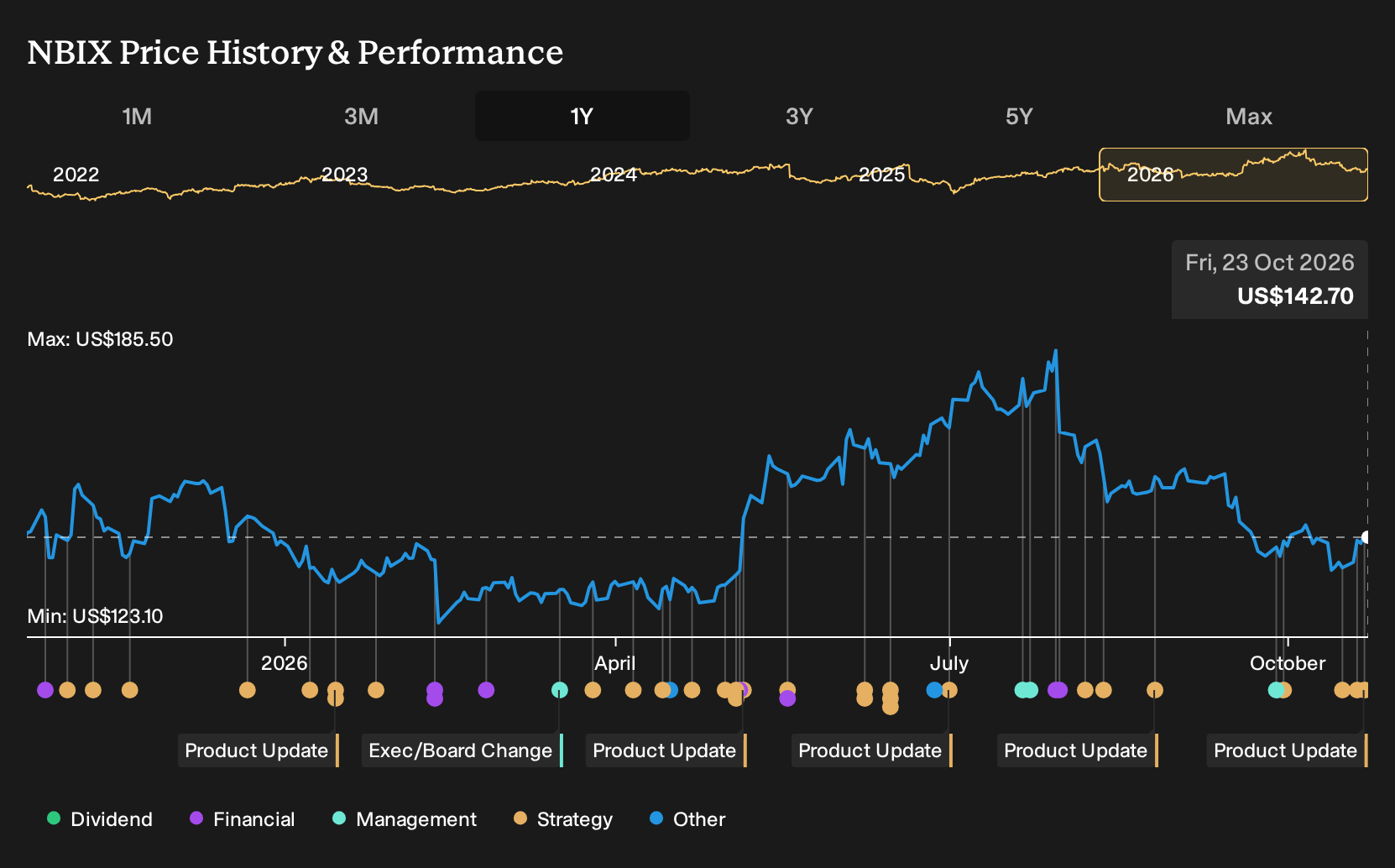
Exploring Other Perspectives
One alternate view focuses on VYKAT XR safety concerns rather than rare disease upside. Before this expert publication, the most cautious analysts were still modeling about US$5.1b of 2029 revenue but only US$1.1b of earnings, versus US$1.3b in the consensus case. That gap shows how sharply opinions on Neurocrine Biosciences can differ and why fresh data like this might reshuffle expectations.
Explore 2 other Neurocrine Biosciences fair value estimates, including one that suggests it could be worth just $206.22!
Form Your Own Verdict
Disagree with existing narratives? Extraordinary investment returns rarely come from following the herd, so trust your own analysis when forming an opinion.
- A great starting point for your Neurocrine Biosciences research is our analysis highlighting 4 key rewards that could impact your investment decision.
- See our latest analysis for Neurocrine Biosciences. The report includes a comprehensive fundamental analysis summarized in a single visual, the Snowflake, making it easy to evaluate Neurocrine Biosciences' overall financial health at a glance.
Looking For More Investment Ideas Beyond Neurocrine Biosciences?
If Neurocrine Biosciences has sharpened your thinking about risk, reward, and pipeline depth, use that same lens across the market by screening for other stocks that fit your preferences on value, income, or balance sheet strength.
- For investors who want potential mispricing with quality fundamentals, start by reviewing a focused 29 high quality undervalued stocks that meet strict cash flow and balance sheet criteria.
- If resilience matters more than excitement, filter for companies in a 30 resilient stocks with low risk scores and see which ones align with your tolerance for volatility.
- For readers who care about income as well as fundamentals, track down a curated set of 5 dividend fortresses that aim to pair stability with higher yields.
Have feedback on this article? Concerned about the content? Get in touch with us directly. Alternatively, email editorial-team@simplywallst.com