


- Johnson & Johnson reported fresh oncology data, including Phase 3 PROTEUS results where apalutamide plus ADT improved event free survival versus surgery alone in high risk localized or locally advanced prostate cancer, alongside progress in head and neck and advanced prostate cancer programs.
- The breadth of late stage and early oncology findings points to Johnson & Johnson leaning further into higher value cancer therapies that can help offset patent headwinds and support the longer term role of its Innovative Medicine division.
- The focus now shifts to how Johnson & Johnson's investment narrative absorbs stronger oncology data, especially the Phase 3 PROTEUS results.
Scan beyond Johnson & Johnson and line up other potential oncology leaders by reviewing the hand picked 34 healthcare AI stocks. These companies could benefit as cancer care shifts toward more targeted, data driven therapies.
Johnson & Johnson Investment Narrative Recap
To own Johnson & Johnson, you need to be comfortable with a diversified healthcare group that is trying to offset loss of exclusivity pressure, litigation noise and softer margins with a heavier tilt toward oncology and immunology. The recent PROTEUS substudy data fits that story by adding more depth to its cancer portfolio, although near term earnings are still shaped by one off items and weaker net income in the latest quarter.
The key near term swing factor remains how quickly higher value medicines can support profit growth as STELARA erosion and MedTech restructuring play through. The biggest risk is that pricing pressure, biosimilar competition and litigation costs keep squeezing margins faster than newer therapies and MedTech products can contribute.
Among the recent announcements, the Phase 3 PROTEUS substudy is most relevant to Johnson & Johnson right now. It evaluated perioperative apalutamide plus androgen deprivation therapy in high risk localized or locally advanced prostate cancer, showing a 62% lower risk of recurrence or death versus surgery alone and a 51% lower risk of metastasis or death at a median 37.8 month follow up.
This kind of data gives the oncology story more substance, although apalutamide plus ADT is not approved for this earlier disease setting and regulators are still assessing overall survival with further follow up. For investors watching catalysts, the route from these results to any new indication and real world uptake sits alongside the existing risks around pricing, STELARA biosimilars and ongoing talc litigation.
Johnson & Johnson's current analyst storyline points to revenues of US$122.9b and earnings of US$29.0b by 2029, assuming revenue rises at 7.4% each year and profit climbs from US$16.1b today. This means earnings would need to increase by US$12.9b over that period.
Uncover why Johnson & Johnson's fair value indicates a 6% potential upside to its current price that could narrow quickly.
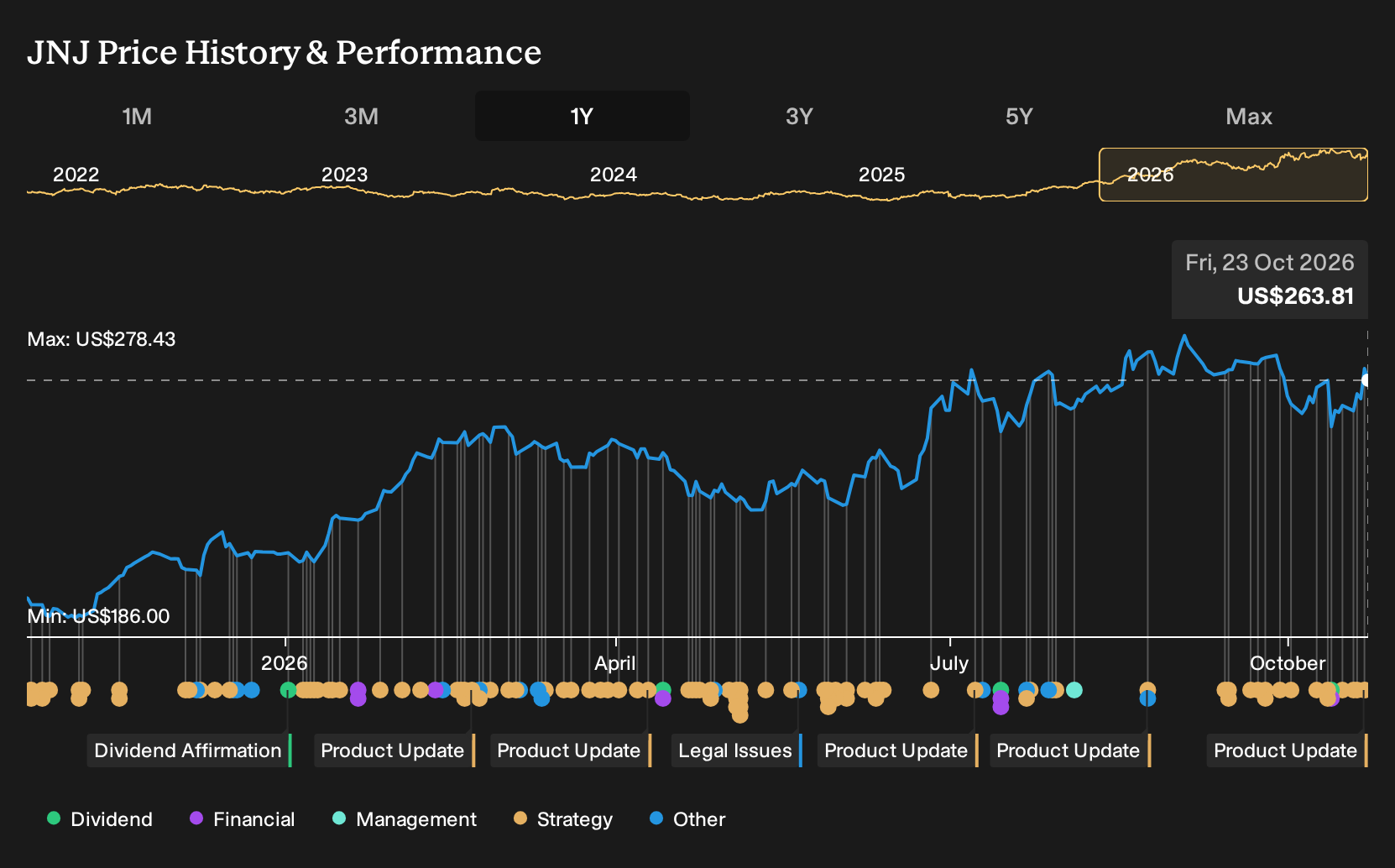
Exploring Other Perspectives
Some of the lowest Johnson & Johnson forecasts lean hard into oncology execution risk. Those analysts were working off revenue of about US$120.1b and earnings of US$28.9b by 2029, with a much lower implied P/E of 22.6x. They reflect a more cautious stance that could shift as PROTEUS data is absorbed.
Explore 9 other Johnson & Johnson fair value estimates, including one that indicates as much as 13% downside from the current price.
Form Your Own Verdict
Don't just follow the ticker. Dig into the data and build a conviction that's truly your own.
- A great starting point for your Johnson & Johnson research is our analysis highlighting 3 key rewards and 3 important warning signs that could impact your investment decision.
- See our latest analysis for Johnson & Johnson. The report includes a comprehensive fundamental analysis summarized in a single visual, the Snowflake, making it easy to evaluate Johnson & Johnson's overall financial health at a glance.
Looking For More Investment Ideas Beyond Johnson & Johnson?
Once you have formed a view on Johnson & Johnson, it can help to widen the lens and compare it with other businesses that fit clear financial themes. The Simply Wall St Screener gives you a structured way to do that, so you are not just reacting to headlines but filtering for the traits that matter to you.
- If you want companies with stronger balance sheets and fewer financial red flags, start by reviewing the list of solid balance sheet and fundamentals (24 results).
- For investors hunting for mispriced opportunities with quality fundamentals, take a look at the 29 high quality undervalued stocks.
- If you care most about income resilience rather than headline growth, focus on the 5 dividend fortresses and stress test those payouts against your risk tolerance.
Have feedback on this article? Concerned about the content? Get in touch with us directly. Alternatively, email editorial-team@simplywallst.com