


The Zhitong Finance App learned that on October 22, the main forum of iFLYTEK Global 1024 Developer Festival was held at the Beijing National Convention Center. At the conference, iFLY Spark Healthcare's big model V3.7 was officially released. It achieved a breakthrough in multi-modal technology that achieved deep integration of medical semantics, images, and speech based on the national production computing power base, marking that the AI capabilities of iFLY Healthcare (02506) have officially crossed the clinical practical threshold and are fully and deeply integrated into the entire medical chain. At the same time, iFLYX upgraded its ability to comprehensively interpret multiple medical reports, health risk insight and comprehensive health management plans, traditional Chinese medicine tongue health identification and wellness plans, etc., to provide better full-cycle health care services for individuals and industry customers.

At the AI Patient Management Innovation Forum held at the same time, iFLY Healthcare released the AI patient management platform 3.0, and the top three hospitals and authoritative scientific research institutions in the United Nations launched a special AI patient management expert consensus plan to lead the standardization and intelligent upgrading of the AI patient management industry in three dimensions, from technological breakthroughs, product iteration, and standard construction.
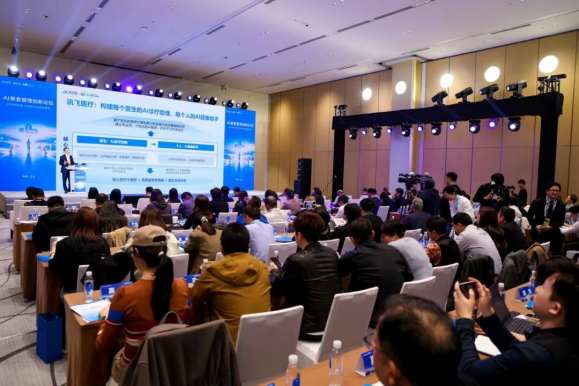
Starfire Healthcare Big Model V3.7 Upgraded to Multi-Modal Empower All Scenes of Healthcare
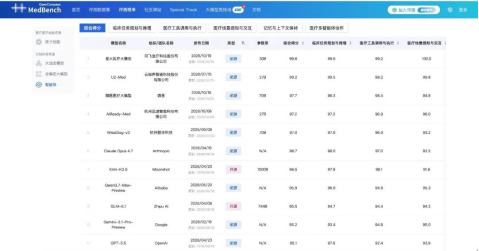
As the core technical achievement in the medical field at this developer festival, Spark Medical Model V3.7 achieved all-round capability advancement, leading the way in core competencies such as medical knowledge questioning, clinical language understanding, diagnosis and treatment plan recommendations, medical document generation, multi-modal interaction, and multiple rounds of evidence-based reasoning. In the MedBench 5.0 smart device evaluation recently released by the Shanghai Artificial Intelligence Laboratory, the model topped the industry list with a comprehensive score of 99.6, and its core technical strength obtained authoritative certification.
Relying on newly upgraded multi-modal technical capabilities, iFLYTEK has simultaneously deeply empowered the dual scenarios of doctors' clinical diagnosis and treatment and residents' full-cycle health management. In the field of AI diagnosis and treatment assistants, the reasonable rate of end-to-end intelligent medical records generation of models has been raised to 85%, completing the experiential transition from “usable” to “easy to use”; medical imaging assisted diagnosis capabilities have increased by more than 15% compared to industry-leading models, and automated report generation and in-depth quality control capabilities have reached industry-leading levels, effectively helping hospitals improve the quality and efficiency of imaging diagnosis and treatment. In the field of AI health assistants, iFLYX has completed comprehensive upgrades such as intelligent interpretation of medical reports, dynamic health file management, personalized risk warning, traditional Chinese medicine physical identification, and customized health plan generation, etc., to promote the service from a single consultation to continuous and personalized full-cycle health management iteration.
The technical foundation of continuous iteration supports large-scale implementation of products in multiple scenarios, and accumulates massive real-world medical service data and mature evidence-based capabilities. Currently, intelligent medical assistants have completed more than 1.2 billion auxiliary diagnoses and 490 million auxiliary medical records; the imaging cloud platform provides an average of 60 million services per year and stores 160 million images of image data; the total number of iFLYX AI health consulting services exceeds 220 million times, the number of downloads has exceeded 44 million, and user satisfaction has reached 98%, consolidating the technical and data foundation for further patient management.
The top three benchmarks lead practical exploration to enable innovation to serve patients in healthcare
On top of the continuous iterative technical foundation and large-scale implementation capabilities, iFLYZ Healthcare has taken the lead in exploring and implementing patient management with a number of top three hospitals. Adhering to the original intention of the industry to solve post-diagnosis management pain points, make up for shortcomings in medical service continuity, and benefit more patients, this AI Patient Management Innovation Forum brings together the forces of industry, academia, research and development to explore development paths.
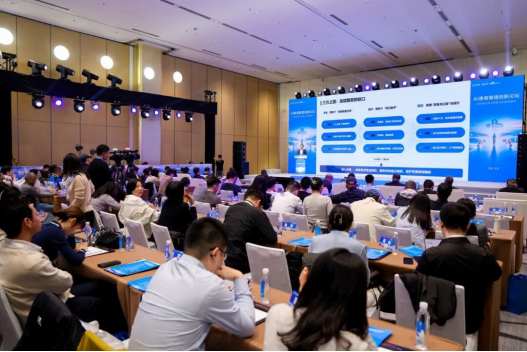
Leaders and experts from the Medical Administration Center of the National Health Commission, the China Institute of Information and Communications Technology, the China Cardiovascular Health Alliance, the Sino-Japanese Friendship Hospital, the People's Liberation Army General Hospital, the National Orthopedic and Sports Rehabilitation Clinical Research Center, Shandong University Qilu Hospital, the First Affiliated Hospital of the University of Science and Technology of China (Anhui Provincial Hospital), Central South University Xiangya Hospital, Capital Medical University Xuanwu Hospital, Peking University First Hospital, Beijing Anding Hospital, and the Chinese Medical Association Journal and People's Health Electronic Audiovisual Press attended. The forum was hosted by Ge Lei, vice president of iFLYX Healthcare and general manager of the patient management product line.
At the forum, representatives from the three hospitals each brought unique practical results, introduced the practical value of AI patient management using real clinical data, and also accumulated practical experience that can be replicated and promoted for the entire industry.
Tian Yanghua, director of the First Affiliated Hospital of the University of Science and Technology of China (Anhui Provincial Hospital), said that the “smart medical companion” model was jointly built with iFLYX Healthcare to open up a full-chain scenario of intelligent pre-diagnosis guidance, full-process follow-up during diagnosis, and post-diagnosis patient management. Using the joint model of “medical care focusing on core diagnosis and treatment+professional platform operation support”, it provides standardized basic services to patients throughout the hospital and provides refined management for key specialized patients. Currently, more than 30 clinics have been launched The department covered more than 100 types of diseases, more than 180,000 online consultation services, and 97% patient satisfaction. Specialized programs such as cerebrovascular intervention, integration of motherhood and childbirth, and weight loss management have achieved remarkable results.
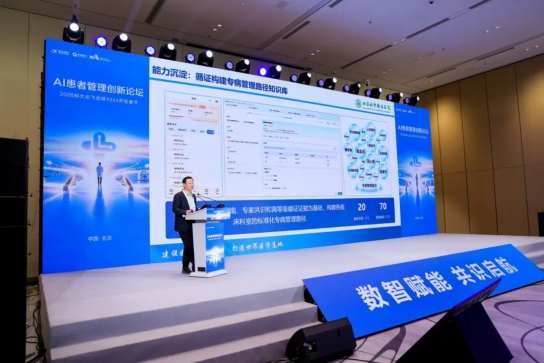
Han Hui, deputy director of the Qilu Hospital of Shandong University, said that joint iFLYTEC released the “Qilu Starfire” full-course management model, which relies on the “AI initial diagnosis+health manager intervention+doctor check” human-computer collaboration model. Through hierarchical classification management, it has covered 20 clinical departments and 70 diseases, managed more than 270,000 patients free of charge, carried out 27,000 specialized follow-up visits, and reduced 90% of the medical follow-up workload; patient satisfaction exceeded 98%, planned follow-up rate reached 70%, and medication compliance reached 9 percent 7%
Meanwhile, Yuan Ye, an expert from Xiangya Hospital of Central South University, also shared her best practices in case management throughout the course of the disease.
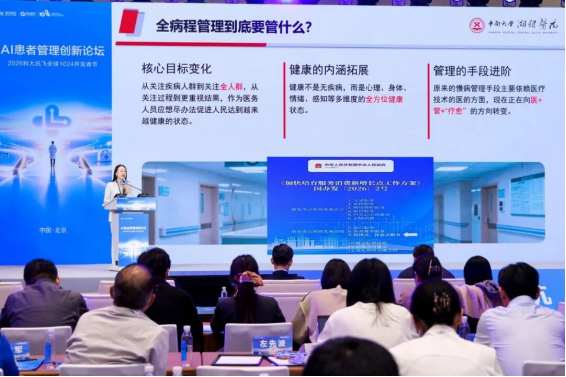
AI Patient Management 3.0 update released, coalescing forces to build new industry standards
On the basis of focusing on sharing benchmarking practices and forging industry consensus, the forum further promoted the implementation of achievements and industry co-construction: iFLYTEC commercialized and standardized pioneering exploration experiences in a number of leading hospitals and officially launched the AI patient management platform 3.0; at the same time, it also initiated expert consensus and standard system co-construction work with all parties in the industry, so that the experience can benefit a wider range of medical institutions and patient groups.
The AI patient management platform 3.0 has completed a systematic upgrade with “new scenarios, new AI, and new experiences”. At the scene level, the product has expanded from single-department specialist management to hierarchical services throughout the hospital, and has established more than 160 standardized specialty management paths, covering more than 30 mainstream clinical departments; at the AI capability level, relying on more accurate patient images, intelligent follow-up agents and dynamic evidence-based reasoning capabilities, it can automatically adjust management plans, intelligently identify risks, and trigger hierarchical intervention according to the patient's recovery progress, combined with a multi-faceted co-management model for doctors, nurses, nutritionists, and rehabilitators to achieve the upgrade of the entire patient care process from fixed mechanical follow-up to individualized, continuous, and accurate whole-patient care; At the user experience level, achieve the patient side Service entrances are centralized, tasks are clear, and guidance is figurative. Health-care tasks are consolidated, collaborative and efficient, and the process is traceable, greatly reducing the burden of management work outside the hospital.
In response to the current state of the AI patient management industry where there are no uniform standards, no standard paths, and uneven services, this forum officially launched a special AI patient management expert consensus program. iFLYTEK will work with national benchmark hospitals, authoritative academic institutions and industry experts to systematically sort out the service processes, technical specifications, quality control standards and application boundaries of AI patient management based on massive real-world clinical service cases, fill gaps in industry standards, and establish a new scientific, standardized, and implementable AI patient management paradigm.

Qilu Hospital of Shandong University, the Journal of the Chinese Medical Association, the First Affiliated Hospital of the Chinese University of Science and Technology (Anhui Provincial Hospital), the China Cardiovascular Health Alliance, and iFLYTEK Medical participated in the launch
Tao Xiaodong, president of iFLY Healthcare, said that building a healthy China requires continuous strengthening of national health management, disease prevention and control, and continuous medical service capabilities. Relying on autonomous and controllable domestic AI computing power and medical models, iFLY Healthcare continues to promote the extension of capabilities from in-hospital digital intelligent diagnosis and treatment to out-of-hospital patient management, insisting on starting from actual diagnosis and treatment needs, empowering medical care with technology and serving patients with products. The core goal is to make up for shortcomings in medical service continuity and promote the true transformation of medical services from “disease-centered” to “patient-centered”.
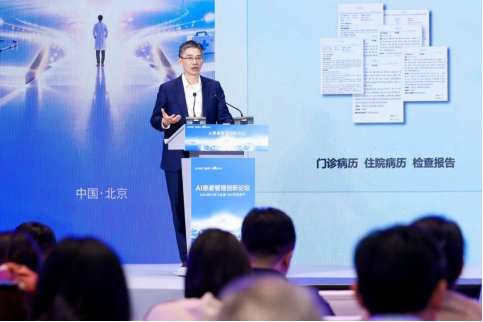
At present, the AI patient management platform has been implemented in more than 300 hospitals across the country, and has completed the refined management of chronic diseases and high-risk groups with more than 500,000 patients. The platform relies on a two-wheel drive of authoritative medical knowledge base and real world data to establish an evidence-based foundation with an authoritative medical knowledge base of nearly 1 billion times, superimposing real service data from both sides of the doctor and patient over 2.2 million times per day to form a positive cycle of technology iteration — product implementation — clinical verification — perfect standards.
The hospital's mature specialty management path is reaching thousands of households through iFLYX. These pathways, which have been proven to have large-scale clinical results, are transformed into daily health plans that can be implemented and tracked on everyone's mobile phone. They include generic drug reminders, review and follow-up, diet and exercise guidance, and are dynamically adjusted as indicators change. The deeper the cooperation of hospitals, the more professional health care services for individuals — high-quality medical capabilities break through hospital walls and extend to residents' daily lives, so that more people can receive intervention and management before the disease occurs.
From leading the industry with large-scale model technology, to large-scale implementation of full-scenario products, to leading the joint construction of industry standards, iFLYTEK has always used AI technology to solve the pain points of the patient management industry and provide a practical response to strengthening national health management capabilities under the Healthy China Strategy. In the future, iFLY Healthcare will continue to use the Spark Healthcare model as the technical foundation to deepen the construction of a full-chain smart medical service system with in-hospital diagnosis and treatment, out-of-hospital follow-up, grass-roots linkage, and personal active management. Through technological innovation, product upgrades and standard co-construction, it will promote the upgrading of healthcare services from standardized inclusiveness to personalized and accurate accuracy, help the sink of high-quality medical resources, and benefit a wider range of people.