


According to data from the Zhitong Finance App, as of October 26, there were 120 IPOs listed in Hong Kong during the year, with a cumulative increase of over 100%, accounting for 8.33%; 5 companies had a cumulative increase of more than 300%, accounting for 4.17%.
White Pigeon Online (02672), known as “the first AI stock in scenario insurance,” is one of the five companies that have increased by more than 300%. On October 24, the online sales volume of White Pigeon skyrocketed, reaching an intraday high of HK$101.10 per share, an increase of nearly 32%. Although the increase fell back to 27.81% at the close, the closing price of HK$97.9 per share was more than 527.56% higher than the issue price of HK$15.60.
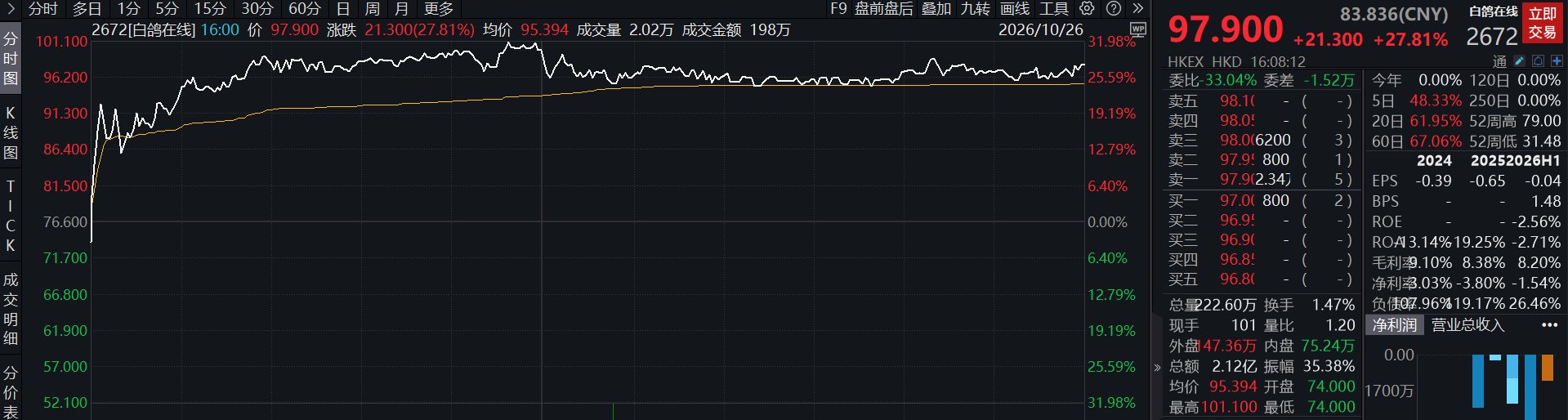
Earlier, on October 21, White Pigeon Online just announced the company's MaaS business progress announcement. According to the data, in the first three quarters of 2026, Baige Online's MaaS service revenue was 62.1 million yuan, an increase of about 730.4% year on year; MaaS revenue in the third quarter was about 25.6 million yuan, an increase of about 29.33% over the previous month.
The continued rise in MaaS revenue further validates the commercial viability of the company's AI risk control decision-making big model technology export strategy. This is probably also the core reason why Baige's stock price performed well after listing online. However, investors are concerned about what is the future investment value of White Pigeon Online after the current stock price has risen more than 5 times compared to the issue price?
Stock price twists and turns highlight internal resilience, with a single-day surge of nearly 30% to a record high
Although White Pigeon Online's stock price increased by more than 5 times, it can be called a “standout group” among the 120 IPOs that have already been listed in 2026, but judging from the stock price trend, it is not easy to achieve this result. The “twists and turns” are shocking, but they also reflect the internal resilience of the company's stock price.
Looking back at White Pigeon's stock price performance in the four months since its online IPO, it can be clearly divided into four different stages. The first one was “amazing” on the first day of listing. On June 29, White Pigeon Online was officially listed and traded on the Hong Kong stock market. At the close, the price was HK$73 per share, an increase of 367.95%, ranking second in the list of 120 IPOs on the first day.
There are two main reasons behind the surge on the first day of listing. One is a sexy AI narrative. As the number one market share of third-party scenario internet insurance intermediaries, White Pigeon had the title of “Scenario Insurance AI First Stock” during its online IPO. In a window where AI application narratives are heating up, this scarce AI+ scenario insurance label naturally attracted market attention.
Second, the characteristics of thin markets are conducive to rising stock prices. White Pigeon Online issued a total of 333.444 million H shares during the IPO, accounting for about 10.40% of the company's total share capital after listing. Of these, 3,334,600 shares were publicly sold, accounting for about 10%, and 30.98 million shares were sold internationally, accounting for about 90%. In the international placement, White Pigeon Online introduced 2 cornerstone investors to subscribe for 1,282 million H shares, so the actual number of shares that can be traded after listing is 32.624 million shares. Based on the issue price of HK$15.60, the market value of these shares is only HK$500 million.
Combining the sexy AI narrative with the HK$500 million thin market, only a small amount of capital is needed to drive the stock price to soar, and after surging 367.95% on the first day of listing, the actual market value that White Pigeon Online can circulate in the market is only about HK$2,341 billion.
After the carnival on the first day, the stock price of White Pigeon Online entered the second phase: high-ranking and wide-ranging sideways fluctuations. After a sharp drop of 26.67% on the third trading day of listing, the stock price began to fluctuate and rise, reaching a maximum of HK$79, then began to fluctuate and fall again. This sharp fluctuation of “sharp drop — pull up — then fall back” showed typical high-ranking box characteristics. Interpreted from the language on the market, this is just a process of cleaning up floating funds and depositing chips.
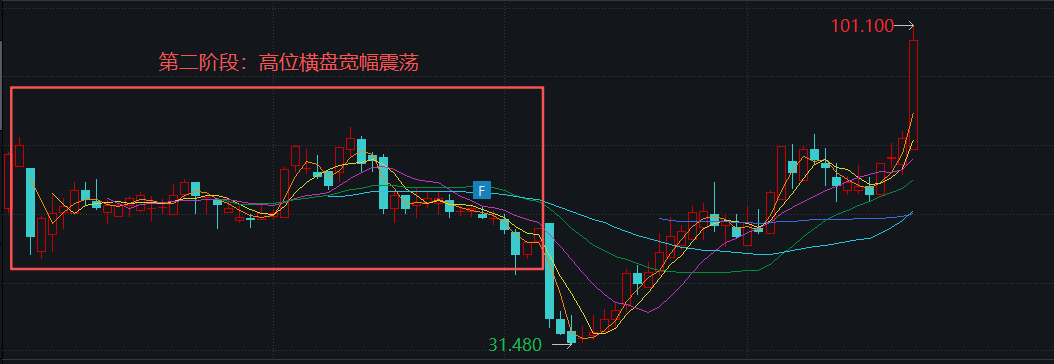
Since it was officially included in the Hong Kong Stock Connect on September 7, White Pigeon's online stock price has immediately entered the third phase of three days: the “favorable redemption period”. Early profit chips were concentrated and escaped through the critical time window of inclusion in the Hong Kong Stock Connect. The volume plummeted by 34.97% on September 7, and the turnover surpassed the HK$200 million mark; the subsequent two trading days showed an inertial decline of 8.43% and 5.96%, respectively, with a cumulative drop of 45.77% over the three days.
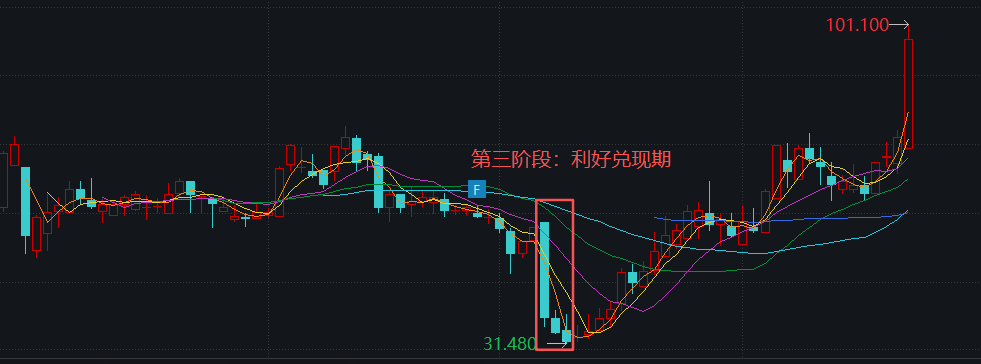
Interestingly, on the third trading day of the third phase (September 9), the share price decline narrowed markedly to 5.96%, but the turnover soared from HK$71.46 million on the previous trading day to HK$162 million. This divergent trend of “narrowing volume decline” clearly signals acceptance from the bottom — at a time when the panic sell-off is nearing its end, funds are already being attracted heavily at a low level, and chip concentration has further increased.
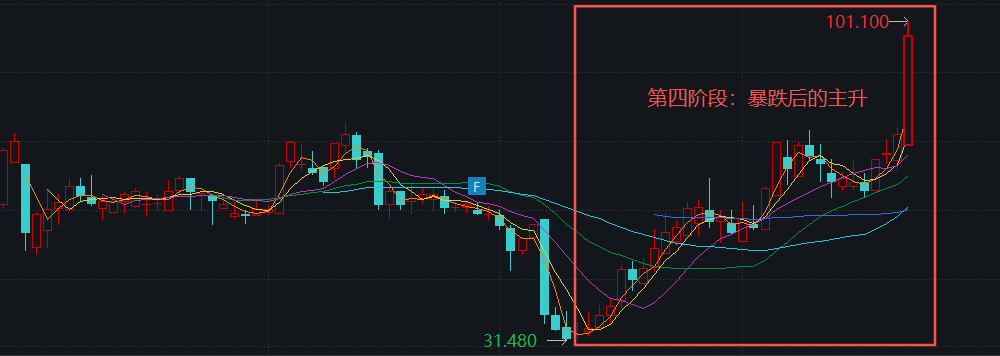
However, the three-day sharp decline actually laid the groundwork for the subsequent market. Since the red market stopped falling on September 10, the stock price operation has entered the fourth phase: the main upward wave after the sharp fall. Over the next 31 trading days, White Pigeon Online first rose steadily along the 5-day EMA, then fluctuated and surged to HK$101.10 per share on October 24, hitting a record high with the highest single-day increase of 31.98% in the market. Although it declined at the end of the session, it closed at HK$97.9 per share, but it has increased by more than 527.56% from the issue price. However, after the chips have been cleaned, they go into battle lightly, which is the internal support for this stage's aggressive trend.
The revenue side continues to grow rapidly, and the MaaS business has become the key to higher valuations
When White Pigeon Online hit a record high with a strong rise of nearly 30% in a single day, this meant that the company's stock price chose to accelerate its peak and break through the game at the previous high position, but whether it can continue to rise in the future is already a question that shareholders must thoroughly think about. The company's fundamentals, on the other hand, are the most important factors worth analyzing.
As a leading domestic scenario-based insurance technology infrastructure service provider and leading third-party scenario internet insurance intermediary, Baige Online designs and provides accurate, customized, fragmented, and short-term scenario insurance products based on specific usage scenarios, activities and potential risks in specific environments, and relies on self-developed MaaS (Model as a Service) technology system, AI risk control engine, and insurance industry hybrid expert model (MoE) to build a business layout covering nine major ecosystems, including travel, health, and public services, forming a business layout covering nine major ecosystems, including travel, health, and public services. Full process service capability.
With the above full-process service capabilities, White Pigeon Online has formed three major business lines, namely insurance transaction services, accurate marketing and digital solutions, and TPA service fees (service fees paid by insurance companies to third party managers). Among them, the top two businesses are the core business of White Pigeon Online. In the first half of 2026, these two businesses accounted for 58% and 41.8% of revenue, respectively.
Judging from performance, White Pigeon Online has shown continuous growth momentum in recent years. According to the data, from 2023 to 2025, White Pigeon Online's revenue was about 660 million yuan, 914 million yuan, and 1,227 million yuan respectively, with a compound annual growth rate of 36.35%. Adjusted net profit for the period was -13.46 million, -7 million, and -9.32 million, respectively. The overall fluctuation was narrowing.
It is worth noting that the logic driving White Pigeon's online revenue side to continue to grow from 2023 to 2025 is not a linear continuation, but rather a “growth relay” has been completed. Revenue growth in 2024 is mainly based on basic market volume. Due to the accelerated expansion of scenario networks and the explosion of high-frequency fragmented API insurance policies, insurance transaction service revenue increased from 536 million to 825 million, a sharp increase of 53.9% over the previous year, and became the main engine for overall revenue growth.
However, in 2025, the second growth curve continued to grow. Due to the contraction in traffic in core travel scenarios and the diversification of partner suppliers, revenue from insurance transaction services fell slightly to 821 million, and growth stopped. However, the precision marketing and digital solutions business exploded strongly, driven by the expansion of the scope of services to non-insurance companies, and the simultaneous expansion of customers and projects. Revenue during the period surged 362.4% year on year to 398 million yuan, and its share of total revenue jumped from 9.4% to 32.5%. It quickly became a new growth pole, driving overall revenue growth.
Entering the first half of 2026, the core driving force behind the continued growth of White Pigeon's online revenue has evolved from a single basic market volume to “two-wheel drive”. Total revenue during the period reached 789 million yuan, up 39.2% year on year. Among them, revenue from insurance transaction services increased 8.8% year on year to about 458 million, which stabilized the basic market; while revenue from precision marketing and digital solutions was 329 million yuan, a sharp increase of 130.4% year on year, contributing more than 80% of the increase, which is the absolute main force driving overall growth.
But the growth logic of these two major business lines is different. The insurance transaction side did not rely on the expansion of insurance policy volume, but achieved steady growth through scenario structure switching. Among them, revenue from the inclusive finance ecosystem surged 44.5% year on year, and the public service ecosystem increased by 33.8%, effectively hedging the impact of the decline in engineering scenarios, and high-value-added scenarios are replacing low-quality traffic.
The precision marketing side, on the other hand, has benefited from the rapid expansion in the number of projects and the launch of new projects, combined with the improvement of consumer portrayal capabilities and cross-marketing networks, which have significantly improved marketing transformation efficiency. At the same time, insurance companies' budget preference for digital empowerment, and the iteration of White Pigeon e-Insurance 3.0 on payment channels and product APIs have further accelerated the launch efficiency of scenario insurance, and jointly promoted the consolidation of the business as a core growth pole.
The underlying variable that runs through these two major business lines is the accelerated commercialization of MaaS technology. In the first three quarters of 2026, the MaaS business achieved revenue of about 62.1 million yuan, a year-on-year increase of 730.4%. The revenue for a single quarter increased from 19.8 million yuan in the second quarter to 25.6 million yuan in the third quarter, an increase of 29.3% over the previous quarter.
More importantly, MaaS does not exist in isolation; it is not only a technical foundation for “high-frequency fragmented insurance policies” to process 100,000 orders per second on the insurance transaction side, but also a source of efficiency for “consumer profile+cross-marketing” on the precision marketing side. When MaaS began exporting to the outside world with independent product lines and charging according to call volume, its business logic changed from a “cost center” to a “profit center”. This is also the core reason why the market is willing to value White Pigeon Online far higher than traditional insurance intermediaries.
Based on the trend where the scenario insurance market is still expanding, it will be a probable event that White Pigeon Online will achieve steady growth in the basic market of insurance transactions, and the accelerated penetration of accurate marketing services among existing customer groups is expected to contribute to the main increase in performance. These are all key supports for the continued growth of White Pigeon Online's revenue side in the future.
However, with the strong stock price of White Pigeon Online reaching a record high, the company's market value has exceeded HK$31 billion, and the market's valuation requirements are no longer limited to the steady growth of traditional businesses. To support this volume, the MaaS business must show stronger growth momentum, further completely transform AI from “sexy narratives” into valid numbers in reports, and rapidly increase the share of MaaS business, thus proving to the market that it is a high-margin, reusable business with independent monetization capabilities. Only in this way can White Pigeon Online, which still has the characteristics of a thin plate, become more stable after reaching a record high, and the market is waiting to see.