


- Fincantieri reported that its BOOST² Shipyard of the Future program, launched three years ago, is moving into large scale rollout, backed by almost $100 million of planned investment between 2026 and 2030 to integrate robotics, Physical AI, digital twins, and smart supply chain tools across 13 yards.
- The group is tying automation and Physical AI directly to day to day production in sites such as Castellammare di Stabia and the Wisconsin shipyards, which puts real world execution costs, worker adoption, and supply chain integration at the center of its digital shipbuilding push.
- We will now look at how Fincantieri's investment narrative is affected by this BOOST² driven push into advanced robotics and Physical AI.
Fincantieri Investment Narrative Recap
To own Fincantieri, an investor needs to buy into a shipbuilder that leans heavily on cruise and defense demand, while trying to squeeze more efficiency out of complex, long cycle contracts. The BOOST² rollout speaks directly to that. If the tools actually help execution on big projects, the most immediate upside sits in fewer cost surprises and steadier margins rather than headline grabbing growth.
The biggest near term risk still looks operational. High leverage and heavy dependence on large contracts leave little room for missteps if new robotics or Physical AI deployments disrupt yards or supply chains. If integration stays smooth and on time, the BOOST² news may modestly support the existing efficiency and cash generation narrative, but it does not rewrite it.
The BOOST² program itself is the key announcement here. Management is talking about almost $100 million of spending between 2026 and 2030, tied directly to shipyard automation, Physical AI, and digital twins across 13 yards. That is squarely aligned with the long running catalyst around improving productivity and protecting margins on complex naval and cruise projects.
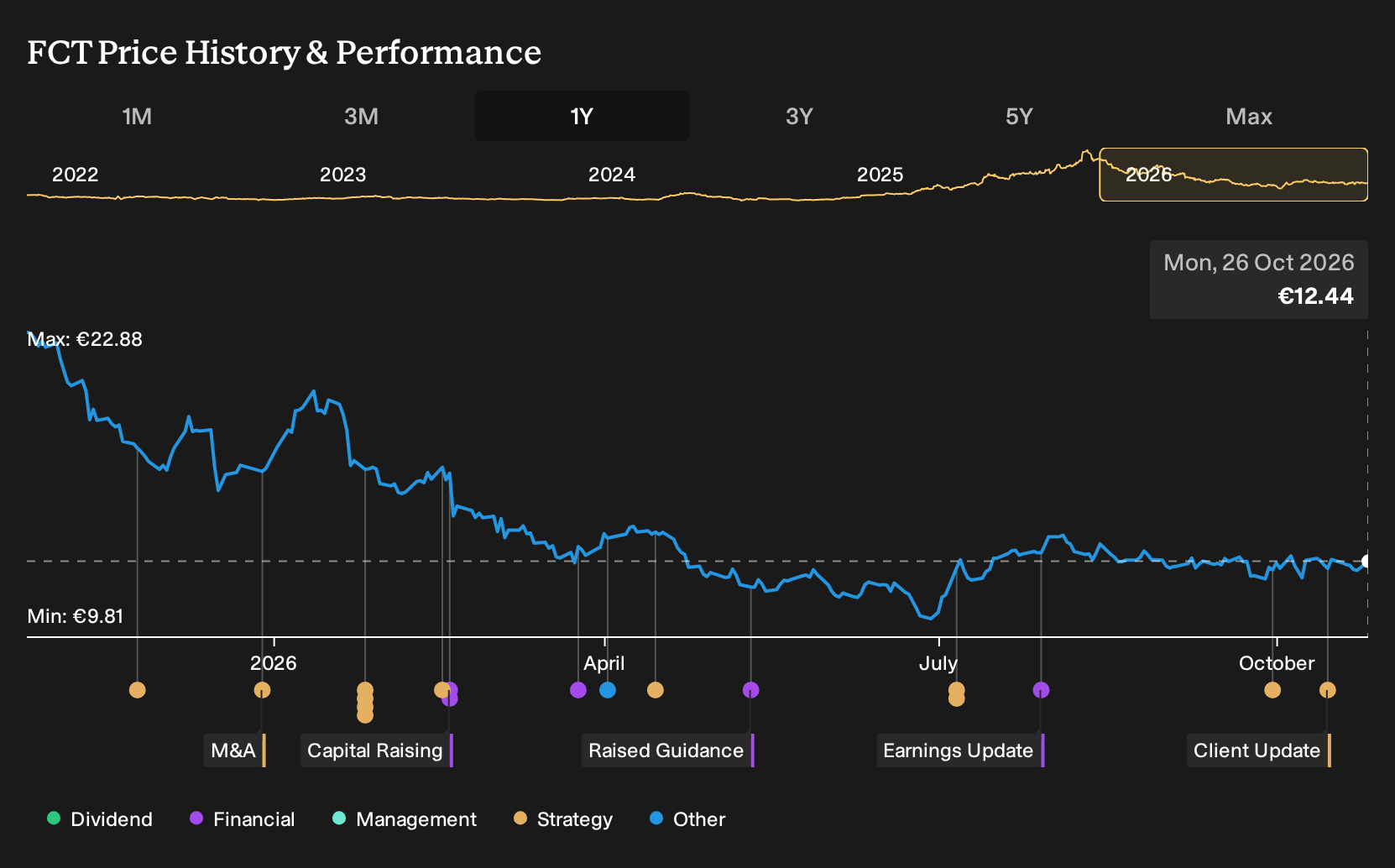
This push also sits against a balance sheet that still carries meaningful debt and a share price that has lagged over the past year despite strong recent earnings trends. Execution on BOOST² could influence whether efficiency initiatives offset that financial risk, especially if large contracts in cruise or defense run into delays or cost pressure while the automation program is being rolled out.
Fincantieri's current analyst narrative points to forecast revenue of €11.9b and earnings of €422.5 million by 2029, built on assumed yearly revenue growth of 10.5%. That earnings target compares with earnings today of €190.8 million, which implies an earnings increase of about €231.7 million over the period.
Uncover how Fincantieri's fair value indicates a 43% potential upside to its current price, which could narrow quickly if BOOST² execution gains wider attention.
Exploring Other Perspectives
Some of the lowest Fincantieri forecasts frame BOOST² very differently. You might see the automation push as a fresh efficiency catalyst, while the more cautious analysts worry that a packed €61.1b backlog and capacity saturation limit flexibility. Their pre news view only pointed to about €11.9b of revenue and roughly €341.1 million of earnings by 2029, so their story is much more restrained. Use that gap in expectations as a reminder to compare several narratives and then decide which set of assumptions feels closer to how you think this new program could reshape the business.
Explore 4 other Fincantieri fair value estimates, including one that suggests it could be worth just €16.45!
The Verdict Is Yours
Disagree with existing narratives? Extraordinary investment returns rarely come from following the herd, so go with your instincts.
- A great starting point for your Fincantieri research is our analysis highlighting 4 key rewards and 1 important warning sign that could impact your investment decision.
- See our latest analysis for Fincantieri. The report includes a comprehensive fundamental analysis summarized in a single visual, the Snowflake, making it easy to evaluate Fincantieri's overall financial health at a glance.
Looking For More Ideas Beyond Fincantieri?
If the BOOST² story has you thinking about where else automation, balance sheet strength, or cash returns could matter for your portfolio, it can help to widen the lens beyond Fincantieri. The Simply Wall St Screener can surface other companies that fit very different risk and income profiles in just a few minutes.
- If capital preservation comes first for you, start by checking companies in our 223 resilient stocks with low risk scores that score well on resilience and stability.
- If you care most about quality at a reasonable entry point, scan for opportunities in the 195 high quality undervalued stocks and see which stocks currently look mispriced on fundamentals.
- If balance sheet strength is your anchor, filter for companies in the list of solid balance sheet and fundamentals (207 results) and focus on businesses with robust financial footing.
Have feedback on this article? Concerned about the content? Get in touch with us directly. Alternatively, email editorial-team@simplywallst.com