


Liability is creeping up the freight chain, and suddenly the quiet legal fine print around trucks, brokers, and apps is front-page risk. That shift creates pressure for asset-light logistics platforms and a different kind of opening for investors watching asset-based trucking carriers. This article unpacks that story and walks through 3 stocks exposed to the same legal shock, helping you think through where risk might be repriced next.
The three carriers highlighted in this piece are only a starting sample, since the full screen surfaced 17 more trucking and logistics companies with equally compelling liability and quality narratives that are not covered here. If you want to identify and analyze the wider field of U.S. asset-based operators under the same legal and financial lens, head straight to the U.S. Asset-Based Trucking & Logistics Carriers screener.
Old Dominion Freight Line (ODFL)
Overview: Old Dominion Freight Line runs its own less than truckload fleet across the U.S., moving freight between terminals for shippers that want reliable, asset-based carrier capacity.
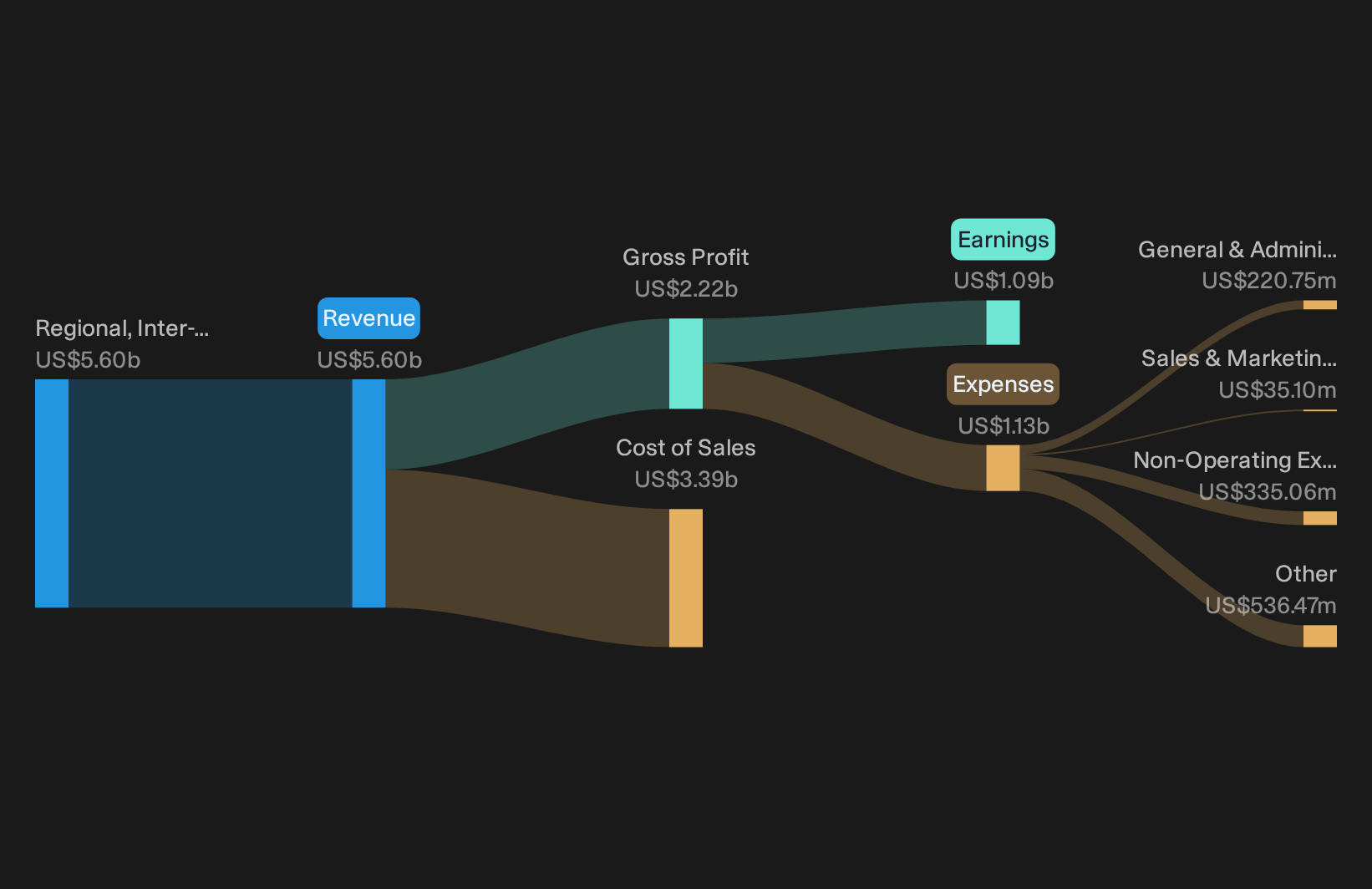
Operations: Old Dominion Freight Line generates about US$5.6b in revenue from regional, inter-regional, and national less than truckload freight services.
Market Cap: US$37.9b
Old Dominion Freight Line is the pure asset-based play in this screen, since it owns the trucks, runs the terminals, and carries the legal and operational risk on its own balance sheet rather than pushing it out to brokers.
"Old Dominion Freight Line is focused on maximizing operating efficiencies and reducing discretionary spending to protect their operating ratio, and the company now reports a 450 basis point improvement to a 70.1% operating ratio in Q2 2026 with direct operating costs 200 to 250 basis points better than a prior record quarter. This could support further gains in net margins as more revenue flows through to earnings."
From here, one quiet shift in customer buying habits is important, because it could tilt that efficiency story for margins and growth.
That shift in freight mix is exactly what the full narrative for Old Dominion Freight Line unpacks, showing where efficiency gains might be masking liability, pricing power, and cycle risk.
Saia (SAIA)
Overview: Saia runs an asset-based less than truckload network across North America, using its own tractors, trailers, and terminals to move mid sized freight.
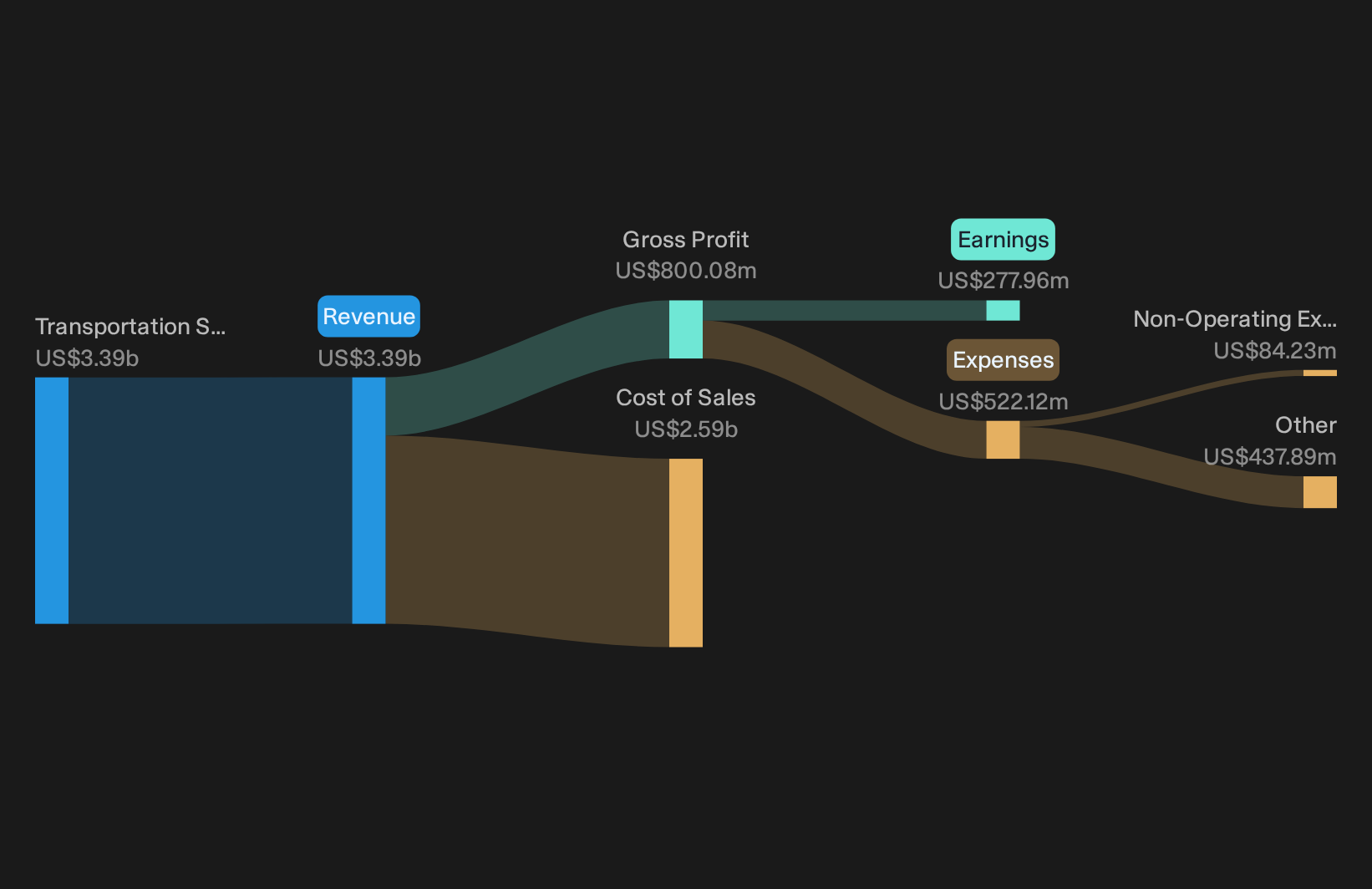
Operations: Saia generates about US$3.4b in revenue from Transportation Services, with all reported revenue coming from customers in the United States.
Market Cap: US$8.8b
Saia matters for this trucking and logistics screen because it owns the fleet and terminals, carries the liability, and now has built enough network scale that small shifts in freight density or safety costs can materially affect how investors think about asset-based carriers.
"The ongoing expansion and maturation of Saia's national terminal network, combined with densification of the 218 plus facilities added or upgraded since 2022, is still early in its ramp and is beginning to show operating ratio improvement at newer sites. This could support higher shipment volumes, revenue growth and better net margins as more terminals move from the low 90s operating ratio toward mature system levels."
What really matters now is how one unseen pressure on this heavier network, and the liability that comes with it, ultimately feeds through into margins.
That pressure point is exactly where the full narrative for Saia shows how liability, pricing and network density could be quietly reshaping Saia's risk and return profile.
Marten Transport (MRTN)
Overview: Marten Transport runs an asset-based, temperature-controlled truckload fleet across the U.S., Mexico, and Canada, hauling food and consumer goods.
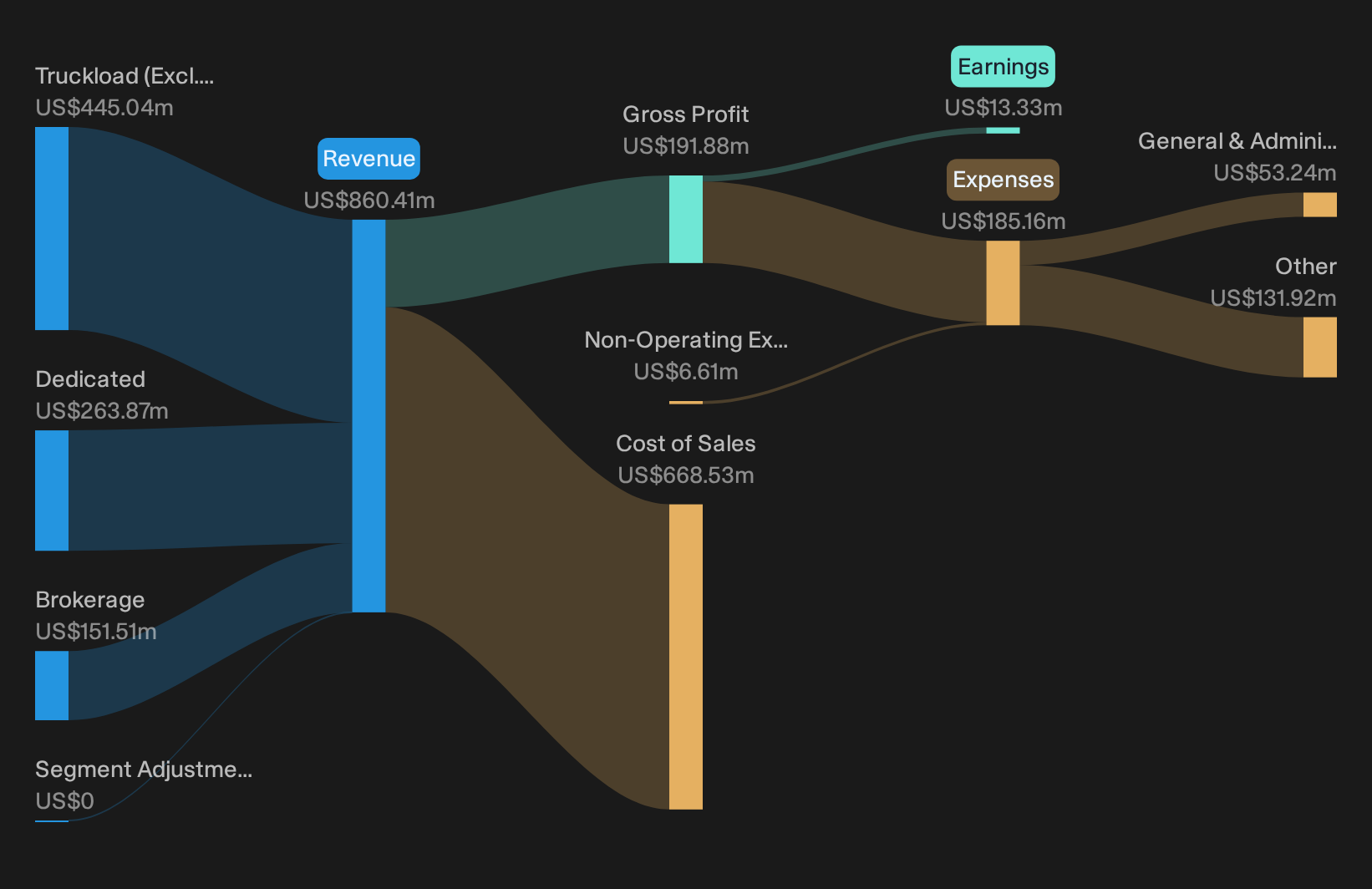
Operations: Marten Transport generates about US$445 million from Truckload, US$264 million from Dedicated, and US$152 million from Brokerage services.
Market Cap: US$962 million
Marten Transport fits this asset-based trucking screener because it owns and operates a large temperature-controlled fleet, directly carrying safety, insurance, and compliance risk rather than outsourcing it. The stock trades on rich expectations and relatively thin margins, so investors watching for robust carriers in a higher-liability world may focus on what happens if a single key assumption breaks in that earnings story.
If that single assumption is starting to wobble, the 1 key reward and 2 important warning signs (1 is major!) shows where Marten Transport's earnings story could diverge from expectations.
Seeking Alternatives Before The Crowd?
Fresh opportunities are always moving. Some are building quiet breakout momentum, others are dropping into better value territory under the radar for now. Do not delay; get in early.
- Spot cash generative compounders early and use the 29 high quality undervalued stocks while the market focus is elsewhere and quality businesses are still priced as if momentum has not arrived.
- Ride the next leg of infrastructure momentum and scan the 42 power grid technology and infrastructure stocks before capital floods into grids, transformers, and hardware already flying off supplier backlogs.
- Position ahead of the robotics build out and review the 94 robotics and automation stocks while factory automation and warehouse efficiency leaders remain caught in broader sector noise.
Have feedback on this article? Concerned about the content? Get in touch with us directly. Alternatively, email editorial-team@simplywallst.com