


- SM Energy has seen a series of positive earnings estimate revisions, including a 20.28% uplift in consensus EPS for the September 2026 quarter, as analysts factor in higher revenue expectations and operational efficiency across its U.S. shale portfolio.
- The combination of a low forward P/E of 4.9, strong value and growth scores, and a large upward shift in earnings forecasts highlights how SM Energy’s cost structure, asset base, and capital plan are influencing perceptions of both its profitability potential and valuation.
- We will now look at how SM Energy’s investment narrative is affected by the sharp upward revisions to its earnings estimates.
SM Energy Investment Narrative Recap
To own SM Energy, you need to believe the business can keep turning its shale footprint, cost cuts and merger synergies into reliable free cash flow while working down its sizeable debt. The immediate swing factor is operational execution around these efficiency gains and maintaining production with disciplined capital spending.
The latest earnings revision news sharpens that focus but does not change the core near term story. The key catalyst remains delivery of the free cash flow maximization plan. The biggest risk still sits with leverage and any hit to cash generation from weaker pricing, project delays or higher costs.
The most relevant data point here is the 20.28% lift in consensus EPS expectations for the September 2026 quarter, which lines up with the earlier narrative around synergy capture and operating efficiencies. Higher forecast earnings, if backed by reported results, would reinforce the view that SM Energy’s cost structure work is flowing through to the bottom line.
This upgrade sits alongside prior commentary on merger driven scale, lower recurring G&A and faster, cheaper completions in areas such as the Uinta Basin. For investors, the link to catalysts is straightforward. Better per share earnings can support further debt paydown and potential future capital returns, while execution missteps could quickly revive concerns about leverage and regulatory or operational setbacks.
SM Energy Forecasts and Valuation Anchors
For SM Energy, the analyst case hinges on a fairly specific 2029 picture. The consensus view ties the free cash flow story to a step up in both scale and profitability, with the numbers giving a clearer sense of what needs to happen between now and then.
At the top line, analysts are working off an assumed 14.2% annual revenue growth rate over the next three years. That pace underpins a forecast that SM Energy can reach US$7.4b of sales by 2029, supported by the planned mix of shale assets, cost work and capital discipline already outlined in recent updates.
On earnings, the starting point is US$1.0b of profit today and a consensus target of US$1.8b by around 2029. That implies an increase of roughly US$0.8b in annual earnings, before even considering the more optimistic US$2.4b scenarios some analysts are using. A shift in profit margins from 20.2% toward 24.1% over roughly three years is a key part of how that move in earnings is framed.
Those earnings expectations then feed through into the valuation anchors that analysts are using. The current discussion centers on a 2029 P/E multiple of 9.1x on the US$1.8b profit forecast, compared with 9.2x today and alongside reference points such as a 12.3x multiple for the broader US oil and gas industry. The assumed discount rate of about 7.7% is used to pull those future cash flows and profits back into today’s valuation debate.
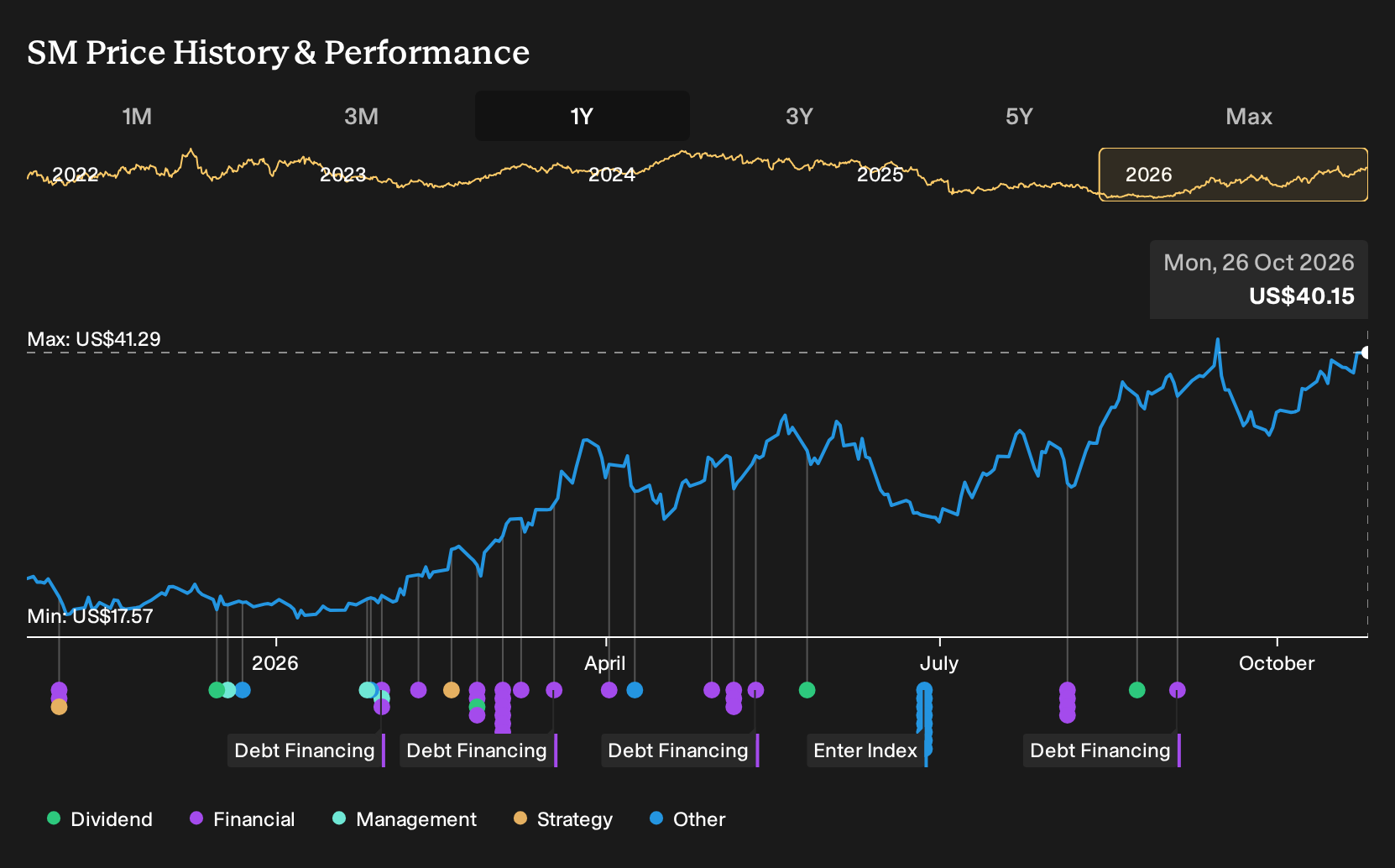
Consensus price targets sit on top of that framework. The average target of US$44.41 is currently 13.2% above the recent US$38.54 share price, while the individual analyst range runs from US$32.00 on the cautious end to US$58.00 on the higher side. Those figures effectively bracket the different views on how fully SM Energy will deliver on the revenue, margin and free cash flow plan already in the market.
SM Energy's narrative projects US$7.4b revenue and US$1.8b earnings by 2029. This rests on 14.2% yearly revenue growth and an earnings increase of about US$0.8b from US$1.0b today.
Uncover why SM Energy's fair value indicates an 11% potential upside to its current price that could narrow quickly.
Exploring Other Perspectives
One alternate view leans hard into SM Energy’s long term production runway as the key upside catalyst. Bullish analysts who were already penciling in US$8.6b of revenue and US$2.4b of earnings by 2029 are effectively telling you the inventory story could be far richer, and that this latest earnings revision news might push those projections even further apart from the cautious forecasts. That kind of gap is a reminder that reasonable people can look at the same shale portfolio and reach very different conclusions, so treat this as an invitation to compare several scenarios rather than anchoring on a single set of numbers.
Explore 5 other SM Energy fair value estimates, including one that suggests potential upside of as much as 239% from the current price.
The Verdict Is Yours
Disagree with existing narratives? Extraordinary investment outcomes rarely come from following the herd, so consider your own analysis and judgment.
- A great starting point for your SM Energy research is our analysis highlighting 5 key rewards and 3 important warning signs that could impact your investment decision.
- See our latest analysis for SM Energy. The report includes a comprehensive fundamental analysis summarized in a single visual, the Snowflake, making it easier to review SM Energy's overall financial profile at a glance.
Looking for more SM Energy style investment ideas?
Once you have formed a view on SM Energy, it can help to compare that thesis with a broader watchlist of opportunities sourced from the Simply Wall St Screener. That way you can stress test your approach across different balance sheets, income profiles and risk levels instead of relying on a single stock.
- If you want companies that combine quality fundamentals with what may be conservative expectations, start by reviewing a curated set of 29 high quality undervalued stocks that fit those filters.
- For investors who care most about resilience and downside protection, consider screening through a 30 resilient stocks with low risk scores that highlights businesses with lower risk scores.
- When balance sheet strength is your first filter, work through a list of solid balance sheet and fundamentals (24 results) and focus on businesses with the financial flexibility to handle surprises.
Have feedback on this article? Concerned about the content? Get in touch with us directly. Alternatively, email editorial-team@simplywallst.com