


Gen X is looking at retirement with more questions than answers, which could quietly reshape where trillions of dollars eventually flow. That uncertainty can pressure some consumer-facing areas, yet it also creates fresh demand for guidance, products, and planning tools. This article walks through three U.S. retirement planning and asset management stocks exposed to that story and explains how the current mood around saving, working longer, and Social Security might matter for your portfolio.
The stocks covered below are just a starting sample of that retirement story, and the full screen surfaced 26 more U.S. retirement planning and asset management companies with equally compelling narratives that are not unpacked in this article. If you want to identify and analyze your own highest conviction angles around this theme, head straight into the US Retirement Planning & Asset Management Companies screener.
Willis Towers Watson (WTW)
Overview: Willis Towers Watson is a global advisory and broking group that helps employers design benefits, manage retirement plans, and structure insurance and risk programs for workers and retirees.
Operations: Willis Towers Watson generates about US$5.4b from Health, Wealth & Career and US$4.5b from Risk & Broking, with meaningful exposure to the United States, United Kingdom and other international markets.
Market Cap: US$30.2b
Willis Towers Watson matters for this retirement-focused screen because it sits inside the machinery of 401(k) style plans, pension derisking and benefits design that employers increasingly rely on as Gen X questions how to fund life after work.
"Acceleration of the Propel AI Acceleration Plan, which targets about US$400m in run-rate savings and higher enterprise and segment margin levels by 2028, could lift Willis Towers Watson’s adjusted operating margin profile and support higher earnings power."
What really shifts the story for Willis Towers Watson is how one still-evolving pressure on retirement-plan demand ultimately feeds through to those margins.
Those margin questions are only half the picture, and the full narrative for Willis Towers Watson explains how retirement-plan pressures, fee mix, and AI savings could be quietly reshaping Willis Towers Watson’s earnings profile.

Equitable Holdings (EQH)
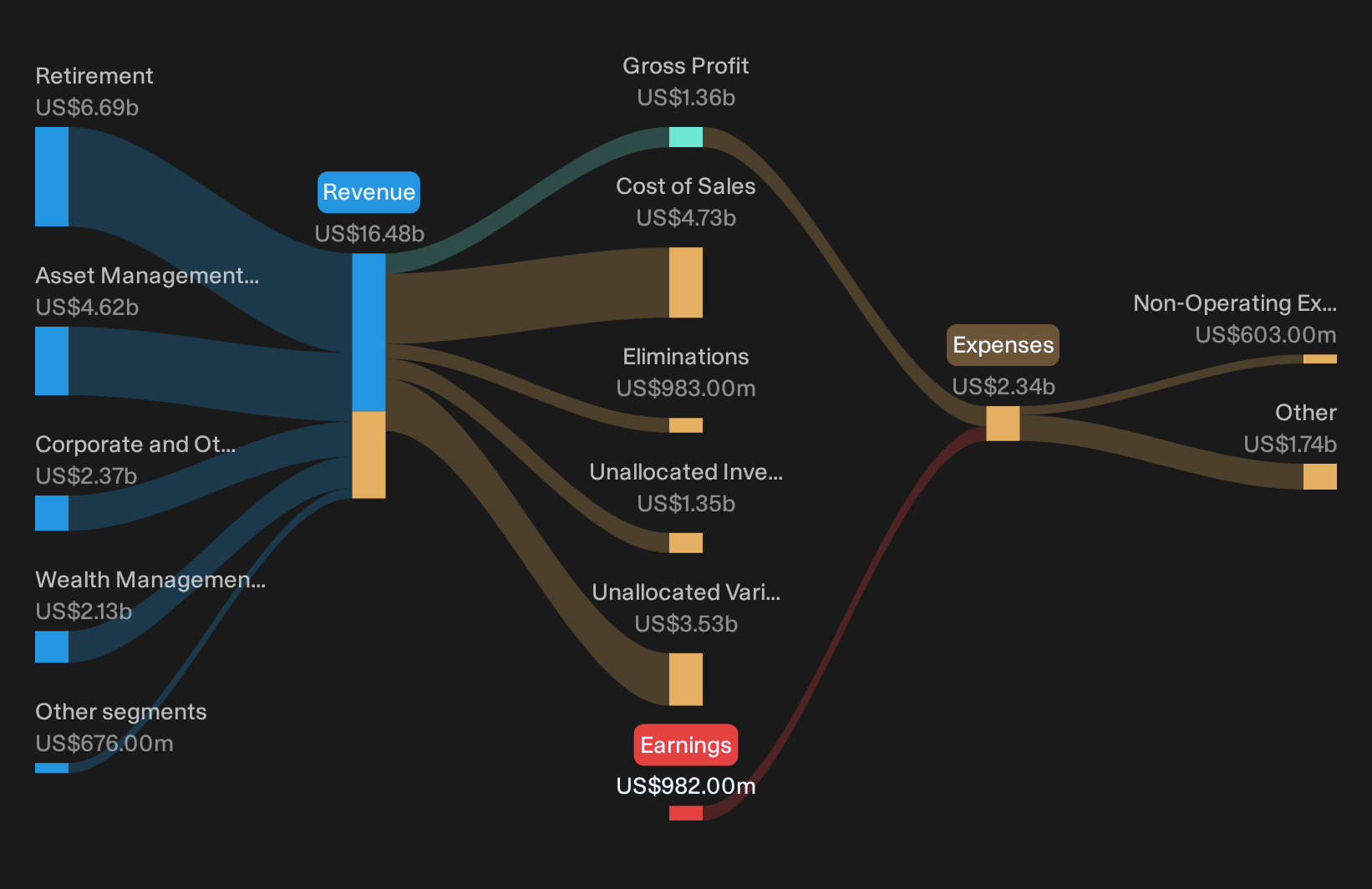
Overview: Equitable Holdings runs a broad retirement focused financial group built around annuities, 401(k) style plans, asset management, and wealth advice.
Operations: Equitable Holdings generates about US$6.7b from Retirement, US$4.6b from Asset Management and US$2.1b from Wealth Management, with additional corporate related items.
Market Cap: US$14.6b
Equitable Holdings plugs directly into the retirement preparedness gap through annuities, workplace plans, and advice that can turn anxious Gen X savers into long term fee clients.
"The planned Corebridge merger is expected to create a top-scale U.S. insurer with more than 10 million clients, about US$30b of GAAP book value and roughly US$5b of operating earnings capacity. This structure could improve operating leverage and support higher EPS if the combined business delivers on its earnings and cash flow targets."
What happens to that retirement income story if one unseen pressure on long term fee economics breaks the wrong way?
If that risk even partly materialises, the full narrative for Equitable Holdings shows how Equitable Holdings could still turn Gen X uncertainty into accelerating fee resilience and retirement-income momentum.
Aon (AON)
Overview: Aon provides risk, health and retirement consulting, helping employers and institutions design benefits, manage pension obligations and guide long term savings.
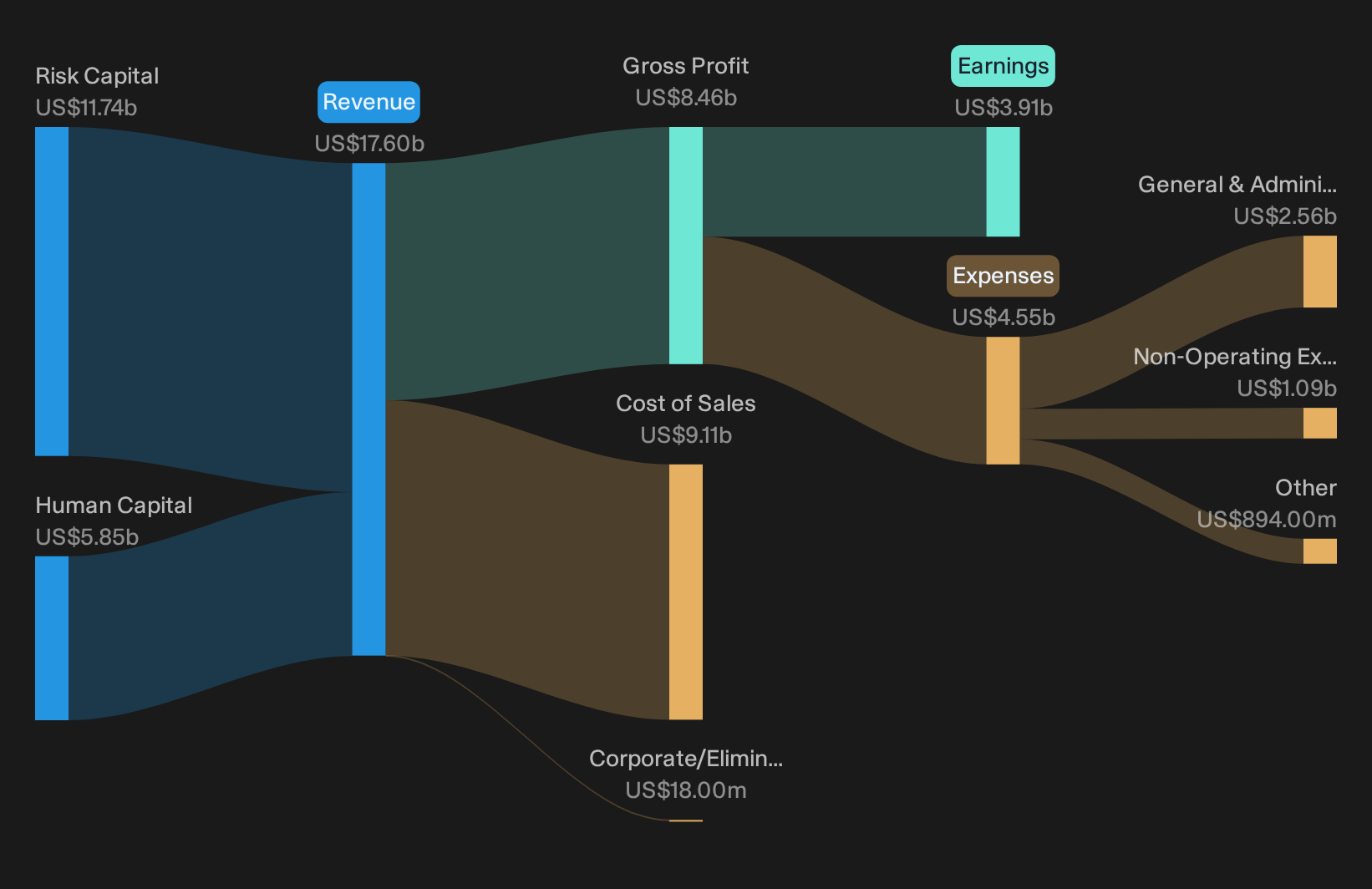
Operations: Aon generates about US$11.7b from Risk Capital and US$5.9b from Human Capital, with US$8.3b from the United States and broad international exposure.
Market Cap: US$64.1b
For the US Retirement Planning & Asset Management theme, Aon matters because its retirement advice and pension work sit where anxious Gen X workers meet employers trying to reshape benefits for longer working lives.
"The acquisition of USI for US$17b in cash, with an expected US$3.3b of revenue and US$1.2b of adjusted EBITDA on a fully synergized basis, extends Aon’s middle market buildout. The large all cash acquisition of USI that Aon is funding with new debt is expected to be EPS dilutive in 2027 and buybacks are not expected in the near term."
What matters now is how one unresolved pressure in that broader middle market expansion ultimately filters through to retirement focused advisory margins.
If that middle market pressure is what worries you, the full narrative for Aon explains how Aon’s USI move could reshape earnings momentum and retirement influence.
Seeking Fresh Alternatives Before They Fly
Fresh opportunities rarely stay quiet for long. Once momentum builds, prices can move quickly while information decays. Scan these under the radar ideas before the crowd wakes up and consider them early in your research process.
- Look for early breakouts in smaller companies that already generate profits, then review the 39 profitable AI stocks that aren't just burning cash before momentum is fully recognized by larger funds.
- Explore yield themes supported by stable cash flows by running the 5 dividend fortresses while high payouts with resilient cash flows may still be under followed.
- Review resource producers that could be positioned for a future cycle by using the 16 top copper producer stocks before any potential increase in capital flows reduces favorable entry points.
Have feedback on this article? Concerned about the content? Get in touch with us directly. Alternatively, email editorial-team@simplywallst.com