


IPO headlines around Anthropic and SpaceX have pushed investment banks like JPMorgan back into the spotlight, reminding investors how quickly sentiment can swing when big-ticket listings return. When capital markets activity picks up, well-capitalized intermediaries often sit close to the action, which can fuel both excitement and hesitation. This article breaks down three stocks linked to that news flow so you can decide whether they deserve a closer look or a wider berth.
The stocks highlighted in the article below are just a small sample, and the full screen surfaced 28 more large, US-listed financial firms with equally compelling narratives around IPO and capital markets activity that are not covered here. To go straight to the source and identify your own higher-conviction ideas, analyze the full Global Investment Banks Leveraged to IPO and Capital Markets Activity screener via the Global Investment Banks Leveraged to IPO and Capital Markets Activity screener.
Nasdaq (NDAQ)
Overview: Nasdaq runs major US and global stock exchanges and related technology that connect IPOs, trading, data and financial institutions.
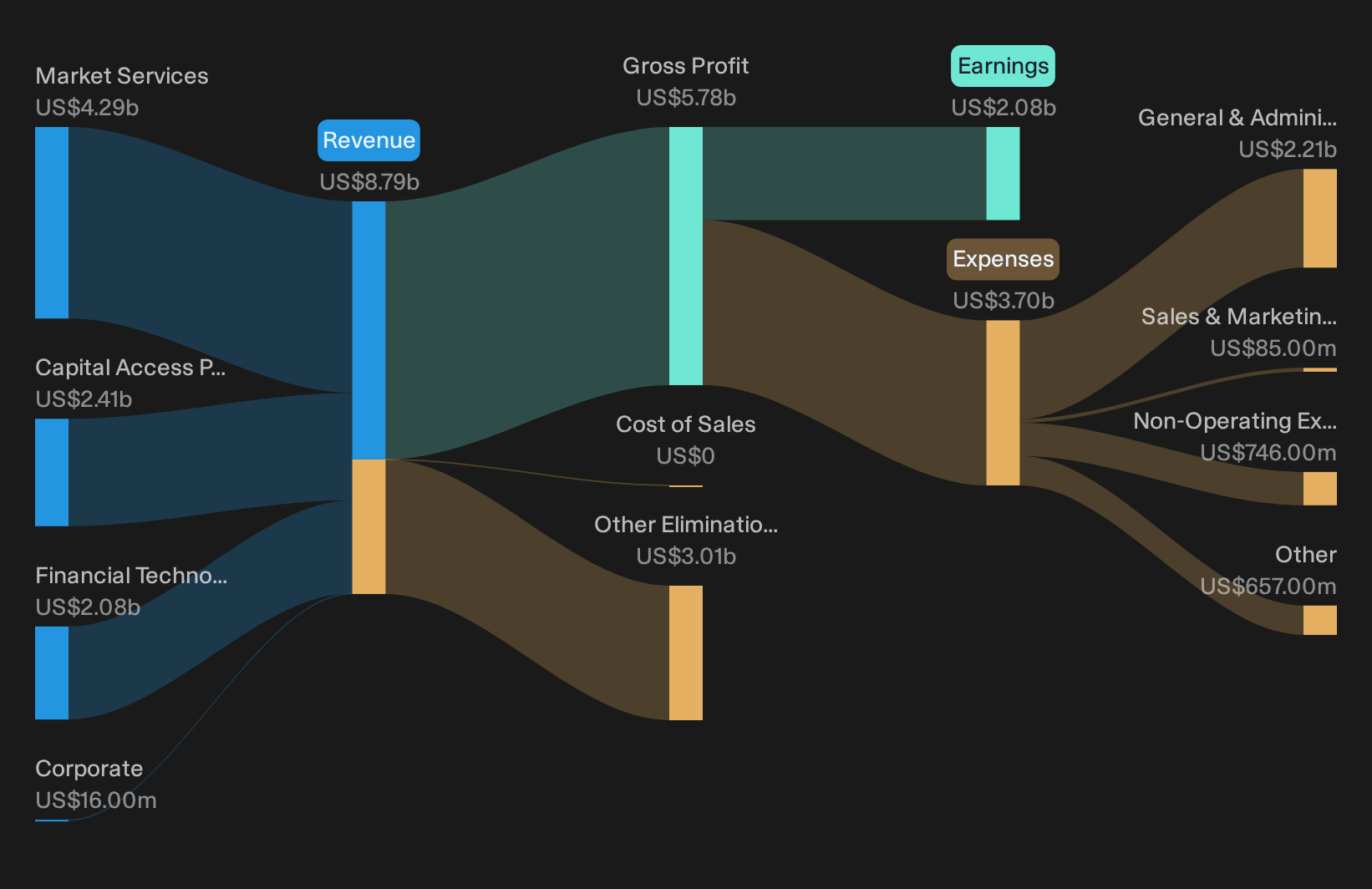
Operations: Nasdaq generates most of its US$8.8b revenue from Market Services at US$4.3b, with Capital Access Platforms and Financial Technology adding US$2.4b and US$2.1b.
Market Cap: US$58.1b
Nasdaq matters for this IPO focused theme because it collects listing fees and transaction revenue when high profile issuers come to market and trading activity stays busy.
"The expansion of Verafin's AI driven solutions has progressed, with 22% revenue growth, 17% ARR growth and 110% net revenue retention in Q2 2026, 11 enterprise deals signed so far in 2026 and roughly 750 clients using agentic AI workers. This supports Nasdaq's efforts to pursue higher ARR and revenue and to improve margins as AI productivity gains scale."
What may be important from here is how one less visible shift in this AI heavy toolkit filters through to margins and valuation.
That margin question is exactly what the full narrative for Nasdaq unpacks, showing where AI driven efficiency, capital intensity and valuation expectations may be quietly decoupling.
Lincoln International (LCLN)
Overview: Lincoln International is an independent investment banking advisor that helps corporates and private capital clients with M&A, capital raising, restructuring and valuation across the US, Europe and Asia.
Operations: Lincoln International generates about US$697 million from Investment Banking Advisory and US$188 million from Valuations and Opinions, with roughly US$649 million from the Americas and US$231 million from Europe.
Market Cap: US$2.4b
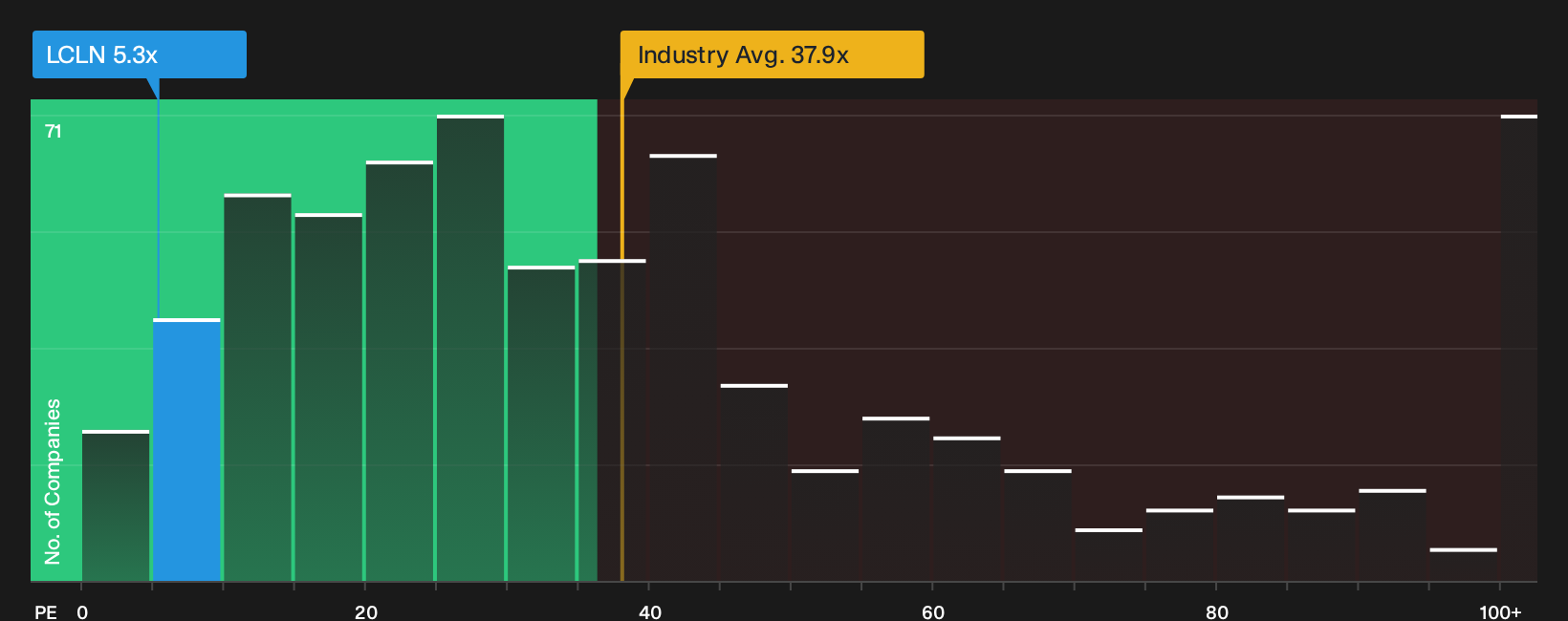
Lincoln International ties neatly into this IPO and capital markets screen because its advisory engine is built around global deal cycles, from M&A to financing to fund secondaries. These cycles often change when marquee listings such as Anthropic or SpaceX reset risk appetite. Investors who want exposure to that deal flow may consider the mix of a 5.3x P/E and 16% forecast revenue growth, depending on how one unresolved pressure on profitability and funding costs develops.
That unresolved pressure is exactly where the 2 key rewards and 2 important warning signs (1 is major!) so you can see how Lincoln International’s valuation and growth story might be pulling in different directions.
Houlihan Lokey (HLI)
Overview: Houlihan Lokey is a global investment bank focused on mid market M&A, capital raising, restructuring, and valuation work tied to deal activity.
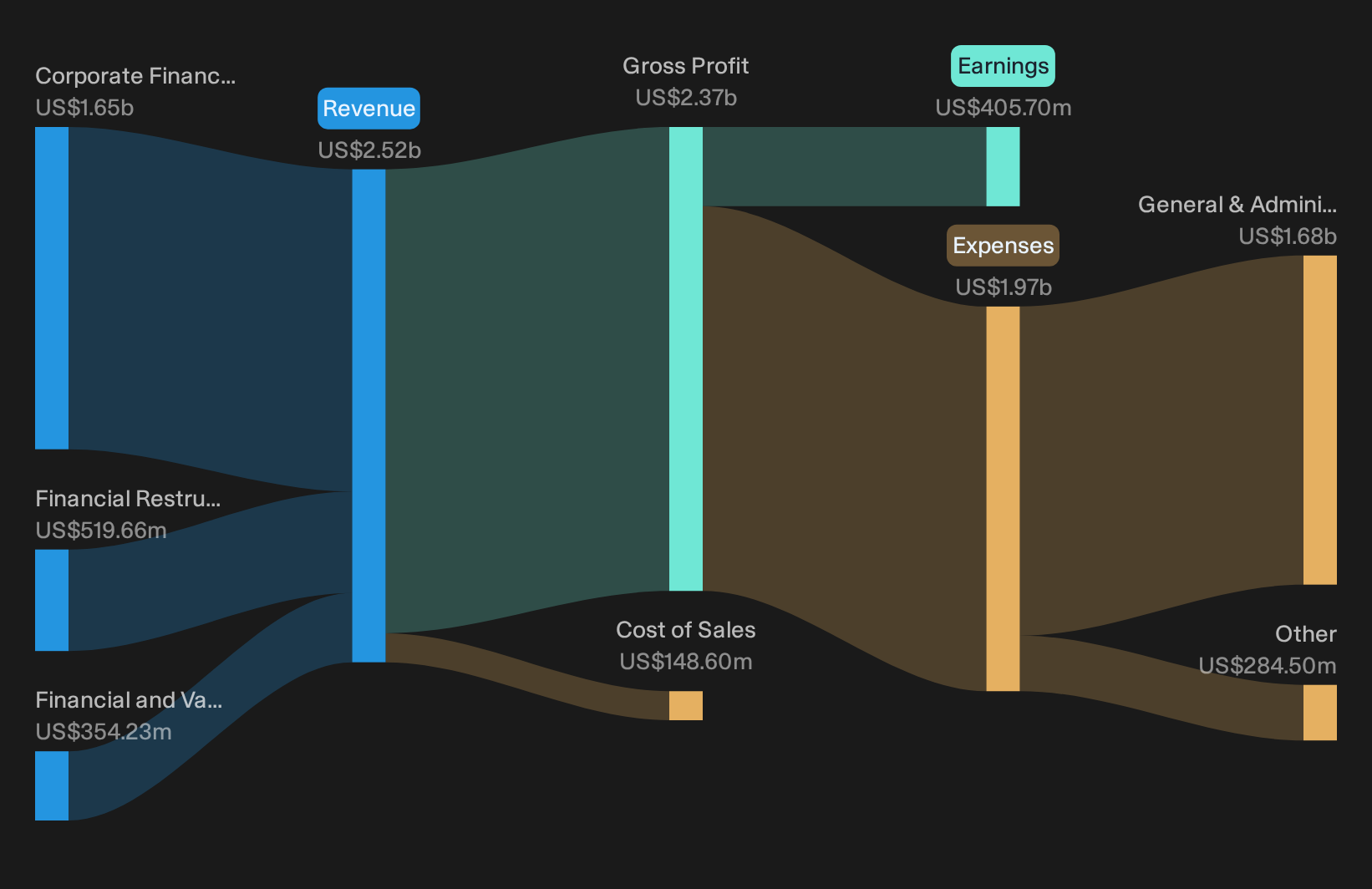
Operations: Houlihan Lokey generates about US$1.6b from Corporate Finance, US$520 million from Financial Restructuring, and US$354 million from Financial and Valuation Advisory. Revenue is approximately US$1.7b from the United States and US$806 million from international operations.
Market Cap: US$9.2b
Houlihan Lokey fits this IPO and capital markets theme because its advisory engine is closely linked to dealmaking cycles that tend to heat up when listings, equity issuance, and financing activity regain momentum.
"Sustained elevated restructuring activity, now supported by widening credit spreads and higher default rates among smaller private credit borrowers, is reinforcing the role of Financial Restructuring as a stabiliser for group revenue and net margins."
The main variable to watch is how any shift in higher fee Corporate Finance and capital solutions work balances against rising cost pressure and cycle timing.
That revenue mix tension is exactly what the full narrative for Houlihan Lokey unpacks, highlighting where Houlihan Lokey’s fee engine, cost base, and cycle sensitivity might be quietly decoupling.
Seeking Fresh Alternatives Before They Fly
Fresh ideas move first. By the time everyone notices the breakout, early momentum can be gone and entry points less appealing. Scan these under the radar lists now and consider them early.
- Spot resilient income ideas that may keep paying even when sentiment cools by reviewing the 5 dividend fortresses before yields change and stronger balance sheets become more widely recognized.
- Track developments in AI-related stocks by checking the 39 profitable AI stocks that aren't just burning cash while these cash generative plays are still being evaluated by the market.
- Explore potential infrastructure-related opportunities by scanning the 42 power grid technology and infrastructure stocks while these grid and hardware operators receive relatively limited attention from broader capital flows.
Have feedback on this article? Concerned about the content? Get in touch with us directly. Alternatively, email editorial-team@simplywallst.com