


AbbVie (ABBV) has built a multibillion-dollar drug empire, steadily boosted its dividend, and developed a new generation of blockbuster medicines, making it a favorite among income-oriented investors.
The pharmaceutical giant is slated to report its third quarter results on Oct. 30, and expectations are running high. Investors are keen to see whether AbbVie's new medicines can deliver the earnings needed to sustain its remarkable 54-year dividend-growth streak, especially after Humira’s decline.
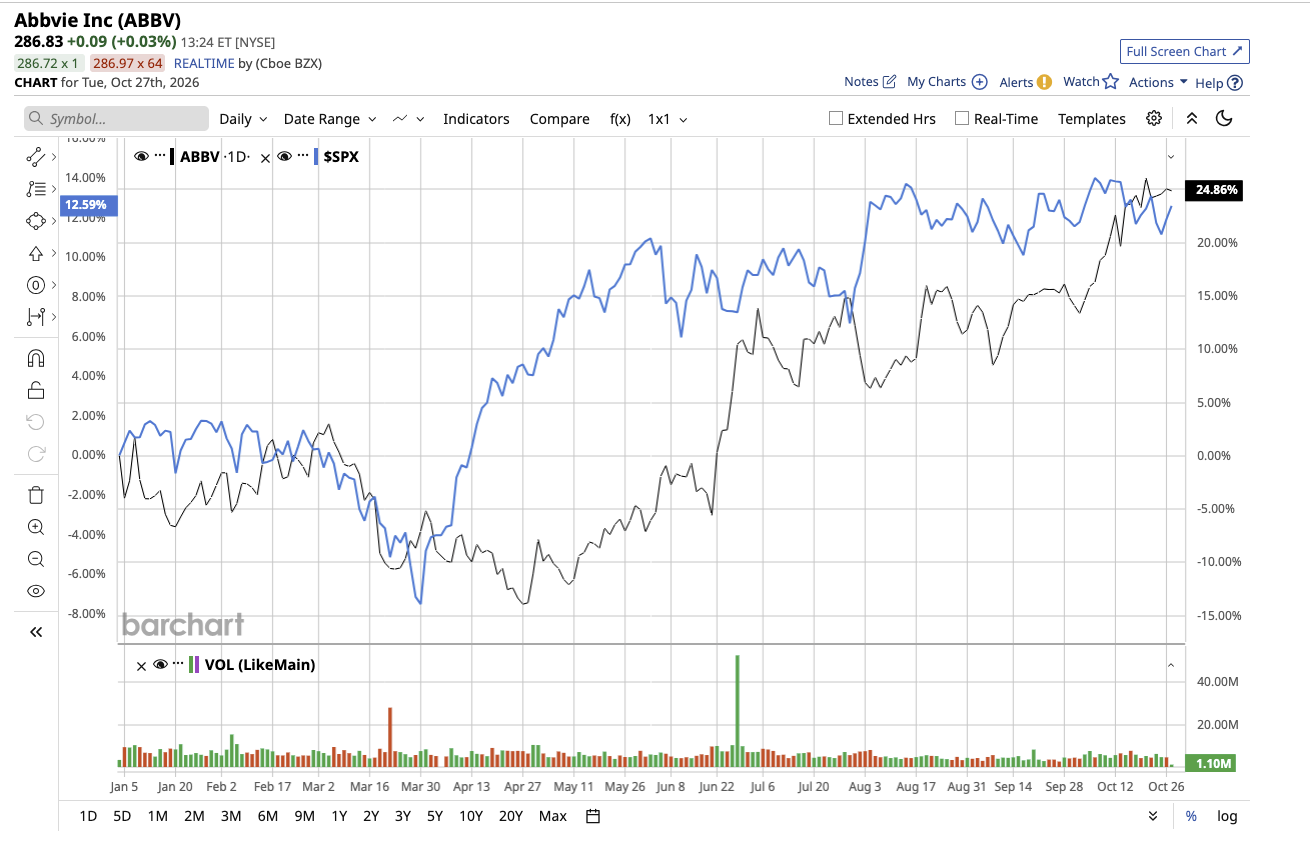
AbbVie's Growth Story Has Moved Beyond Humira
Humira, once the company's flagship immunology drug, has faced growing competition from biosimilars. In the second quarter, Humira’s sales fell 36.1% to $756 million, as expected, due to biosimilar competition. The silver lining is that AbbVie’s portfolio covers treatments for inflammatory diseases, neurological and psychiatric conditions, cancer, and aesthetic concerns. This broad range reassures investors that Humira’s decline is not a crisis. AbbVie has ensured its financial strength does not rest on a single blockbuster.
AbbVie has since expanded Skyrizi and Rinvoq, two newer immunology medicines that are becoming increasingly important to its future. In the second quarter, Skyrizi generated $5.5 billion in worldwide sales, rising 24% on an operational basis from the prior-year quarter. Rinvoq contributed $2.5 billion, up 23.7% operationally. Together, the medicines brought in just over $8.03 billion during the quarter. Total revenue increased 10.2% to $17 billion, while adjusted earnings per share rose 22.9% to $3.65.
Skyrizi's momentum reflects demand throughout psoriasis and inflammatory bowel disease, including Crohn's disease and ulcerative colitis. Management also discussed progress toward a subcutaneous induction formulation for Crohn's disease. The regulatory review is proceeding as expected. If additional formulations and indications for Skyrizi are approved, they could help the drug reach more patients and bolster its position in immunology.
Separately, Rinvoq is charting its own impressive course for growth. Management stressed its strong momentum in gastroenterology, projecting a remarkable 30% surge in global sales for 2026. The company also explored new frontiers in dermatology, including possible expansion into treatments for vitiligo and alopecia areata in the U.S. If regulators approve, these advances might significantly expand Rinvoq's commercial footprint.
Neuroscience Is Becoming Another Growth Engine
Immunology is not the only portfolio worth watching. AbbVie's neuroscience business generated $3.3 billion in revenue, up 19.8% year-over-year (YoY). Vraylar, a treatment for psychiatric conditions, generated $1.07 billion. Botox Therapeutic contributed $1.04 billion. Combined sales of migraine medicines Ubrelvy and Qulipta reached $742 million.
That diversification benefits a dividend-paying pharmaceutical company. A broader portfolio of successful products lowers dependence on any single medicine and creates more paths for growth. In the third quarter, investors should watch whether the neuroscience portfolio can maintain momentum and whether newer products can add meaningfully to growth along with established brands.
AbbVie must keep growing its replacement medicines fast enough to absorb Humira’s lost sales.
Management expects full-year revenue of about $67.6 billion and adjusted EPS between $13.87 and $14.07. The third-quarter results will show whether the company keeps on track to meet those targets or upgrades them.
The Dividend Is Attractive, but Cash Generation Matters
Since parting ways with Abbott in 2013, AbbVie has not just raised its dividend but has also supercharged it, boasting a remarkable growth of over 330% since inception. With its 54-year dividend-growth track record, AbbVie has earned a desirable spot among both the Dividend Aristocrats and the even more exclusive Dividend Kings.
AbbVie’s appeal as an income stock goes beyond its impressive 54-year dividend track record. The company also boasts a forward dividend yield of 2.4%, easily outpacing both the market and healthcare sector averages. Its forward payout ratio of 61% remains sustainable, leaving room for further growth.
A growing dividend can catch the eye, but a track record of rewarding shareholders doesn't guarantee safety. The real test is the company's ability to generate cash, make smart capital decisions, handle debt, and finance future growth. Investors should closely watch Q3 cash flow and look for signs that management is devoted to balancing shareholder returns with investment in the next wave of medicines.
The Bottom Line on ABBV Stock
AbbVie brings together a powerful mix of proven medicines, promising new growth engines, and a strong track record of rewarding shareholders. Still, a dividend history isn't enough to justify buying ABBV stock, especially as the biotech sector navigates fierce competition, shifting regulations, and unpredictable development hurdles.
The Q3 earnings report will be a key moment for investors to see if AbbVie’s growth and financial muscle can truly back its ambitions. For income investors, the real measure isn't how long the dividend streak lasts, but how robust the business is at its core.
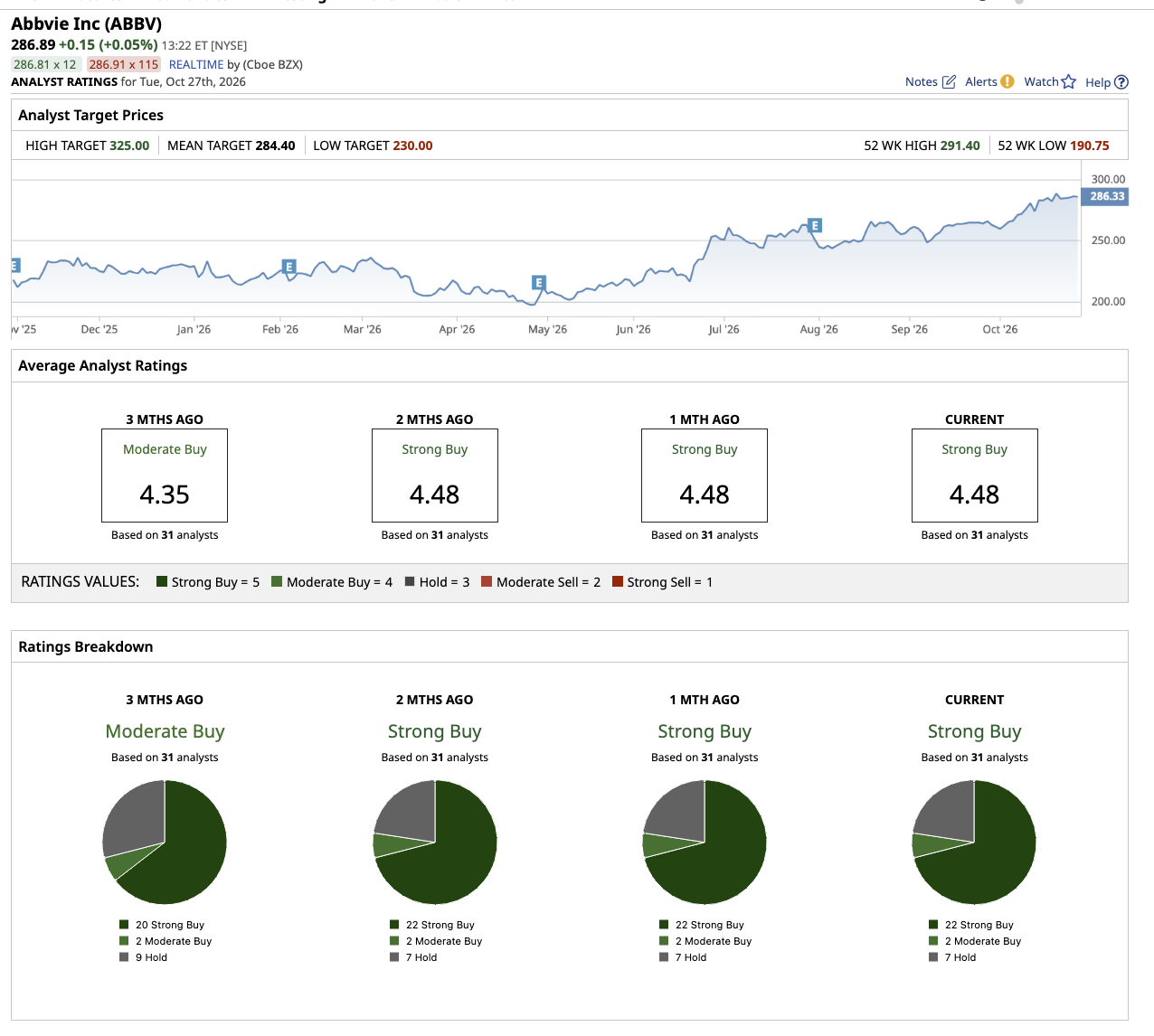
Overall, Wall Street still rates ABBV stock as a consensus “Strong Buy.” Out of the 31 analysts covering the stock, 22 have a “Strong Buy” rating, two suggest a “Moderate Buy,” and seven recommend a “Hold.” The stock has surpassed its average target price, but the high price estimate of $325 suggests it could rally up to 13% over the next 12 months.
On the date of publication, Sushree Mohanty did not have (either directly or indirectly) positions in any of the securities mentioned in this article. All information and data in this article is solely for informational purposes. For more information please view the Barchart Disclosure Policy here.