


The Bank of Canada just pushed its policy rate to 2.5% and signaled that tighter money could stick around, which puts every interest sensitive stock under a harsher spotlight. Higher borrowing costs and stickier 3% inflation expectations can reward some balance sheets and pressure others. This article walks through 3 Canadian stocks from a rate exposed screener that appear particularly interesting after the latest decision.
The three stocks covered below are only a sample from this rate sensitive corner of the market. The full screen surfaced eight more Canadian banking, mortgage lending, and cash management companies with equally detailed stories that are not unpacked in this article.
Head straight into the Canadian Banks, Mortgage Lenders, and Cash Management Firms Leveraged to Higher BoC Policy Rates screener to identify, compare, and analyze the higher conviction opportunities that best fit your own risk and income goals.
MCAN Mortgage (TSX:MKP)
Overview: MCAN Mortgage is a Toronto based mortgage investment corporation that channels Canadian savings into residential, construction, and commercial loans directly exposed to Bank of Canada driven lending rates.
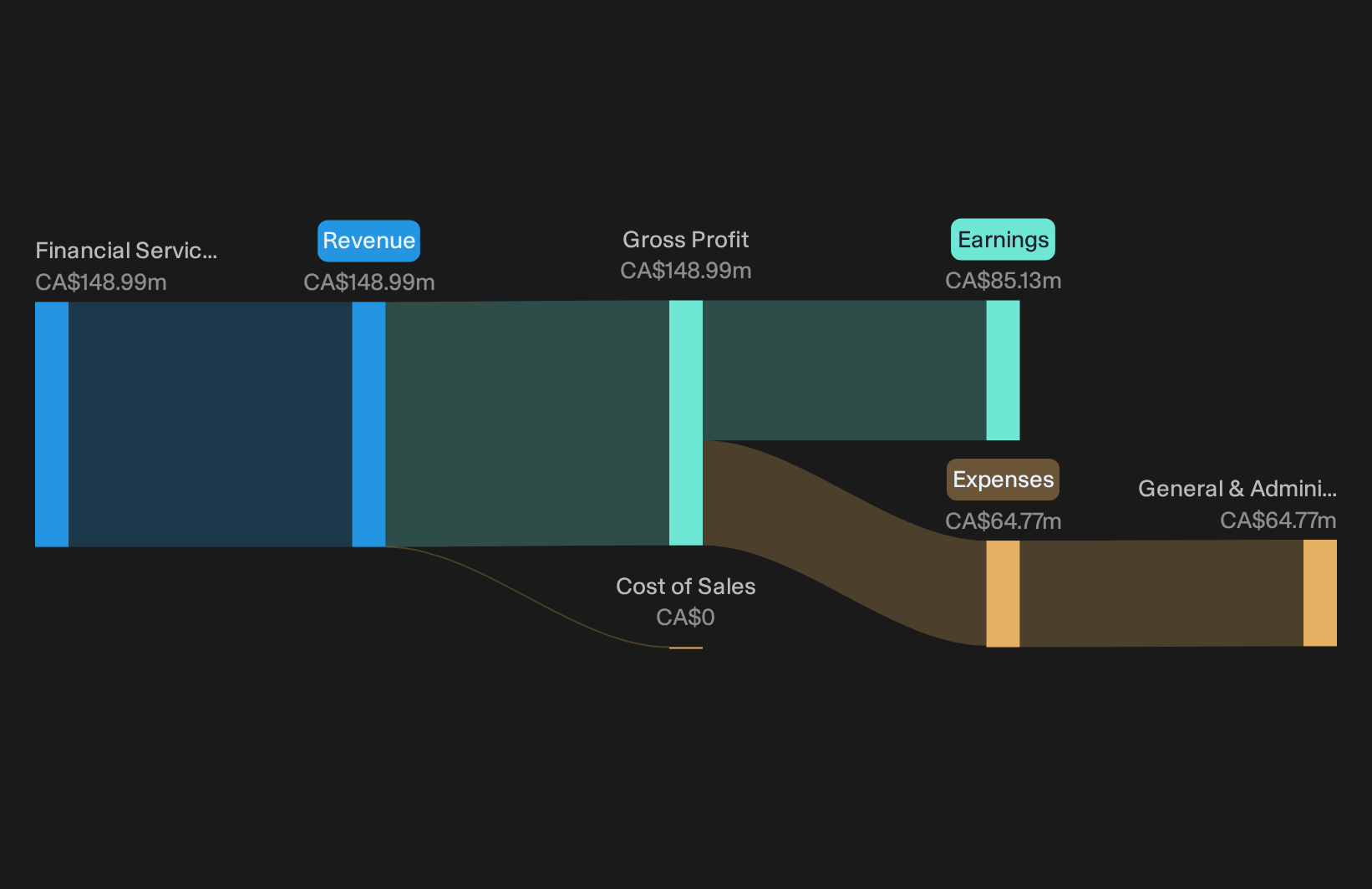
Operations: MCAN Mortgage generates all of its CA$149 million in revenue from mortgage focused financial services in Canada, concentrated in a single domestic lending book.
Market Cap: CA$890 million
MCAN Mortgage sits almost on the fault line of the Bank of Canada story, with a balance sheet built around Canadian mortgages that reset as policy rates shift. As a result, any move in the overnight rate can quickly alter what this lender earns on its book.
"Growth of mortgage securitization programs, including plans to expand the uninsured program launched with a major Canadian bank and continued use of insured programs, can support asset growth while influencing funding costs and net interest margins.
The real swing factor for MCAN Mortgage is how one unseen pressure ultimately plays out in the gap between lending yields and funding costs.
That tug of war is the real story. Read the full narrative for MCAN Mortgage to see how MCAN Mortgage’s funding mix, payout profile, and rate sensitivity intersect.
Atrium Mortgage Investment (TSX:AI)
Overview: Atrium Mortgage Investment is a Toronto based mortgage lender that finances residential, multi residential, and commercial real estate across Canada, tying its earnings closely to Bank of Canada driven mortgage rates and credit spreads. These sit at the heart of this screener’s rate sensitivity theme.
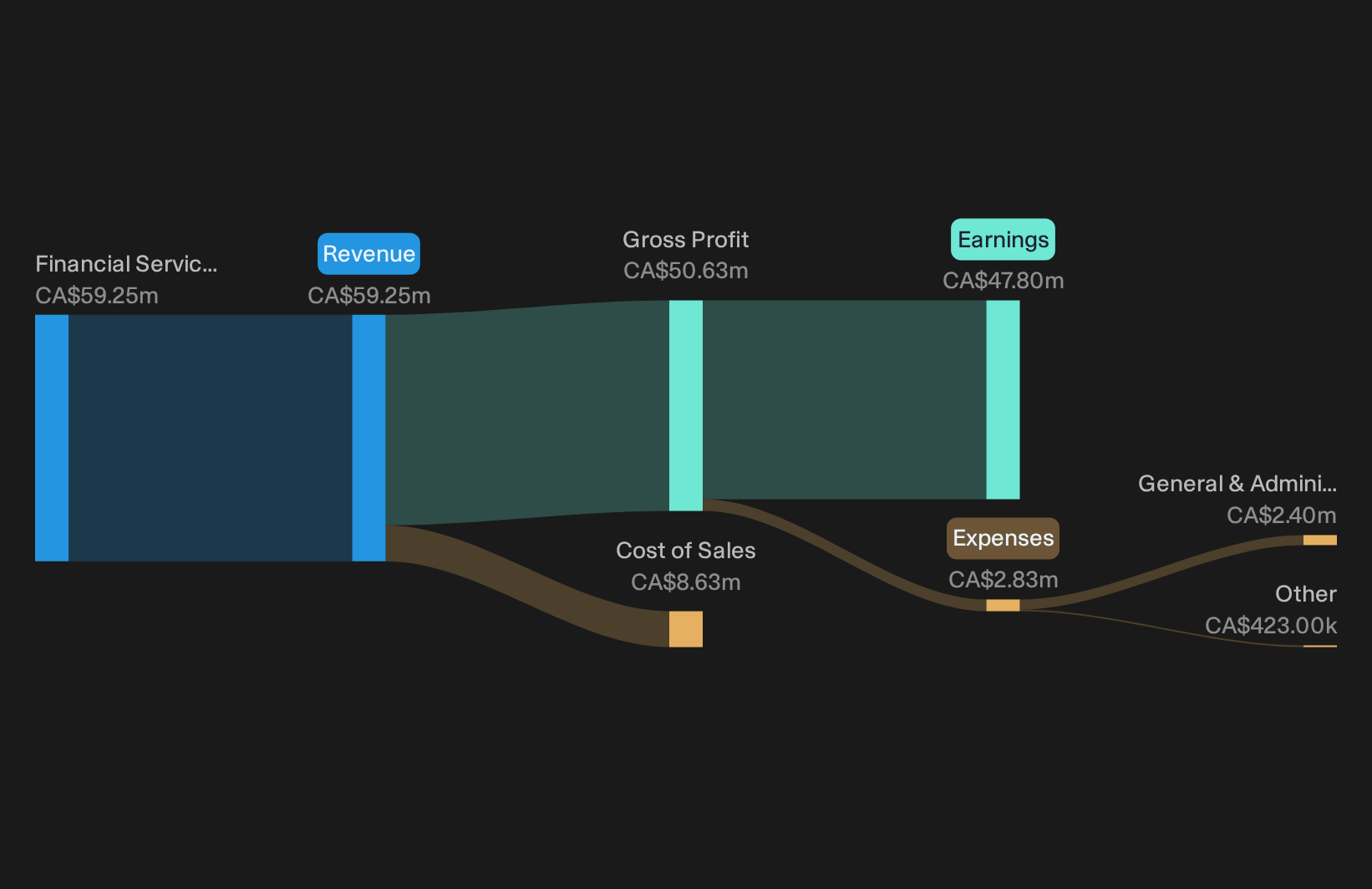
Operations: Atrium Mortgage Investment generates CA$59 million in revenue from mortgage focused financial services entirely within Canada. This reflects a single country lending book directly exposed to domestic policy rate shifts.
Market Cap: CA$542 million
Where MCAN Mortgage channels rate moves through a diversified mortgage pool, Atrium Mortgage Investment pushes the screener theme further by leaning into specialized loans for developers and income properties that are highly sensitive to funding costs and lending spreads.
"Tighter mortgage lending standards at traditional banks are continuing to funnel real estate developers and non prime borrowers towards private lenders like Atrium Mortgage Investment, which can expand its addressable lending market and support higher potential loan volumes and revenue.
The key question is how a relatively quiet shift in Atrium Mortgage Investment’s book mix eventually feeds through to margins when the next rate move occurs.
That quiet portfolio shift is exactly what full narrative for Atrium Mortgage Investment unpacks, revealing how Atrium Mortgage Investment’s funding mix and credit risk could be decoupling from headline rate moves.
National Bank of Canada (TSX:NA)
Overview: National Bank of Canada is a major Montreal based lender and wealth manager offering banking, investing, and financing services to individuals, businesses, and institutions.
Operations: National Bank of Canada generates about CA$5.5b from Personal and Commercial, CA$3.9b from Capital Markets, CA$3.6b from Wealth Management, CA$1.4b from U.S. Specialty Finance and International, and CA$0.2b from other activities.
Market Cap: CA$79.4b
For investors focused on how higher Bank of Canada policy rates filter through to everyday banking, National Bank of Canada reflects a mix of core deposit funding, mortgage repricing, and fee income that can all shift as the rate backdrop changes.
"Successful integration of Canadian Western Bank is progressing, with about $238 million of cost and funding synergies already captured toward a $300 million run rate target, and growing revenue synergies from cross sold products, which can continue to support higher net margins and earnings as remaining integration benefits are realized."
What really influences results for National Bank of Canada now is how one less visible pressure ultimately shapes where net interest margins settle.
That pressure point is exactly where the full narrative for National Bank of Canada shows how integration, funding costs, and fee income could be masking where National Bank of Canada’s earnings power really lands.

Seeking Alternatives Before The Crowd?
Fresh ideas move first. Breakout themes gain momentum while they are still under the radar for now. Do not get caught dropping in late, act now.
- Spot resilient income payers and stress test your yield focus by scanning a curated pool of 3 dividend fortresses before the momentum in payouts gets fully priced in.
- Track fast moving small caps riding real AI demand by running through 39 profitable AI stocks that aren't just burning cash while the strongest operators remain quietly priced like side projects.
- Target sturdier balance sheets as conditions shift by combing through a curated list of solid balance sheet and fundamentals (7 results) before higher quality fundamentals are chased by late money.
Have feedback on this article? Concerned about the content? Get in touch with us directly. Alternatively, email editorial-team@simplywallst.com