


- BAE Systems recently reported a live-fire success for its Adaptable Deck Launcher for the U.S. Department of War and expanded its Horizon Solutions aftermarket offering, while also securing new U.S. defense and space work and acquiring extra production capacity in Colorado.
- The cluster of contract wins, product milestones and lifecycle service expansions points to BAE Systems pushing harder into higher value defense electronics, precision munitions and long duration support work across both military and commercial aviation customers.
- We will now look at how progress with BAE Systems' Adaptable Deck Launcher could reshape the investment narrative around its defense electronics exposure.
BAE Systems Investment Narrative Recap
To own BAE Systems, you need to be comfortable with a long queue of government work across air, maritime, munitions and electronics, plus the execution demands that come with it. The short term swing factor is still how efficiently that record backlog converts into revenue and cash. The recent announcements mainly reinforce existing themes rather than create a new near term catalyst.
The biggest current operational risk stays the same. Maritime contracts are still margin constrained and any further schedule or cost pressure there could offset progress in higher margin electronics and munitions. Added compliance monitoring after the export control penalty also keeps regulatory risk elevated, even as new wins arrive.
The APKWS laser guidance framework with the U.S. Department of War looks closest to an identifiable catalyst. It relates directly to one of BAE Systems key pillars: scaling munitions output where fixed facilities already exist. If volumes ramp inside that multi year framework, the munitions footprint in New Hampshire and Texas could support better utilisation and operating leverage.
That opportunity sits next to execution risk. Higher run rates demand reliable supply chains, disciplined cost control and continued regulatory scrutiny, especially after the recent penalty. Investors tracking BAE Systems may watch delivery tempo and any follow on orders under the APKWS umbrella as a practical test of how well the company handles this next leg of capacity build out.
BAE Systems Long Term Consensus Setup
Analysts sketch a long term picture for BAE Systems that leans heavily on that growing electronics and munitions mix. Their models factor in revenue expanding by 11.4% a year over the next three years, with profit margins moving from 7.2% today to 7.7% by 2029 as higher value programs and digital tooling scale up across the group.
On current forecasts, earnings are expected to be £2.1b today and reach £3.1b by 2029, which implies a £1.0b uplift in profit if those targets are met. The consensus also assumes the share count stays broadly flat, so any earnings change flows mostly through to earnings per share rather than being diluted by fresh equity issuance.
Those same estimates anchor the valuation debate. To line up with consensus targets, investors would need to be comfortable with BAE Systems trading on a P/E of 28.5x 2029 earnings compared with 25.9x today. That multiple is also above the current 25.9x P/E cited for the wider GB Aerospace & Defense group, so any rerating would reflect confidence that electronics, munitions and space can support higher profitability than the broader sector.
BAE Systems' narrative projects £40.6b revenue and £3.1b earnings by 2029. This assumes 11.4% yearly revenue growth and a £1.0b earnings increase from £2.1b today.
Uncover why BAE Systems' fair value indicates a 14% potential upside to its current price that could narrow quickly.
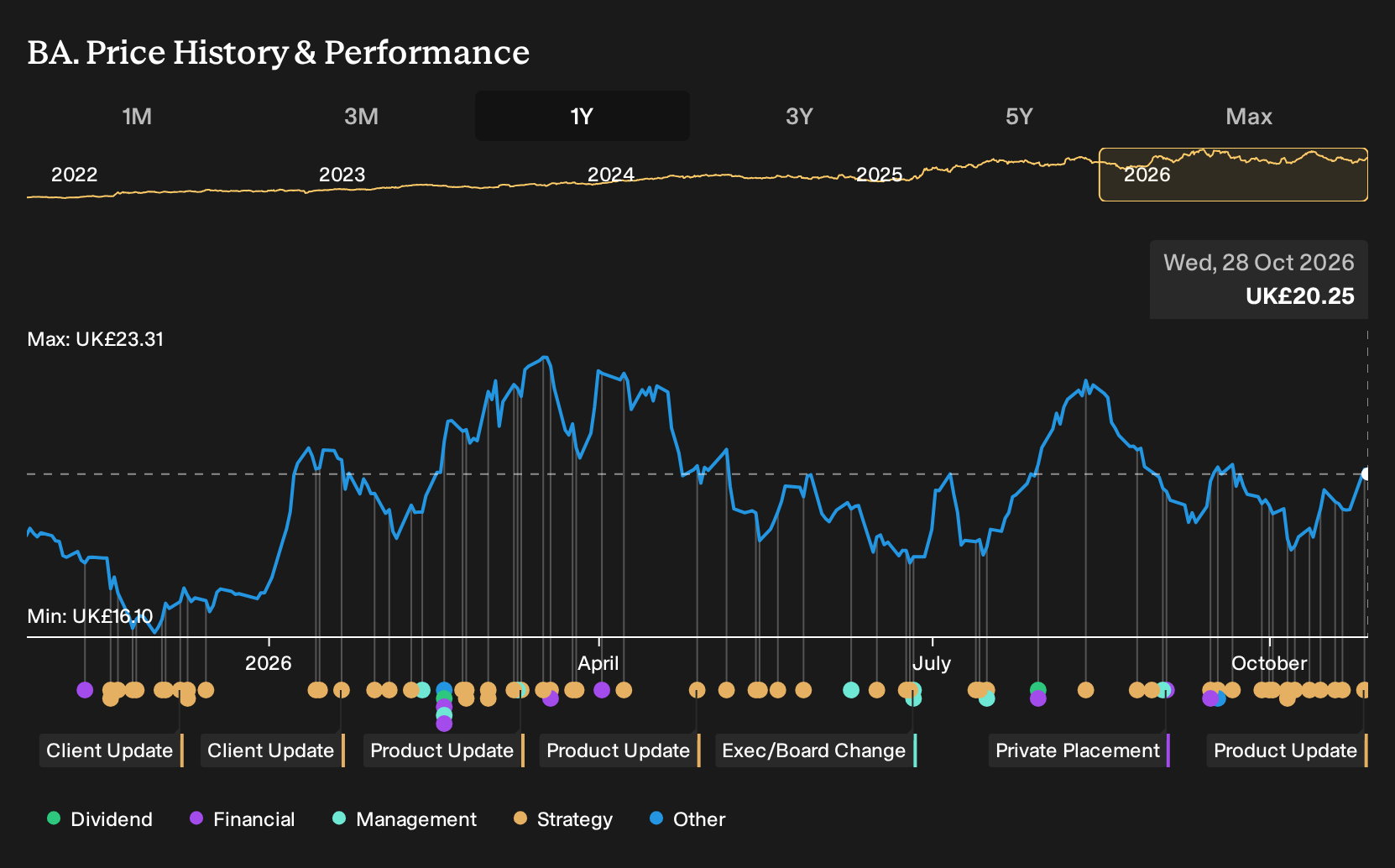
Exploring Other Perspectives
Some of the lowest analysts focus less on the Adaptable Deck Launcher and more on backlog conversion risk. They were working off a view that BAE Systems might only reach about £39.2b in revenue and £3.0b in earnings by 2029, so they saw less upside. You can treat this new news as a prompt to compare both narratives.
Explore 4 other BAE Systems fair value estimates, including one that suggests it could be worth just £23.14.
Reach Your Own Conclusion
Don't just follow the ticker; dig into the data and build a conviction that's truly your own.
- A great starting point for your BAE Systems research is our analysis highlighting 4 key rewards that could impact your investment decision.
- See our latest analysis for BAE Systems. The report includes a comprehensive fundamental analysis summarized in a single visual, the Snowflake, making it easy to evaluate BAE Systems' overall financial health at a glance.
Looking for more BAE Systems sized investment ideas?
If this BAE Systems review has sharpened your thinking, you can widen the search and stress test your thesis against a broader watchlist using the Simply Wall St Screener.
- For investors who want income with staying power, scan a curated set of high yield payers through 5 dividend fortresses that aim to combine payout strength with balance sheet resilience.
- If capital preservation sits at the top of your checklist, start with a focused 4 resilient stocks with low risk scores that highlights businesses scoring well on financial strength and risk metrics.
- When you are hunting for quality that is not yet crowded, review a targeted 5 high quality undiscovered gems that surfaces financially sound stocks flying under most radars.
Have feedback on this article? Concerned about the content? Get in touch with us directly. Alternatively, email editorial-team@simplywallst.com