


- Analysts recently projected that CRH will report a year over year decline in quarterly earnings per share while revenues are expected to rise, with segment forecasts pointing to growth in Americas Materials Solutions and International Solutions but variability in adjusted EBITDA across the portfolio.
- The cut to consensus EPS estimates over the past month highlights pressure on CRH to convert expected revenue gains into consistent segment level profitability.
- We will now examine how this mixed earnings and revenue outlook for CRH could reshape the investment narrative built around infrastructure demand.
Compare CRH's mixed earnings setup with a curated group of infrastructure linked businesses by scanning the list of solid balance sheet and fundamentals (24 results), which may better convert revenue into durable profitability.
CRH Investment Narrative Recap
To own CRH, you need to believe in a long runway for publicly funded infrastructure, data center related demand and steady execution on an aggregates led portfolio. The recent forecast of lower quarterly EPS alongside higher sales puts the focus on cost control and mix. It challenges CRH to show it can turn volume into cash, not just headline revenue.
The key near term swing factor is how quickly margins in Americas Materials Solutions and International Solutions convert expected project activity into earnings. The main risk remains exposure to U.S. infrastructure budgets and a softer residential backdrop, plus higher leverage as CRH leans into acquisitions while buybacks are paused.
With no fresh announcements tied directly to this earnings update, the pending Arcosa acquisition still matters most for understanding CRH in this context. Management intends to add 35 million tons of annual aggregates capacity through the deal, with a stated goal of US$175m run rate cost synergies by year three of ownership.
This planned expansion raises the stakes on integration, especially when quarterly EPS expectations are under pressure. Execution on Arcosa and the broader M&A program, along with disciplined use of higher debt, will shape how quickly CRH can stabilise margins, resume capital returns and support its infrastructure led earnings profile.
CRH Long Term Earnings Framework
Analysts are effectively asking investors to judge CRH on a long stretch of infrastructure and reindustrialization spending rather than just the next quarter. The current consensus framework points to a measured revenue expansion, some uplift in margins and meaningfully higher earnings by the end of the decade. That is a different question from whether CRH clears a single mixed earnings hurdle in the coming quarter.
The assumptions on the table are straightforward enough for you to sanity check. Forecasts build in 5.0% annual top line growth over the next three years and margin progression from 9.9% today to 10.8% by 2029. On that basis, analysts see earnings moving from US$3.8b currently to US$4.9b by the 2029 financial year, with the most optimistic estimates stretching to US$5.5b. Those are sizeable numbers and they rest on CRH continuing to execute on aggregates centric deals like Arcosa and absorbing them cleanly into the broader portfolio.
Where the narrative becomes more demanding is on valuation. To line up with the consensus price targets, the stock would need to trade on a P/E multiple of 21.5x applied to the US$4.9b earnings estimate for 2029, compared with 15.1x today. That also sits above the current 18.1x for the wider GB Basic Materials sector, which leaves less room for disappointment if profitability from the enlarged footprint disappoints or if infrastructure activity slows from current expectations.
Even with that higher required multiple, analysts tie their 2029 picture to a share count that edges down as buybacks resume over time, with assumptions for a 0.74% annual decline in shares outstanding over the next three years. That supports the path to earnings per share of US$7.14 in 2029 using the US$4.9b profit line, but buybacks are only one part of the story. The heavier near term use of debt for acquisitions, the timing of any return to repurchases and the actual integration outcomes will do more to shape how close CRH comes to this longer term earnings script.
For CRH, this mix of mid single digit revenue expansion, modest margin uplift and a higher rating multiple builds a clear hurdle. The business needs infrastructure volume to stay resilient, it needs cost and pricing discipline to hold margins up against inflation and project timing swings, and it needs each new acquisition to pull its weight quickly rather than dilute returns while integration drags on. The bigger the M&A pipeline becomes, the more sensitive that story is to execution risk and to any slowdowns in publicly funded work.
CRH's narrative points to forecast revenues of US$44.7b and earnings of US$4.9b by 2029, anchored on a projected 5.0% revenue growth rate each year and an earnings increase of about US$1.1b from current earnings of US$3.8b.
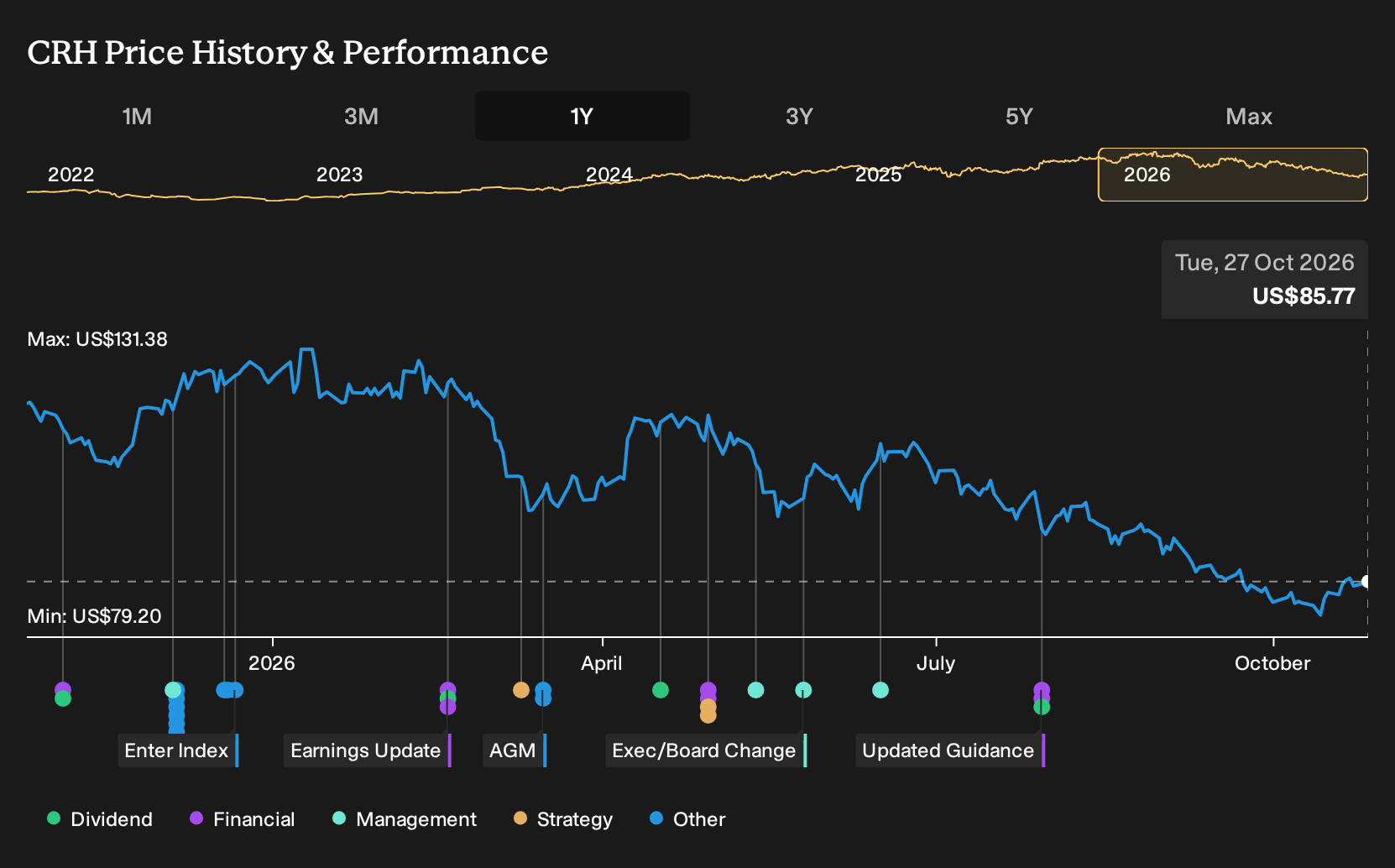
Uncover why CRH's fair value indicates a 43% potential upside to its current price that could narrow quickly.
Exploring Other Perspectives
One alternate lens on CRH puts the Arcosa leverage spike front and center. The most cautious analysts were only penciling in about 3.0% annual revenue growth and US$4.5b of earnings by 2029 before this EPS downgrade story. That camp already saw limited upside, so this update may push their expectations even lower. Consider both narratives before deciding where you land.
Explore 5 other CRH fair value estimates, including one that suggests it could be worth just $96.00.
Reach Your Own Conclusion
Disagree with existing narratives? Extraordinary investment returns rarely come from following the herd, so go with your instincts.
- A great starting point for your CRH research is our analysis highlighting 5 key rewards and 1 important warning sign that could impact your investment decision.
- See our latest analysis for CRH. The report includes a comprehensive fundamental analysis summarized in a single visual, the Snowflake, making it easy to evaluate CRH's overall financial health at a glance.
Looking For More Ideas Beyond CRH?
If the mixed setup around CRH has you wanting a wider watchlist, it can help to line it up against other stocks with different risk and balance sheet profiles.
- For investors who want income that could complement an infrastructure focused holding, consider screening for higher yielding opportunities through 5 dividend fortresses.
- If capital preservation and resilience matter most to you, narrow the universe to companies with steadier risk profiles by running the 30 resilient stocks with low risk scores.
- When you prefer financially robust businesses that can potentially absorb cycles more comfortably, start with the 21 high quality undiscovered gems and see which contenders merit a place on your watchlist.
Have feedback on this article? Concerned about the content? Get in touch with us directly. Alternatively, email editorial-team@simplywallst.com