


- Unilever (LSE:ULVR) has had its planned sale of the Unox processed food brand to Zwanenberg blocked by the Dutch competition authority.
- The regulator cited concerns about market concentration in relevant product categories in the Netherlands if Zwanenberg acquired Unox.
- The decision interrupts Unilever’s efforts to reshape its food portfolio in the region through the disposal of selected assets.
- The blocked Unox sale is important, but Unilever’s broader story for investors stretches well beyond this single ruling. Our analysis turns up 4 other big wins for Unilever as well.
For a wider angle on income opportunities around European consumer staples, it is worth looking at the current crop of high-yield dividend payers: 4 dividend fortresses.
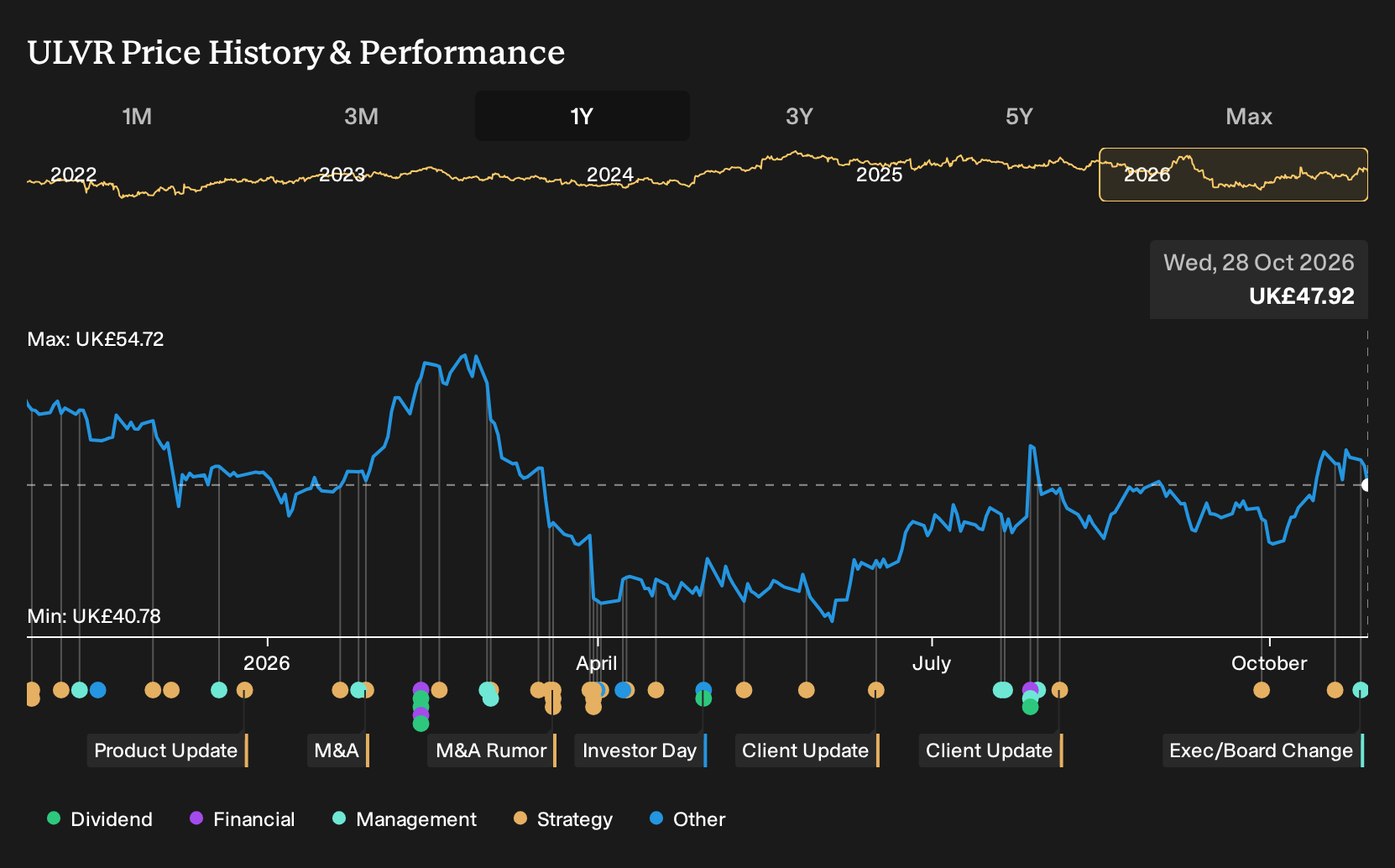
Unilever, a £103.2 billion fast-moving consumer goods group, sells personal and household products across Asia Pacific, Africa, the Americas and Europe, so any change to its European processed food line-up can affect how balanced that global portfolio looks for investors.
See how Unilever's balance sheet measures up.
How big a financial setback is the blocked Unox sale for Unilever?
Unox is one brand within Unilever’s wider Foods business. That sits alongside much larger Home Care, Personal Care and Beauty & Wellbeing units. The blocked sale keeps the asset and its earnings inside the group for now. However, it also means the expected disposal proceeds and any related balance sheet shift are delayed.
Does this change the Unilever Narrative investors have been watching?
The ruling interrupts one piece of the broader portfolio reshaping that is meant to leave Unilever as a roughly €39b Home & Personal Care focused group with operating margins above 19%. It adds another regulatory angle on top of existing risks such as input cost inflation of about $850m in 2026 and scrutiny of Horlicks health claims in India that the Narrative already flags.
See how these catalysts shape Unilever's path to a £51.97 fair value.
What should investors watch next to see how this plays out?
The key signpost is what management says in and around its Q3 2026 sales and trading statement call on 28 October 2026 about appeal plans, alternative buyers or keeping Unox in house. Any update on the separate Foods combination with McCormick will also show how the wider reshaping of Unilever’s portfolio is progressing.
The one check on Unilever many buyers run before acting on headlines like this
Before you even think about trading Unilever on recent events, it helps to see where analysts currently think earnings and cash generation are heading a few years from now. See where analysts expect Unilever to be in a few years.
Have feedback on this article? Concerned about the content? Get in touch with us directly. Alternatively, email editorial-team@simplywallst.com