


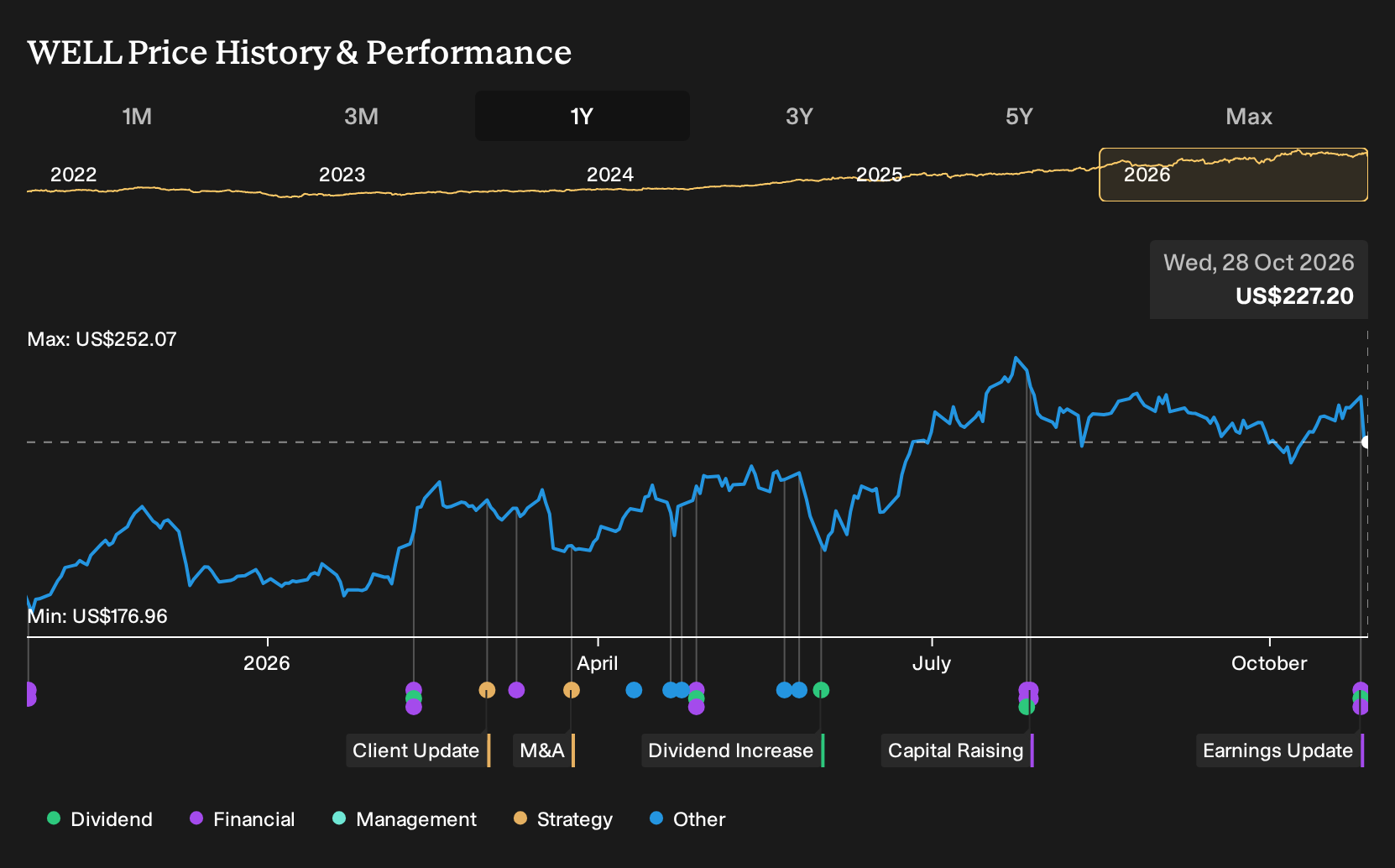
If Welltower was on your watchlist rather than in your portfolio, the recent performance may feel like a missed shot. For Welltower shareholders, the return over the past year was 30.3%, including dividends. That outcome came after analysts in late 2025 were split on how much aging demographics and home-based care would really translate into steady senior rental demand and earnings power. The question now is whether that demand thesis was the key signal investors needed to focus on at the start.
The move put Welltower in the middle of this trade. Scan 10 top silver producer stocks for other companies exposed to it.
The Argument You Would Have Been Weighing With Welltower
The shares cost US$180 at the start of the period, so anyone looking at Welltower then had to decide which story about its future cash flows felt more realistic.
The bullish narrative pointed to aging demographics and senior housing exposure, with a Fair Value of US$207.75, the price those upbeat assumptions implied, built on ideas such as continued 20%+ same-store NOI gains and wider profit margins.
The more cautious camp saw scope for strain instead, with a Fair Value of US$145 based on risks such as heavier acquisition spending, higher interest costs, and possible pressure on occupancy and margins.
What The Results Changed In The Welltower Debate
Welltower’s Q1 2026 update, with 23% normalized FFO per share growth to US$1.47 and 38% revenue growth plus 16.4% same-store NOI gains, leaned toward the optimistic demand story. Record senior housing NOI, higher occupancy, and a 15% dividend increase supported that side, while a later Q3 2026 net income miss and a 33x price to FFO multiple reminded investors the cautious valuation case still mattered. Overall, the evidence cut both ways.
The key assumption was that rising senior housing NOI and occupancy would validate the richer cash flow story. For any other REIT, you would test that same claim against reported same-store NOI growth, occupancy levels, and updated FFO guidance rather than the share price move alone.
What Today's Welltower Price Asks You To Believe
With Welltower now at US$227, this selected Narrative sees its Fair Value above that level and links the gap to how investors rate the senior housing engine.
The argument focuses on needs based demand, capital recycling, and technology tools working together. It claims today’s price still underappreciates sustained high same store NOI growth from the senior housing operating portfolio.
"The main thing that has to go right is that Welltower continues to translate strong needs based senior housing demand and disciplined capital recycling into sustained high same store NOI growth from its senior housing operating portfolio without letting expense growth or governance concerns erode that progress."
Not everyone reads the same price the same way. → See the higher figure this Narrative lands on, and how it gets there
Looking Beyond Welltower's Walls
Welltower puts you squarely inside the senior housing story. One step away, another landlord leans on a different kind of predictable need.
This business focuses on single tenant retail sites where tenants sign long leases. Many tenants sell everyday essentials, which can support steadier rent checks through cycles.
Management uses a relatively conservative balance sheet and interest rate hedging to fund new properties. Internal tools help them process more deals without scaling overhead as quickly.
That mix of necessity focused locations, cautious funding and process automation raises a quieter question. How much room is left for this retailer focused landlord to keep building its portfolio?
One Narrative has already put a figure on it. → Uncover the company trading 18% below one Narrative's Fair Value
Have feedback on this article? Concerned about the content? Get in touch with us directly. Alternatively, email editorial-team@simplywallst.com