


TransUnion (TRU) just paired fresh fourth quarter and full year 2026 earnings guidance with a higher quarterly dividend, giving investors new numbers on expected revenue, profitability and direct cash returns.
TransUnion’s guidance and dividend move come after a sharp 12.3% 1‑month share price gain from recent lows, even as the stock is still down 10.8% year to date and the 1‑year total shareholder return is lower. As a result, recent momentum looks more like a rebound than a full trend change.
Scan how TransUnion’s rebound and richer dividend stack up against other potential opportunities by running the 26 high quality undervalued stocks to pull together quality businesses with compressed valuations.
TransUnion now trades at a sizeable discount to both analyst targets and some intrinsic estimates after a sharp rebound. Is that gap a sign of misplaced caution, or a fair price on real risks?
Most Popular Narrative: 16% Undervalued
TransUnion’s most followed valuation storyline pegs fair value at $88.81 per share, above the recent $74.31 close, which frames today’s rebound against a still sizable modeled upside gap.
Strategic innovation investments, including AI, machine learning, and the roll-out of the global cloud-native OneTru platform, are driving efficiency, faster product launches, better cross-sell opportunities, and improved customer retention. This positions TransUnion to grow earnings with higher operating leverage and net margins as technology transformation costs subside post-2025.
See why 10 investors see TransUnion as 16% undervalued.
Result: Fair Value of $88.81 (UNDERVALUED)
Still, the TransUnion narrative leans on heavy data use and complex tech, so tighter privacy rules or a serious cyber event could quickly reset expectations.
Find out about the key risks to this TransUnion narrative.
Another View: What TransUnion’s P/E Is Really Saying
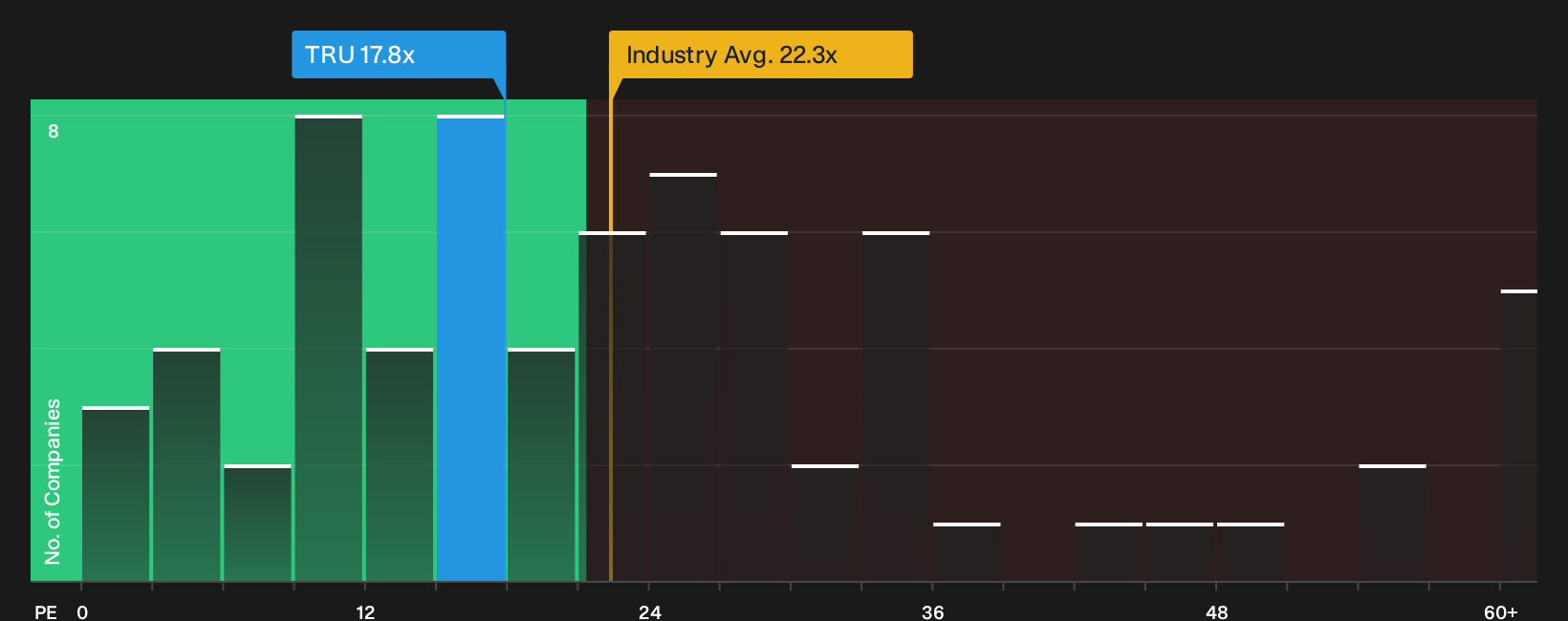
The first story presents TransUnion as meaningfully undervalued, with fair value estimates around $88.81 per share. Viewed through the simpler P/E lens, the picture appears less generous. At 17.8x earnings, the stock trades below the US Professional Services average of 22.3x and below peers at 29.5x, yet above its own fair ratio of 16.9x. This suggests investors already pay a premium relative to where that ratio could settle. Is that gap a margin of safety, or a signal to be more demanding on the price you are willing to accept?
For a closer look at what the current earnings multiple might be asking you to pay for TransUnion's future, See what the numbers say about this price — find out in our valuation breakdown.
Next Steps
Mixed signals across TransUnion’s valuation, earnings guide and dividend can feel messy, so move fast, review the underlying data, and weigh both the risks and the upside highlighted in the 3 key rewards and 2 important warning signs
Want more ideas beyond TransUnion?
Broaden your watchlist with a few focused screens that surface clear opportunities, then decide where TransUnion fits alongside those potential candidates.
- Target steadier potential outcomes by filtering for resilient businesses with lower risk scores using the 32 resilient stocks with low risk scores.
- Hunt for quality on sale by scanning for companies with solid fundamentals trading at compressed prices through the 26 high quality undervalued stocks.
- Back balance sheet strength by reviewing a list of solid balance sheet and fundamentals (24 results) that can help support operations through tougher conditions.
Have feedback on this article? Concerned about the content? Get in touch with us directly. Alternatively, email editorial-team@simplywallst.com