


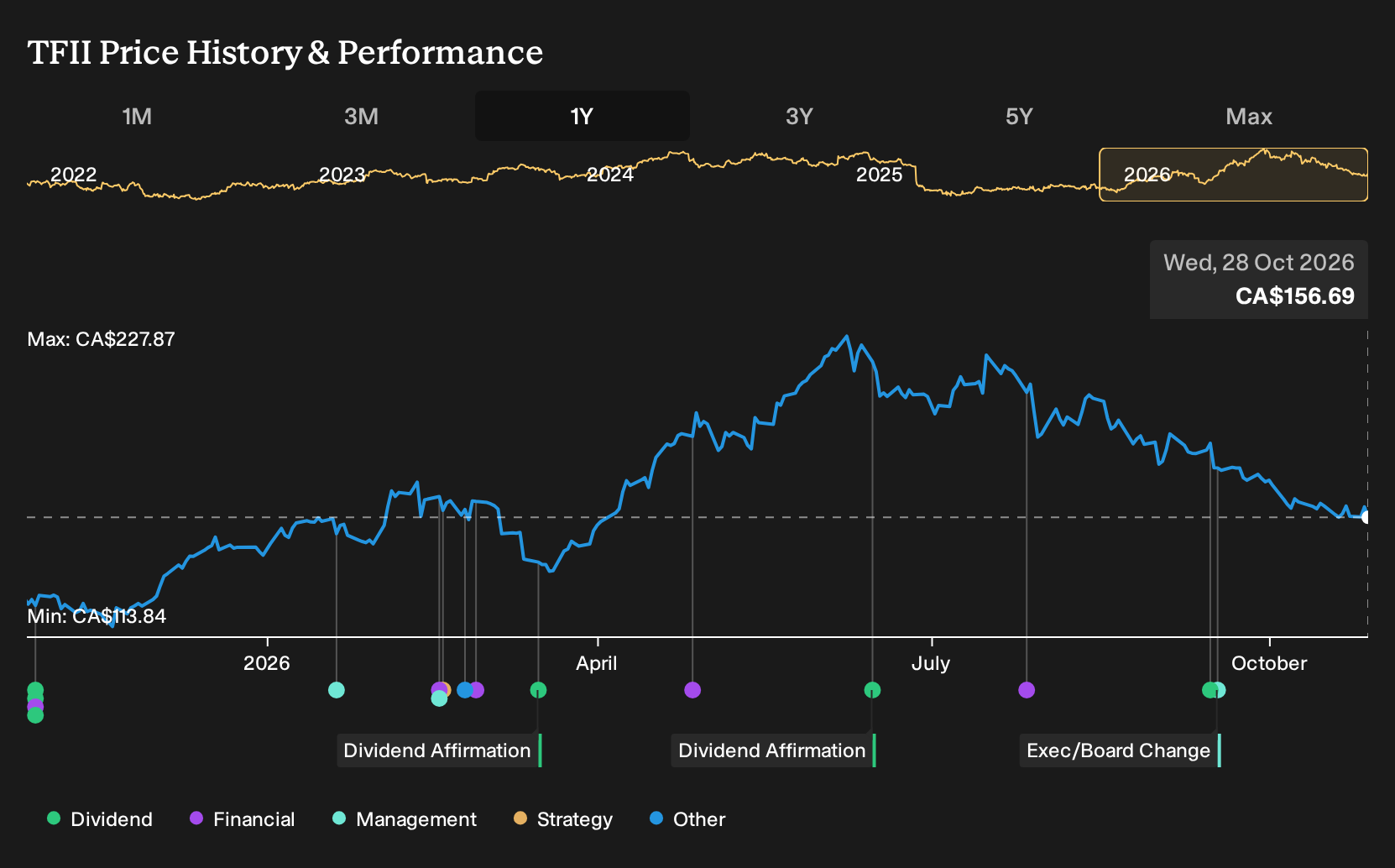
If you had bought TFI International on 28 October 2025 and simply sat tight, the past year looks very different today. Investors who held TFI International over the past year are up 28.0%, including dividends. That outcome now invites a harder question. Back at the start, should early buyers have focused more on cross border freight growth and digital efficiency, or on the risk that decarbonization and new delivery tech could erode its freight model?
The useful thing about a Narrative is that the reasoning is checkable: the assumptions sit beside the argument, and together they imply an estimated Fair Value you can disagree with.
The easy part of this move is behind TFI International. Zero in on 4 high quality undervalued stocks for companies trading below our estimates.
The Argument TFI International Investors Were Actually Having
The shares cost CA$123 at the start of the period, and anyone looking at TFI International then had to pick between two very different stories about its next few years.
The bullish narrative put fair value at CA$141, built on revenue growing 3.6% a year and profit margins reaching 6.1% as cross border freight and digital efficiency projects improved earnings power.
The bearish view saw fair value at CA$96.4 and focused on decarbonization costs and new delivery technology shrinking traditional freight demand, with margins pressured by higher regulatory and labor expenses.
What The TFI International Results Actually Tested
TFI International reported Q2 2026 revenue of US$2.29b and net income of US$136.2m, compared with US$2.04b and US$98.2m a year earlier. Net margin was 5.9%, up from 4.8%. That pattern supported the optimistic case that focused on higher efficiency and earnings power, although it did not settle longer term questions about freight demand or disruption risk.
The key lesson is simple. When a thesis leans on margin expansion, track the net margin line and its direction each reporting period, not just headline revenue or EPS, and test whether it is actually moving toward the original assumption.
What TFI International's Price Already Bakes In
With TFI International now at CA$157, this Narrative’s Fair Value sits above the current price based on its own framework rather than settled fact.
The argument leans on mix and margin work, not blue sky tech. A buyer today would need to believe U.S. LTL repricing and service upgrades can materially close the gap with Canada.
"The current numbers on truckload margins, logistics ROIC, free cash flow, leverage, and ongoing dividend growth together imply a share price that does not fully reflect the company’s capital-light model, balance sheet strength, and potential for further cash returns."
Not everyone reads the same price the same way. → See the higher figure this Narrative lands on, and how it gets there
Another Route Beyond TFI International
TFI International orients your attention to freight, terminals, and trailers. One step away, a different player is asking who owns the ride itself.
Your parcel crosses borders in a truck. At the same time, a separate platform is stitching together cars, couriers, and long haul loads.
Its software matches demand with available vehicles, handles payments, and coordinates timing. The entire pitch rests on using data to keep wheels turning more often.
If autonomous vehicles change who drives, that platform’s role could change too. The real puzzle is whether the marketplace or the machine keeps more of the economics.
The case is on the record, with the assumptions it rests on. → See the Narrative that values this company 78% above its price
Have feedback on this article? Concerned about the content? Get in touch with us directly. Alternatively, email editorial-team@simplywallst.com