


A new global trade agreement is quietly rewriting the rules for how money and goods move across borders, and that ripple reaches straight into global e-commerce and digital payments platforms. Lower tariffs and clearer data rules could shift where consumers click, how businesses expand and which stocks actually benefit. This article examines three stocks exposed to these policy changes to help you evaluate which opportunities may warrant closer attention and which might be less compelling.
The stocks covered below are a starting sample from this theme. The full screen surfaced 20 more global e-commerce and digital payments platforms with equally compelling narratives that are not included in this article. To see the broader field and identify which large, liquid platforms best match your own criteria, head straight into the Global E-Commerce and Digital Payments Platforms screener
Global-E Online (GLBE)
Global-E Online sits squarely in the global e-commerce and digital payments theme because its platform is built to simplify cross-border direct-to-consumer sales for large brands. As a result, shifts in trade rules and data standards feed directly into how valuable its service can become.
Global-E Online runs a pure cross-border direct-to-consumer platform, earning all of its US$1.11b in revenue from internet information provider services, and carries a market value of about US$7.0b.
"Although Global-E Online is reporting GMV and revenue growth with rising adjusted EBITDA margins, the recent decline in non GAAP gross margin to 45.3% from 46.5% linked to higher and more volatile fuel costs that were not fully passed through to merchants points to ongoing pressure on unit economics that could weigh on future net margins and earnings quality."
What happens to profitability from here largely hinges on how one quiet shift inside the service mix plays out over the next few years.
That hinge point is exactly what the full narrative for Global-E Online unpacks, revealing how Global-E Online could see fuel cost pressure decouple from long term earnings potential.

Coupang (CPNG)
Coupang plugs directly into the global e-commerce and digital payments theme through its online retail, marketplace, delivery, content and fintech services across Korea and overseas markets, generating about US$30.0b from Product Commerce and US$5.5b from Developing Offerings, with a roughly US$25.0b market value.
Coupang matters here because it blends a massive domestic e-commerce engine with early cross border reach. As a result, any policy tailwind for data flows and tariffs can feed into a business already wiring shoppers, restaurants and content into a single logistics and payments stack.
"Ongoing investments in automation, AI, and logistics technology are already driving major improvements in operational efficiency and gross margins."
What really moves the needle from this point is how one unresolved cost and capital balance shapes future margins and cash generation.
That cost question is exactly what the full narrative for Coupang breaks down, showing where automation gains might be masking risk and where Coupang’s flywheel could still be accelerating.

Rakuten Group (TSE:4755)
Rakuten Group is a broad digital ecosystem across e-commerce, fintech, mobile and content that fits this screener through its mix of online marketplaces and payment services that support global trade. What really grabs attention now is how that ecosystem is starting to work harder together.
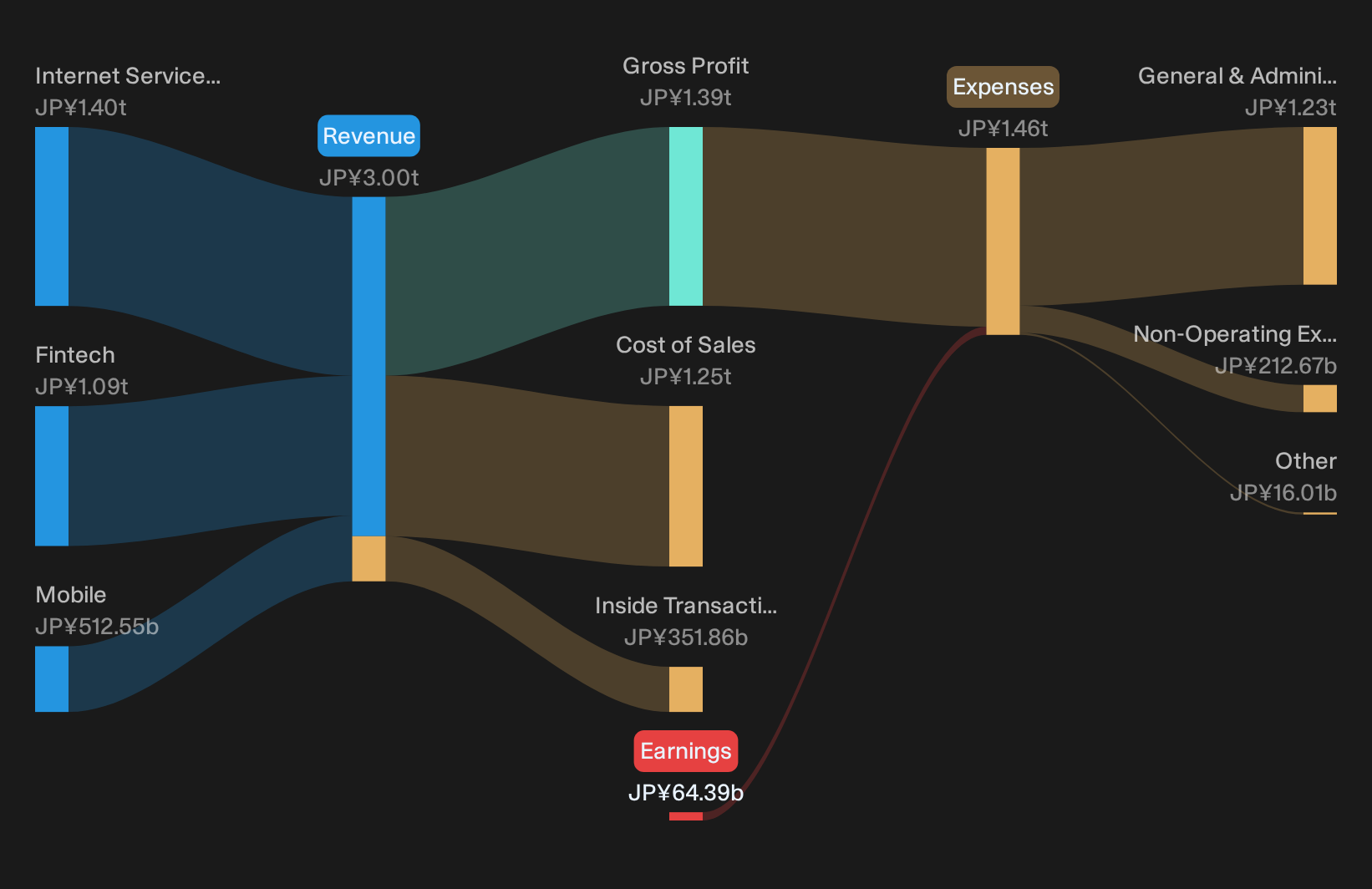
Rakuten Group runs Internet Services that generated about ¥1,395.4b, FinTech operations producing roughly ¥1,090.4b and Mobile at around ¥512.6b in revenue, offset by ¥351.9b of internal transactions, and carries a market value near ¥1,348.3b.
"Rakuten Group’s AI deployment across search, recommendations, advertising, customer service, and internal tools generated ¥25.5b of profit contribution in 2025 with a very large increase in token usage. Management is targeting roughly 3x the 2024 contribution in 2026, which directly targets higher net margins and earnings."
What happens if one planned shift inside the wider fintech and mobile ecosystem lands exactly as management expects for profitability and cash generation?
If that shift matters to your thesis, read the full narrative for Rakuten Group to see how Rakuten Group’s ecosystem could convert ecosystem synergies into accelerating earnings power.
Seeking Alternatives Before The Crowd?
Fresh ideas move first. By the time every screen flashes green, early momentum is already flying and entry points start dropping. Scan these curated picks while it matters and consider your options promptly.
- Spot potential breakouts early by scanning a curated 19 high quality undiscovered gems that have stayed under the radar for now, before momentum is fully caught by the wider market.
- Target cash-generators in AI by running through 38 profitable AI stocks that aren't just burning cash where the focus is on businesses already converting demand into earnings rather than just burning capital.
- Anchor your watchlist with income-oriented names by checking the 6 dividend fortresses that aim to combine cash flows with yields that may support portfolios when momentum cools.
Have feedback on this article? Concerned about the content? Get in touch with us directly. Alternatively, email editorial-team@simplywallst.com