


Many artificial intelligence (AI) skeptics believe that the AI boom will not last long, and that the bubble will be ugly when it bursts. But Nvidia (NVDA) CEO Jensen Huang is doing his utmost not only to keep the so-called bubble alive, but to make it bigger by the day. To that end, Nvidia just announced that it will invest $3 billion in social media giant Meta Platforms (META) as part of a collaboration involving Meta's Muse AI models.
This investment will see Meta deploy both Vera Rubin and Vera CPUs for its Muse AI agent and wider Muse family of models. The partnership will also involve Meta making use of Nvidia's Spectrum-X Ethernet networking and BlueField-4 data processing unit. Crucially, Nvidia's AI agents-focused cybersecurity architecture — namely, the Nvidia OpenShell Reference Architecture — may also be deployed along with Nvidia Sentry, the security software framework that monitors AI agents.
Muse made a blockbuster debut in September 2026 and surpassed 10 million downloads in its first 40 days. Accordingly, there is likely no better real-life test of Nvidia's latest cybersecurity initiative.
“AI agents represent a new computing paradigm — software that understands our goals, reasons, uses tools and gets work done on our behalf. This changes how we use computers, from operating applications to working with intelligent agents," said Nvidia CEO Jensen Huang. "NVIDIA and Meta are expanding our partnership to optimize the computing infrastructure end to end for capable, efficient and secure AI agents, so Muse can empower billions of people to achieve more and pursue greater ambitions.”
This latest investment from Nvidia is part of Meta Platforms' $97.5 billion equity fundraise to expand AI capacity. But what does the deal mean for the wider AI trade? Let's take a closer look.
Nvidia's Agentic Security Bet
Nvidia wants to be a one-stop shop for everything AI. With its industry-leading GPUs and CUDA software ecosystem, the company has unmatched prowess, too. However, as inference becomes the centerpiece of the AI revolution and companies develop their own custom chips for their specific workloads, some naysayers have started to believe that Nvidia's preeminent position is under threat.
Not looking to cede its ground so easily, Nvidia has introduced the Vera CPU, which plays a particularly important role in inference-heavy workloads involving agentic AI and the broader Vera Rubin system. Staying with Vera, it gives Nvidia a stronger position in the work happening between model calls. In a March 2026 announcement, Nvidia described 88 custom Olympus cores “delivering high performance for compilers, runtime engines, analytics pipelines, agentic tooling and orchestration services.” For faster inference, the company's dedicated Vera CPU rack combines 256 CPUs and supports more than 22,500 concurrent CPU environments. Within the Vera Rubin platform, the CPU and GPU connection offers 1.8 terabytes per second of coherent bandwidth.
Nvidia has also been improving the economics of its existing hardware through software. Released in March 2026, Dynamo 1.0 provides an open-source framework for coordinating inference across GPUs and memory resources. It separates stages of inference, routes requests toward GPUs holding relevant cached context, and moves that context to cheaper storage when appropriate. This is particularly useful for agents that revisit earlier information across successive reasoning steps.
Finally, announced on Oct. 21, the company's OpenShell Reference Architecture expands that software initiative into enterprise infrastructure. Nvidia’s technical explanation describes a gateway that manages sandboxes and policies, a separate supervisor that checks outbound requests and credentials, and a policy prover that checks permissions against organizational limits. In essence, the important feature is that governance sits outside the agent’s control.
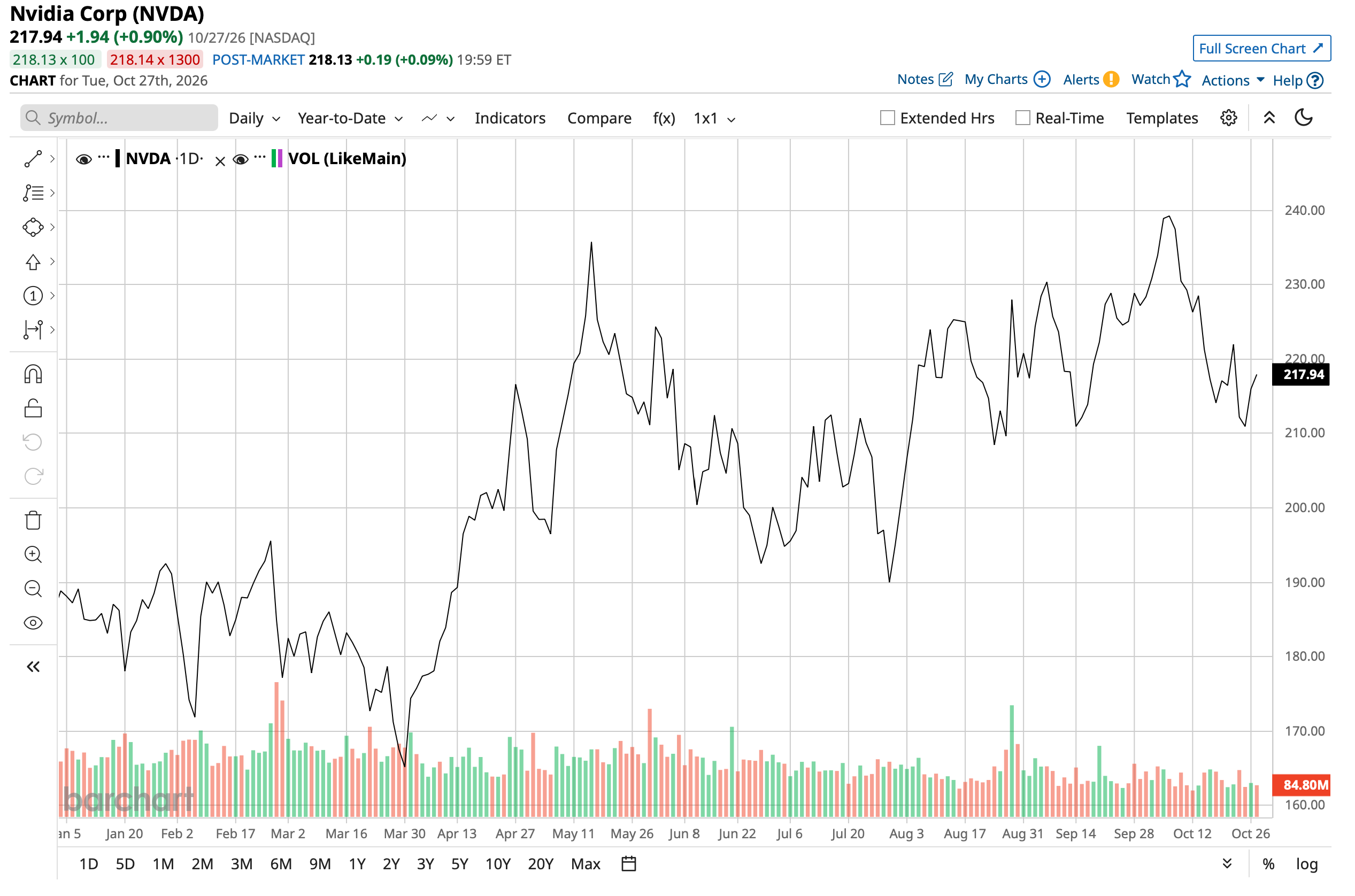
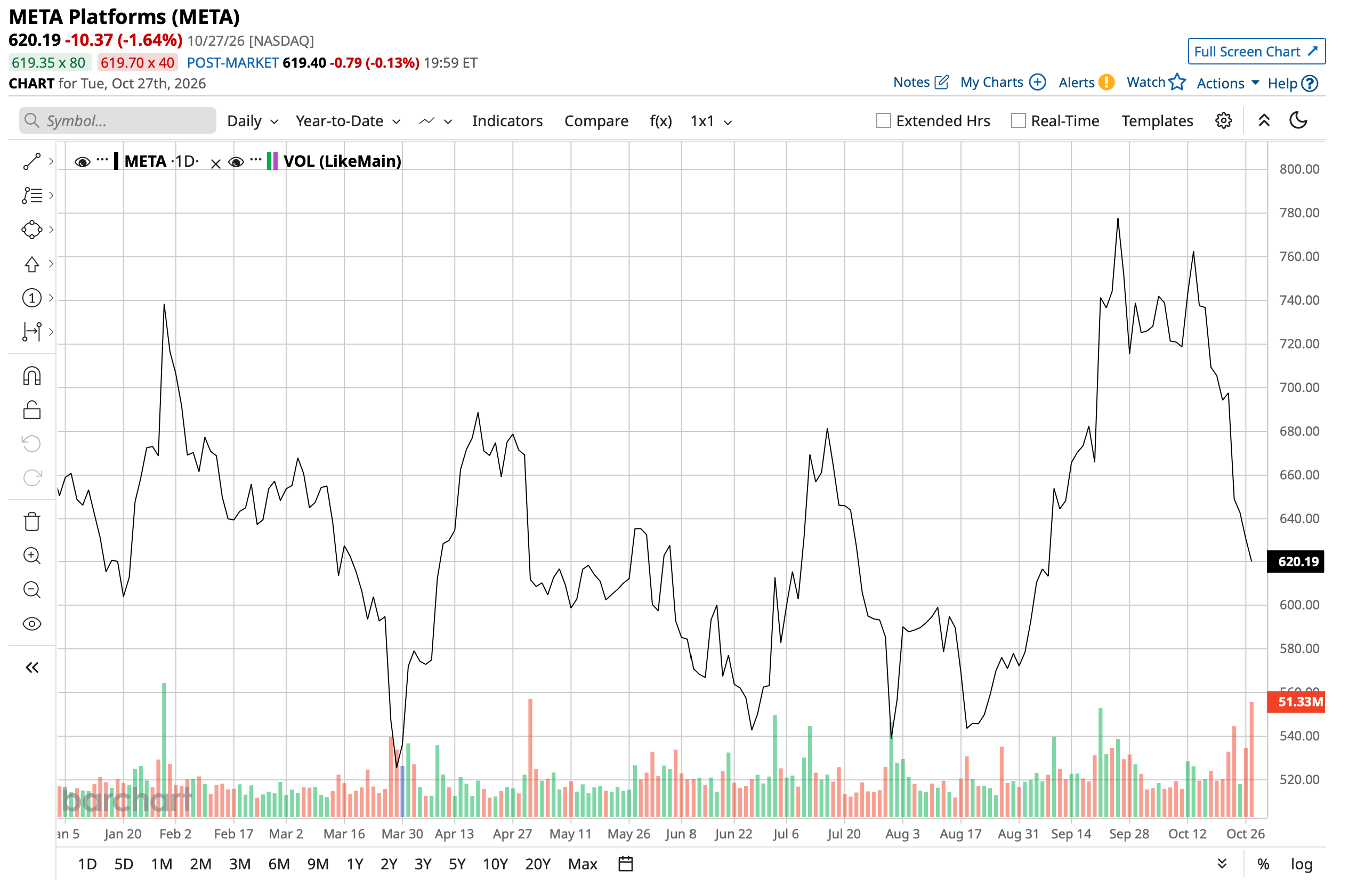
With a market capitalization of $5.35 trillion, NVDA stock is up by 15% on a year-to-date (YTD) basis and up 7% for the past 52 weeks. Meanwhile, with a market cap of $1.69 trillion, META stock is down 7% on a YTD basis and down 18% for the past 52 weeks.
What Do Analysts Think of NVDA Stock and META Stock?
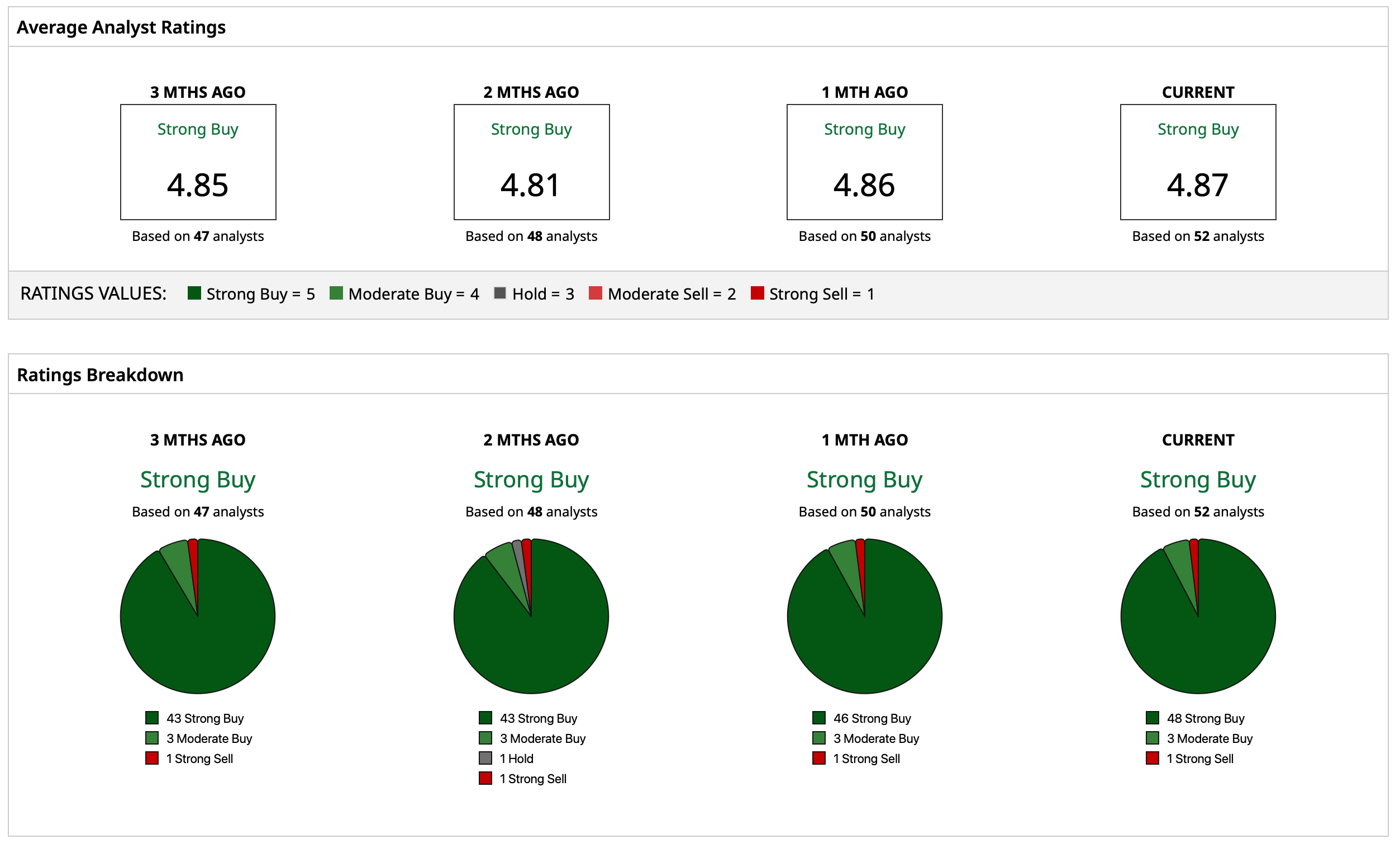
Overall, analysts have a consensus “Strong Buy” rating for Nvidia stock. Out of 52 analysts covering NVDA stock, 48 have a “Strong Buy” rating, three have a “Moderate Buy” rating, and one analyst has a “Strong Sell” rating. The mean target price of $328.75 denotes potential upside of 53% from current levels
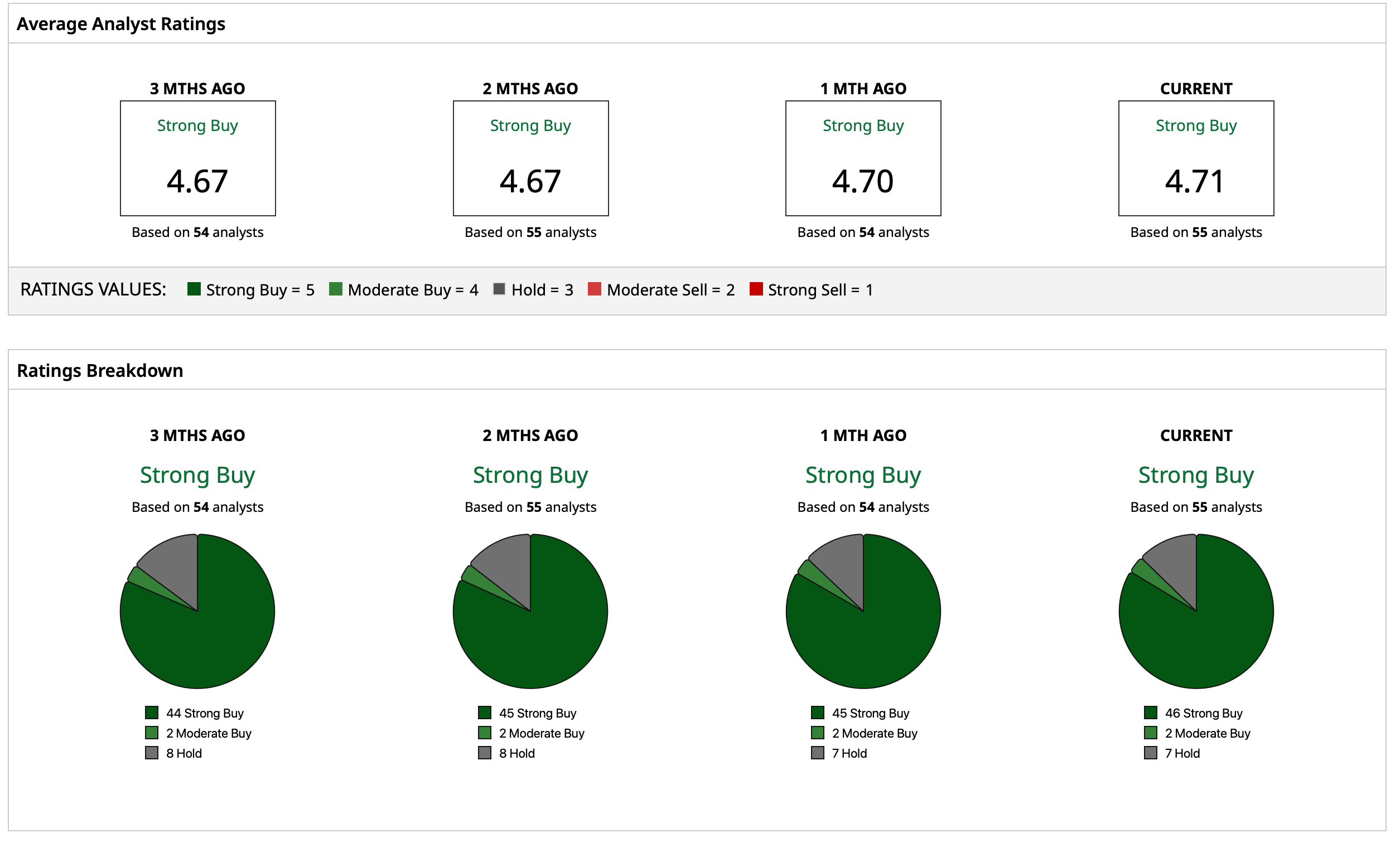
For META stock, analysts also have a consensus “Strong Buy” rating overall. Out of 55 analysts covering Meta Platforms stock, 46 have a “Strong Buy” rating, two analysts have a “Moderate Buy” rating, and seven analysts have a “Hold” rating. The mean target price of $855.47 indicates potential upside of roughly 40% from current levels.
On the date of publication, Pathikrit Bose had a position in: NVDA . All information and data in this article is solely for informational purposes. For more information please view the Barchart Disclosure Policy here.