



Boat and marine manufacturer Brunswick (NYSE:BC) met Wall Street’s revenue expectations in Q3 2026, with revenue up 6.9% year on year to $1.45 billion. The company’s outlook for the full year was close to analysts’ consensus estimates with revenue guided to $5.75 billion at the midpoint. Its non-GAAP profit of $1.58 per share was 19.4% above analysts’ consensus estimates.
For more on Brunswick, read our free full research report.
Brunswick (BC) Q3 2026 highlights:
- Revenue $1.45 billion vs S&P analysts’ consensus estimates of $1.45 billion (6.9% year-on-year growth, in line)
- Adjusted EPS $1.58 vs S&P analysts’ consensus estimates of $1.32 (19.4% beat)
- Revenue guidance The company reconfirmed its revenue guidance for the full year of $5.75 billion at the midpoint
- Adjusted EPS guidance Management raised its full-year adjusted EPS guidance to $4.65 at the midpoint, a 2.2% increase
- Operating margin 7.2%, up from -17.8% in the same quarter last year
- Free cash flow margin 9.7%, up from 7.8% in the same quarter last year
- Market capitalization $4.46 billion
Revenue growth
A company’s long-term revenue performance can indicate its overall quality. Any business can report a good quarter or two, but many enduring ones grow for years. Brunswick struggled to consistently increase demand as its $5.72 billion in revenue for the trailing 12 months was close to its revenue five years ago. This fell short of our standards and suggests it’s a low-quality business.
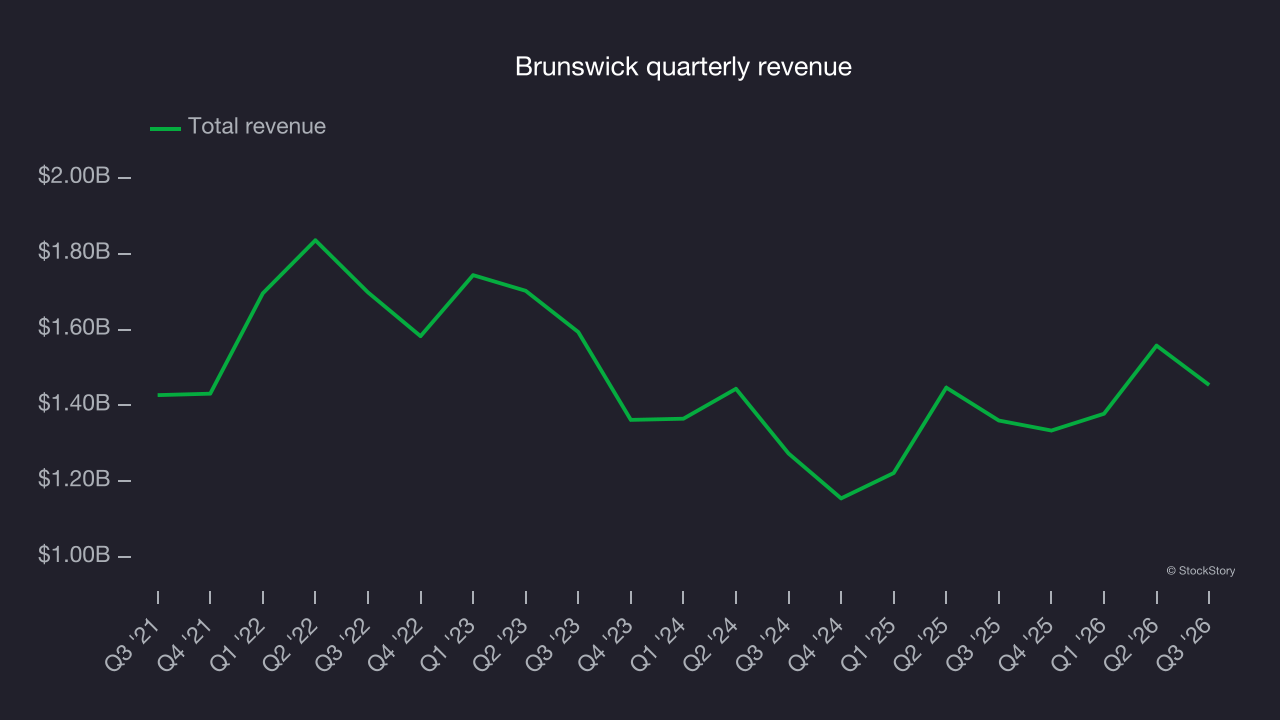
Long-term growth matters most, but within consumer discretionary, a stretched historical view may miss a company riding a successful new product or trend. Brunswick’s annualized revenue growth of 2.5% over the last two years is above its five-year trend, a positive sign. 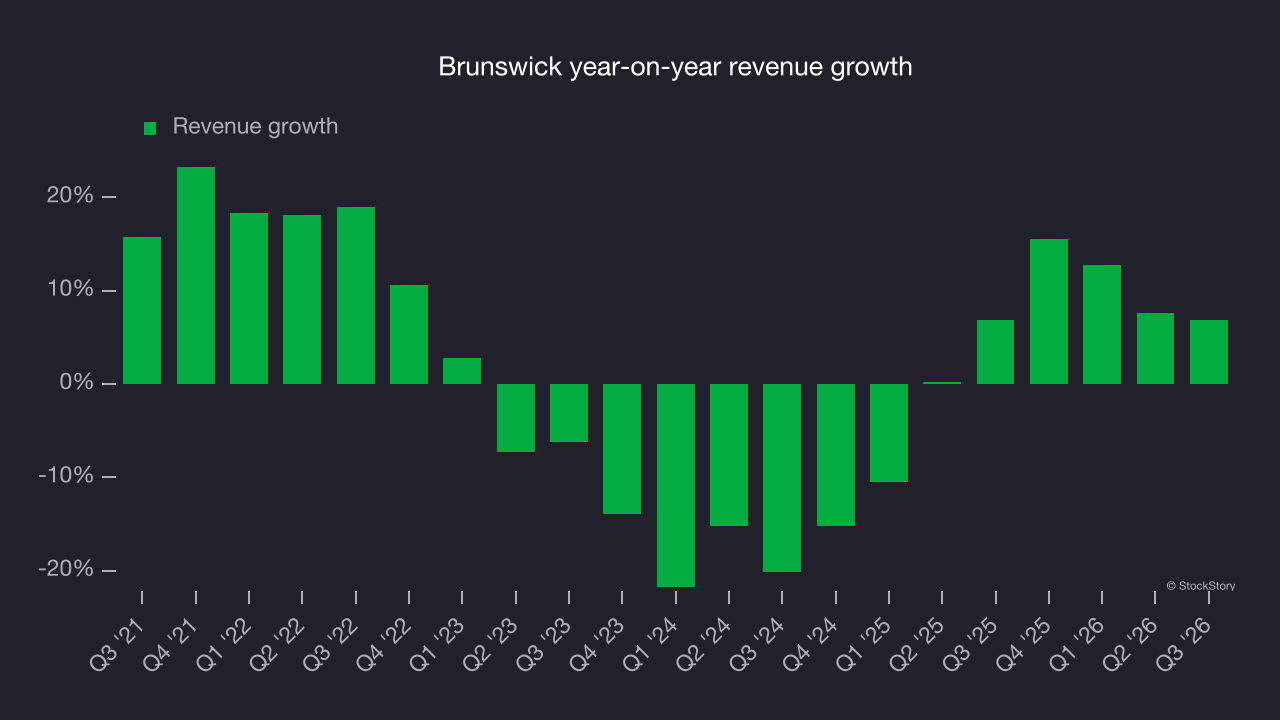
This quarter, Brunswick grew its revenue by 6.9% year on year, and its $1.45 billion of revenue was in line with Wall Street’s consensus estimates.
Looking ahead, sell-side analysts expect revenue to grow 5% over the next 12 months, according to S&P. While this projection indicates its newer products and services will spur better top-line performance, it is still below average for the sector.
Operating margin
Brunswick’s operating margin has risen over the last 12 months and averaged 1.7% over the last two years. The company’s improved efficiency is a positive, but its suboptimal cost structure means its profitability remains inadequate for a consumer discretionary business.
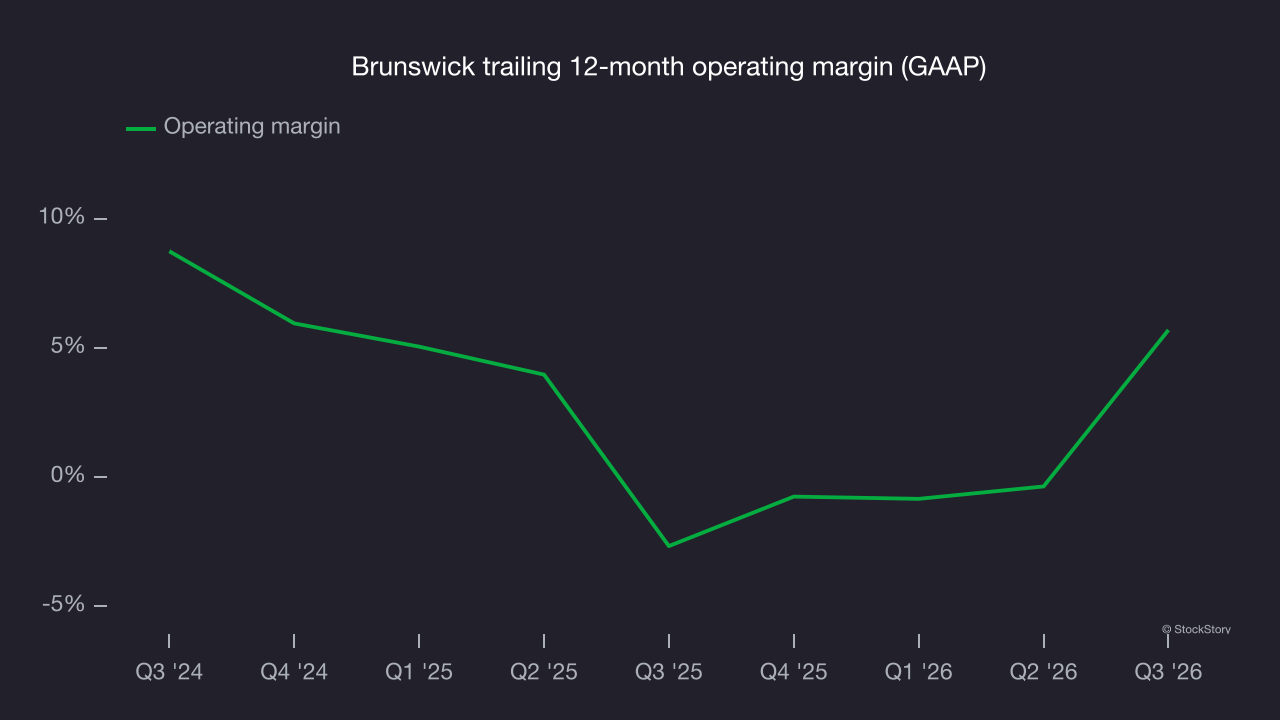
This quarter, Brunswick generated an operating margin of 7.2%, up 25 percentage points year on year. The increase was a positive sign of improved efficiency.
Earnings per share
Revenue trends explain a company’s historical growth, but the long-term change in earnings per share (EPS) points to the profitability of that growth – for example, a company could inflate its revenue through excessive spending on advertising and promotions.
Brunswick’s EPS declined by 11.5% annually over the last five years while its revenue was flat. This indicates the company struggled because its fixed cost base made it difficult to adjust to choppy demand.
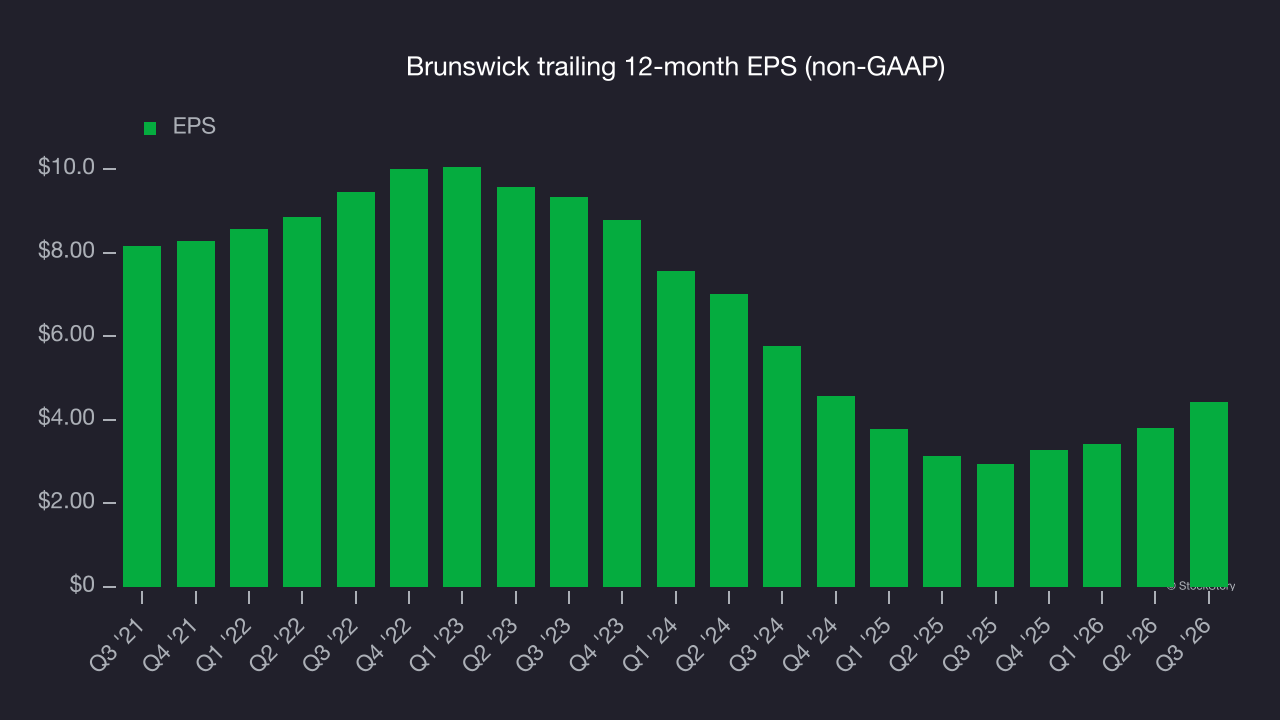
In Q3, Brunswick reported adjusted EPS of $1.58, up from $0.97 in the same quarter last year. This comfortably exceeded analysts’ consensus estimates. Over the next 12 months, Wall Street expects Brunswick’s full-year EPS to grow 15.9% from $4.42 to $5.12, according to S&P.
Key takeaways from Brunswick’s Q3 results
Brunswick’s quarter had key positives on earnings, with EPS topping analysts’ consensus estimates and full-year EPS guidance also exceeding Wall Street’s consensus. Full-year revenue guidance, however, was in line with expectations. Shares rose 4.2% to $71.71 immediately after the results.
Brunswick’s latest quarter matters when deciding whether to buy the stock, but longer-term fundamentals and valuation matter much more. Read the full research report here (it’s free).