


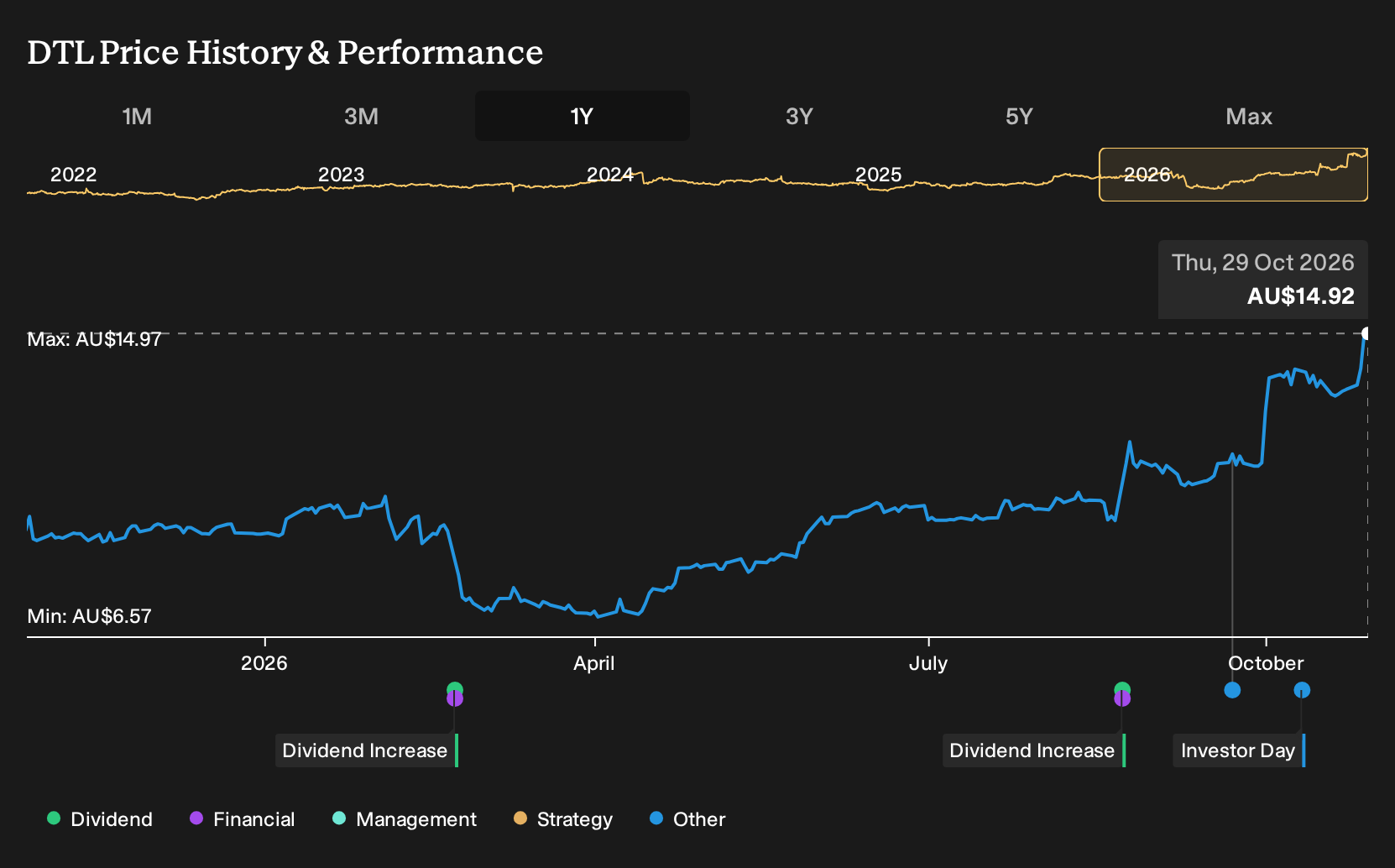
If you had bought Data#3 on 29 October 2025, the decision now looks anything but dull. For Data#3 shareholders, the return over the past year was 74.5%, including dividends. That result sits next to a starting point where one narrative flagged ENRON-style disclosure tricks and cash flow window dressing, while another leaned on recurring contracts and Microsoft ties. The real question is what early buyers thought mattered more: the reported risks or the recurring revenue story.
On Simply Wall St, a Narrative is an investor's thesis written down: the reasoning, plus the numbers it rests on. Run those numbers and you get an estimated Fair Value.
Data#3 has already moved. Pinpoint other ways to investigate the theme among 54 AI infrastructure stocks.
The Two Data#3 Stories Investors Were Arguing About
The shares cost A$9.53 at the start of the period, and anyone looking at Data#3 then had to pick between two very different stories.
On one side, the bull Narrative put Fair Value at A$25.4, built on assumptions of 35.9% revenue growth, a 5.5% profit margin and a future P/E of 28.0x, while worrying about disclosure quality and cash flow presentation.
The opposing case saw Fair Value at A$8.85, leaning on 63.2% assumed revenue growth with a 1.7% margin and a future P/E of 27.5x, but highlighting concentration risk in Microsoft partnerships and margin pressure from subscriptions.
What The Results Changed For The Data#3 Narratives
The biggest new fact for Data#3 was the record FY26 result. Management reported A$907.3m statutory revenue, A$69.8m EBIT and A$54.5m net profit after tax, alongside higher EPS and dividends per share. This broadly leaned toward the optimistic case that focused on recurring contracts and Microsoft ties. Half-year numbers showed revenue and profit both higher, with net margin moving from 5.6% to 6.5%. Overall, the evidence cut both ways rather than settling the debate.
The lesson is simple. When a thesis hangs on disclosure risk versus recurring revenue strength, you test it against reported cash, debt levels, segment mix and margin direction every results season, then decide which story is gaining ground.
What Data#3's Price Already Assumes
Data#3 now trades at A$14.92 after a 74.5% gain over the past year, while the selected Narrative's Fair Value sits below that level based on its own framework.
The Narrative leans on recurring contracts, security services and key vendor ties, yet highlights partner dependence and margin pressure. Anyone paying today's price is effectively backing durable earnings quality, then weighing how concentration risk or commoditisation could challenge that assumption.
"The accelerating shift by customers to multiyear subscription and as-a-service models (evidenced by recurring revenue increasing to 69% and rapid expansion in Device-as-a-Service), positions Data#3 for higher, more stable, and predictable revenue and margin growth over time as the mix continues to improve."
The price and this Narrative do not agree. → Uncover what this Narrative says Data#3 is actually worth
One Step Beyond Data#3
See Data#3 as one route into the AI build out. Then ask where all that software demand ultimately leans for raw computing power.
Behind the scenes, a different provider is racing to supply cloud infrastructure for the heaviest AI workloads. It is building huge sites designed around dense computing clusters.
Those facilities are meant to train and run large language models at scale. The same push helps clients handle everyday AI tasks once models are finished.
If that need for compute capacity keeps spreading, this infrastructure specialist’s role could shift meaningfully from its old reputation.
The case is on the record, with the assumptions it rests on. → See the Narrative that values this company 170% above its price
Have feedback on this article? Concerned about the content? Get in touch with us directly. Alternatively, email editorial-team@simplywallst.com