


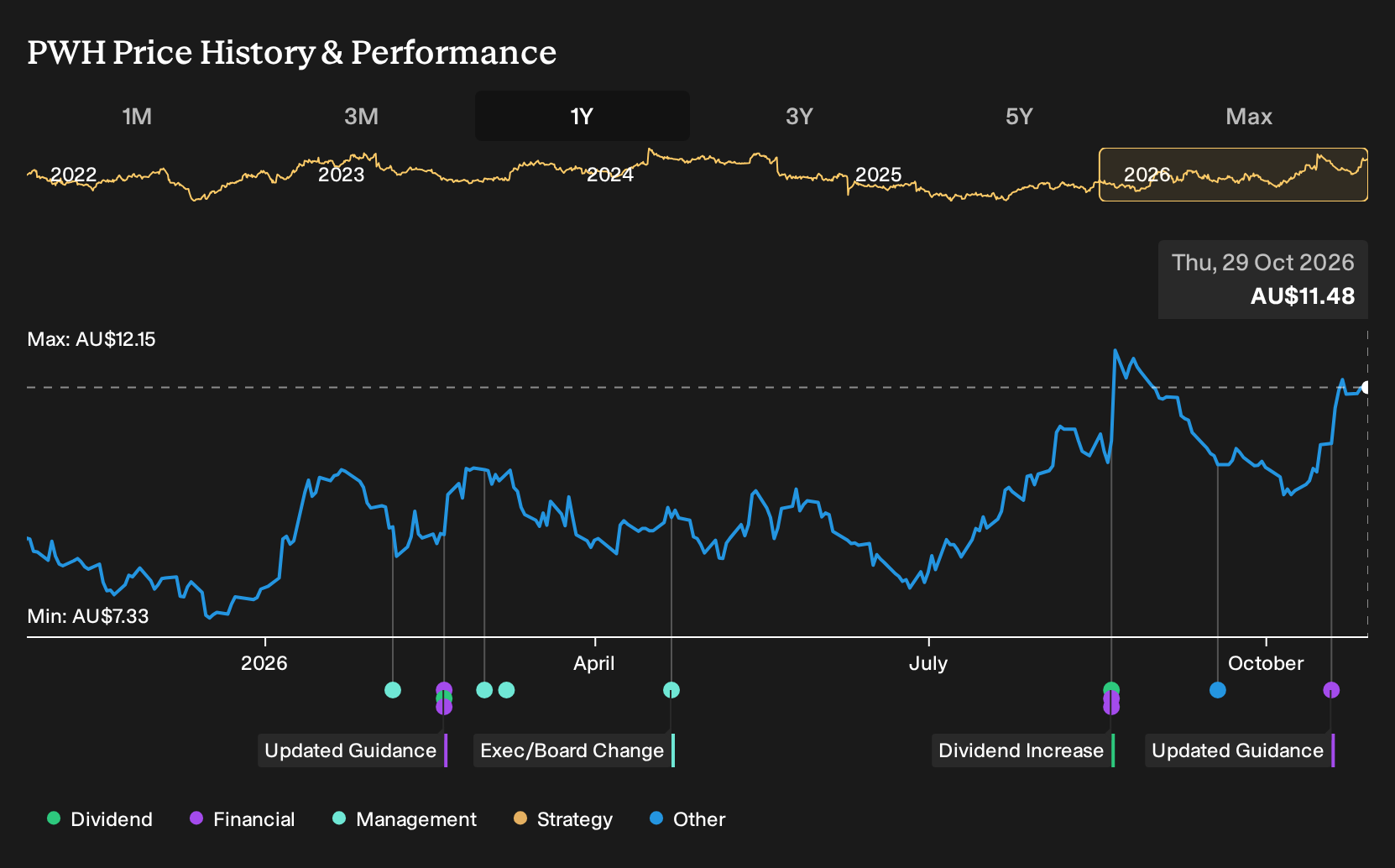
If you had bought PWR Holdings on 29 October 2025, the decision now looks very different on a one year chart. For PWR shareholders, the return over the past year was 35.6%, including dividends. That outcome might tempt you to think the call was simple. Yet early buyers were weighing expanding aerospace ambitions against fresh tariff costs and lumpy motorsport demand. So which of those moving parts truly mattered at the point of decision?
Narratives are how investors here put a case on the record, with explicit assumptions about revenue, margins and the multiple. Those assumptions imply an estimated Fair Value.
The easy part of this move is behind PWR. Zero in on 2 high quality undervalued stocks for companies trading below our estimates.
The Two PWR Stories Investors Had To Weigh
The shares cost A$8.75 at the start of the period, and PWR Holdings sat between two cleanly argued stories about what might come next.
The bullish Narrative put Fair Value at A$12.4. That view leaned on PWR using its motorsport credibility to win higher value aerospace and defense contracts while aiming for 12.0% revenue growth and a 24.0% profit margin over a 5 year horizon.
The more cautious Narrative set Fair Value at A$8.27. This side focused on risks from rising tariffs, heavier fixed costs from new facilities and compliance, and sensitivity to motorsport and aerospace demand swings.
What The Results Changed For PWR Holdings
The headline shift was PWR Holdings reporting record FY26 numbers, with revenue of A$170.7 million and net profit after tax of A$17.9 million, and H2 2026 revenue and profit both above H2 2025 with margin rising from 8.5% to 13.5%. That tilt toward higher profitability supported more of the bullish thesis than the cautious one, although margins stayed short of the optimistic 24% assumption.
The lesson is simple. When a thesis leans on margin expansion, track the reported net margin first, not just revenue or headline profit, and compare it directly with the original target range you priced in.
What PWR's One Year Run Already Prices In
PWR Holdings now trades at A$11.48 after a 35.6% gain over the past year. The selected cautious Narrative sees Fair Value below that level, even while treating the thermal technology as unusual and difficult to copy.
For this price to hold up, a buyer must assume the aerospace and defense expansion keeps converting into long contracts without eroding PWR’s competitive edge or returns.
"PWR has several layers of protection that any competitor must overcome before taking a single dollar of revenue. First, there is the technology itself. The ability to fabricate tube and fin, bar and plate, and Micro Matrix heat exchangers using additive manufacturing is not something a mass-market automotive supplier can replicate profitably."
The price and this Narrative do not agree. → Uncover what this Narrative says PWR is actually worth
Looking One Step Beyond PWR
PWR shows how thermal expertise can reshape what high performance hardware can do. Your next question might sit slightly off that track.
Robots and electric vehicles still need a different ingredient. They rely on dense batteries and control systems that can run advanced software constantly.
Another business is chasing that demand by tying physical machines to artificial intelligence services. Its pitch is simple. Sell the hardware, then keep charging for new skills.
That shift turns each robot or vehicle into a recurring software customer. If that model takes hold at scale, it could change how investors think about hardware-heavy companies.
That argument has a Narrative and a number behind it. → See the company one Narrative values 65% above its price
Have feedback on this article? Concerned about the content? Get in touch with us directly. Alternatively, email editorial-team@simplywallst.com