


Airports were once places where planes landed and took off, and passengers (and cargo) flew to and from.
Today, they’re moving beyond basic transport structures to “long-duration, capital-intensive assets that create sustained economic, social and financial value while shaping regional growth and investment patterns,” according to a recently released Cushman & Wakefield report.
But this doesn’t just happen. The report explained that airports are often among the largest contiguous landholdings in their metro areas. Owners who go one step further by developing an integrated commercial real estate strategy can provide “a framework for sound investment decisions, stronger asset performance and sustained growth across the whole airport,” the Cushman & Wakefield authors said.
Where We Are Now
Cushman & Wakefield described three interconnected areas where airport real estate value can be generated:
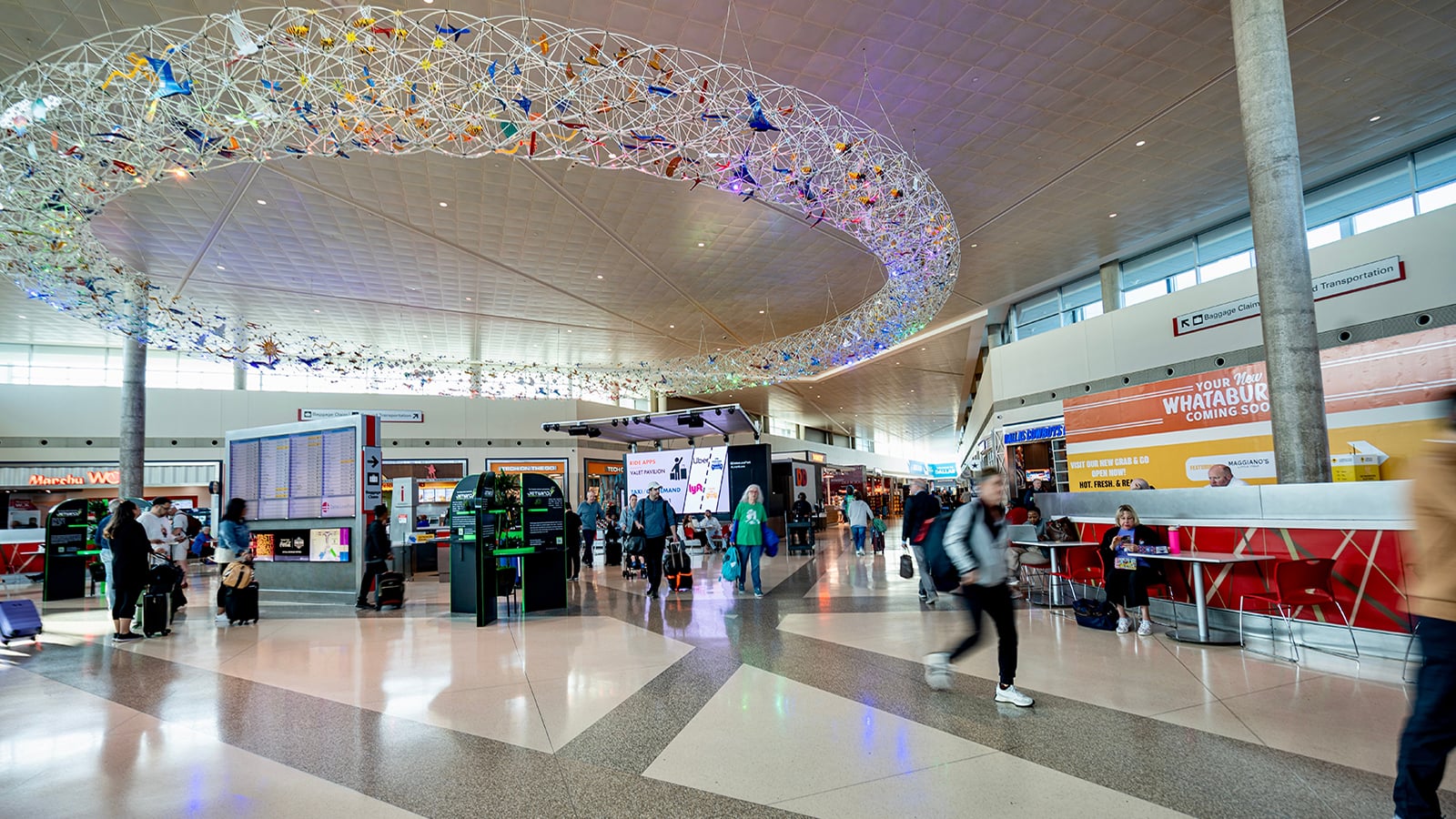
- In-terminal. Terminals are no longer places where passengers check in and wait. In fact, the passenger dwell time is “arguably the most powerful lever available to airports,” the report said. Time saved at check-in, security and customs points means passengers spend their money on retail, food and beverage, premium services and passenger lounge areas. The report suggested, “a more meticulous approach to planning and execution to minimize delays and cost escalations.”
- Airside. Land inside an airport’s secure area is constrained real estate due to safety, security and regulatory issues. At the same time, demand is growing for cargo, maintenance, repair and overhaul and aviation-linked industrial uses. Still, the report suggested that the focus should be less about near-term revenue and more toward “future operational scenarios shaped by cargo growth, automation, aircraft technology, sustainability and evolving regulatory standards.”
- Landside. The report noted that beyond their perimeters, airports are anchors of urban and regional activity. To take advantage of this, owners should understand a site’s current and future potential by analyzing target users, utilization mixes and scale. Basically, the “starting point is a clear vision for the future, grounded in placemaking,” Cushman & Wakefield pointed out.
What Comes Next
The report explained that generating economic, social and financial value means “viewing airports as an integrated real estate system, rather than individual operating zones.”
The move toward this means the appropriate analysis, land development and asset optimization across in-terminal, landside and airside operations.
“An integrated real estate strategy can support resilient income and long-term land value for airport owners, reduce operating friction for airlines, improve revenue certainty for retailers and shape opportunity and competitive pressure for local authorities and land owners,” the report noted.
Photo: RebeccaDLev/Shutterstock
The post Airports as CRE: How Integrated Real Estate Strategies Unlock Revenue appeared first on Connect CRE.