


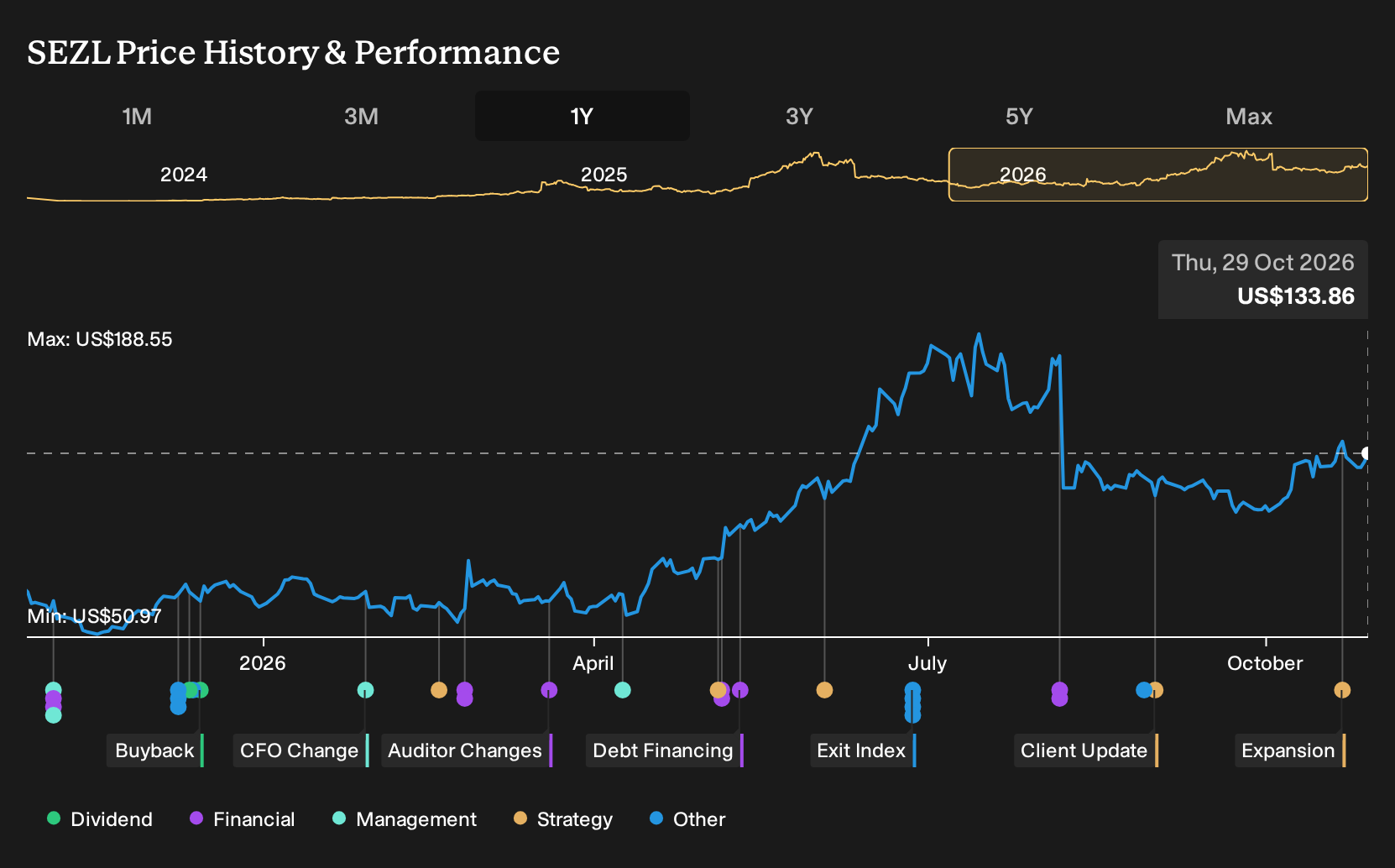
- Sezzle Inc. disclosed that earlier in October 2026 it applied to the OCC for a national bank charter and to the FDIC for deposit insurance, aiming to launch Sezzle Bank, N.A. with checking, savings, FDIC insured deposits and credit products for digitally native customers who often avoid traditional credit cards.
- The planned Sezzle Bank would shift more financial services in house and subject the group to full bank level oversight. This could reshape Sezzle’s cost structure, revenue mix and risk management profile if approvals are granted over time.
- We will now explore how Sezzle’s push for a full national bank charter could reshape the broader investment narrative around the business.
Sezzle Investment Narrative Recap
To own Sezzle, investors need to believe the business can keep turning a point of sale BNPL tool into a broader everyday money app without losing its grip on credit quality or unit economics. The OCC and FDIC applications fit that story, but they do not change the near term reality that Sezzle still relies on higher risk wholesale style funding rather than deposits.
Right now, the near term catalyst is execution around product breadth, subscriber engagement, AI supported efficiency and upcoming earnings, which are expected to show a year over year EPS improvement. The biggest risk remains that a premium P/E multiple and ongoing antitrust litigation could intersect with any wobble in results or legal costs, which could pressure sentiment regardless of headline growth.
The fresh filing to charter Sezzle Bank, N.A. is the clearest recent signal on where operations may be heading. If regulators eventually approve it, more funding and credit activity could move inside the group. That might influence Sezzle’s cost base, interest income mix and how tightly it manages credit risk for digitally native users.
For catalysts, that charter push sits alongside an earnings print expected on 4 November 2026, where analysts see higher revenue and EPS but have trimmed estimates. That combination of ambitious banking plans, ongoing AI and subscriber roll out and a rich valuation means investors are weighing execution and regulatory progress against legal, funding and expectations risk.
What Sezzle’s Consensus Assumptions Are Really Asking You To Underwrite
Analysts are effectively asking investors in Sezzle to underwrite a business that grows revenue at 22.8% a year for the next few years while gently lifting profitability. The consensus view has earnings today at US$161.4 million and working toward US$333.5 million by 2029, which is roughly a doubling of the profit pool on current forecasts. That combination assumes profit margins move from 30.4% now to 33.9% over the same period, helped by a tighter cost base and a greater mix of higher margin products across the broader Sezzle ecosystem.
On those numbers, forecast 2029 revenue of US$984.2 million would support the US$333.5 million earnings line. Analysts are modelling a lower P/E multiple of 20.1x by that year compared with 23.1x today. Shares outstanding are expected to shrink by about 1.4% per year over the next three years, which, if it plays out, concentrates that future earnings stream across a smaller share count. The discount rate used in the consensus work is 7.3% to 7.33%, which gives a sense of the hurdle rate analysts are applying when they pull those future cash flows back into today’s dollars.
Sezzle's current narrative anchors around forecast 2029 revenue of US$984.2 million and projected earnings of US$333.5 million in that same year. To line up with that view, analysts are building in 22.8% yearly revenue growth and an earnings increase of about US$172.1 million from current earnings of US$161.4 million.
Uncover why Sezzle's fair value indicates a 26% potential upside to its current price that could close more quickly than investors expect.
Exploring Other Perspectives
The loudest alternate risk around Sezzle is bank level regulation. The most cautious analysts already expected only US$931.7 million of revenue and US$353.5 million of earnings by 2029, which supported a US$150.0 target. That reflects a tighter view on margins and competition. The fresh charter move could eventually push those narratives to evolve.
Explore 8 other Sezzle fair value estimates, including one that suggests as much as 54% downside from the current price.
Decide For Yourself
Don't just follow the ticker. Dig into the data and build a conviction that's truly your own.
- A great starting point for your Sezzle research is our analysis highlighting 3 key rewards and 2 important warning signs that could impact your investment decision.
- See our latest analysis for Sezzle. The report includes a comprehensive fundamental analysis summarized in a single visual, the Snowflake, making it easy to evaluate Sezzle's overall financial health at a glance.
Looking for more Sezzle style investment ideas?
If Sezzle has sparked fresh questions about where you want exposure in your portfolio, it can help to scan a wider field of companies with clear, rules based criteria rather than chasing headlines one by one.
- For investors who want a mix of quality and value, use the 30 high quality undervalued stocks to spot businesses where fundamentals and price still look out of sync.
- If capital preservation sits high on your priority list, the 30 resilient stocks with low risk scores can narrow the field to companies with more resilient risk profiles.
- When balance sheet strength matters most, the list of solid balance sheet and fundamentals (23 results) can help you focus on businesses with sturdier financial foundations.
Have feedback on this article? Concerned about the content? Get in touch with us directly. Alternatively, email editorial-team@simplywallst.com