


The Bank of Japan has quietly moved from emergency footing to cautious repair mode, and that shift puts a spotlight on Japanese financial stocks exposed to rising domestic rates. When a central bank starts talking about regular hikes, pricing power, funding costs and investment returns all get reshuffled. This article unpacks that story and walks through three screen-picked stocks that could either benefit or struggle as the new rate regime takes hold.
The three stocks below are a small sample of what the new rate backdrop might mean for Japanese financials. The full screen surfaced 11 more banks and insurers with equally compelling narratives that do not fit into this article. To see the broader opportunity set, head straight into the Japanese Financials (Banks and Insurance) screener to identify, compare, and analyze the highest conviction ideas for your watchlist.
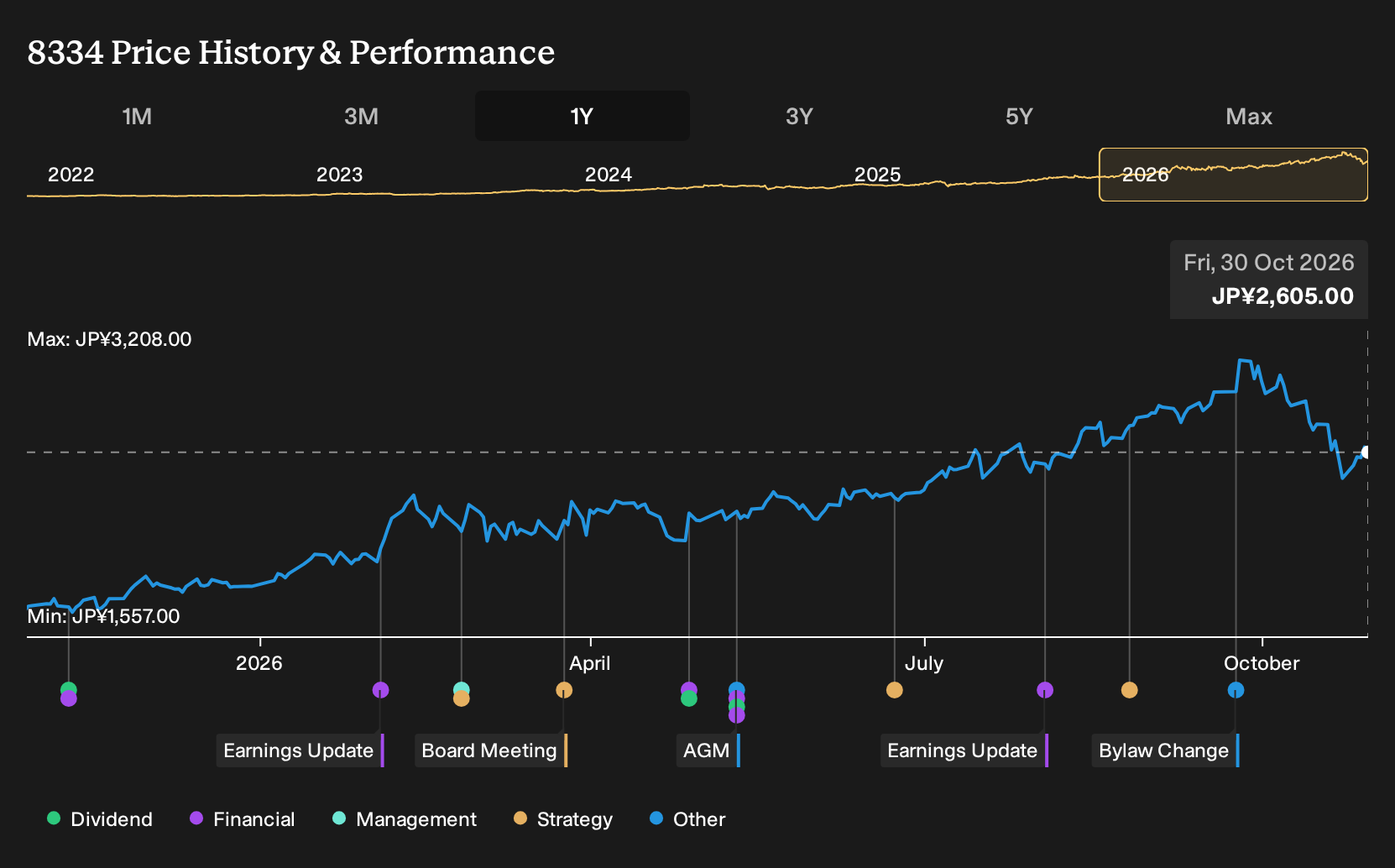
Gunma Bank (TSE:8334)
Overview: Gunma Bank is a regional Japanese lender that collects deposits and makes loans across its home market, earning interest income that is closely tied to domestic interest rates.
Operations: Gunma Bank generates roughly ¥228.7b from banking and ¥37.0b from leasing, with total reported revenue concentrated in Japan at about ¥199.3b.
Market Cap: ¥998.6b
Gunma Bank provides focused exposure to the BOJ normalization theme, with a broad lending and deposit base, a 2.69% dividend yield, and earnings tied closely to domestic rates. The recent hawkish shift from the BOJ aligns directly with this rate sensitivity. However, much of the outcome still depends on how one unseen pressure shapes future profitability.
That hidden pressure point is exactly what the 4 key rewards and 1 important warning sign identifies and it shows where Gunma Bank’s rate exposure could be working harder for you.
Hokuhoku Financial Group (TSE:8377)
Overview: Hokuhoku Financial Group is a regional Japanese banking group that serves individuals and SMEs through multiple subsidiary banks and related financial services.
Operations: Hokuhoku Financial Group generates about ¥130.4b from The Hokuriku Bank and ¥93.5b from Hokkaido Bank, with ¥22.0b in segment adjustments.
Market Cap: ¥903.5b
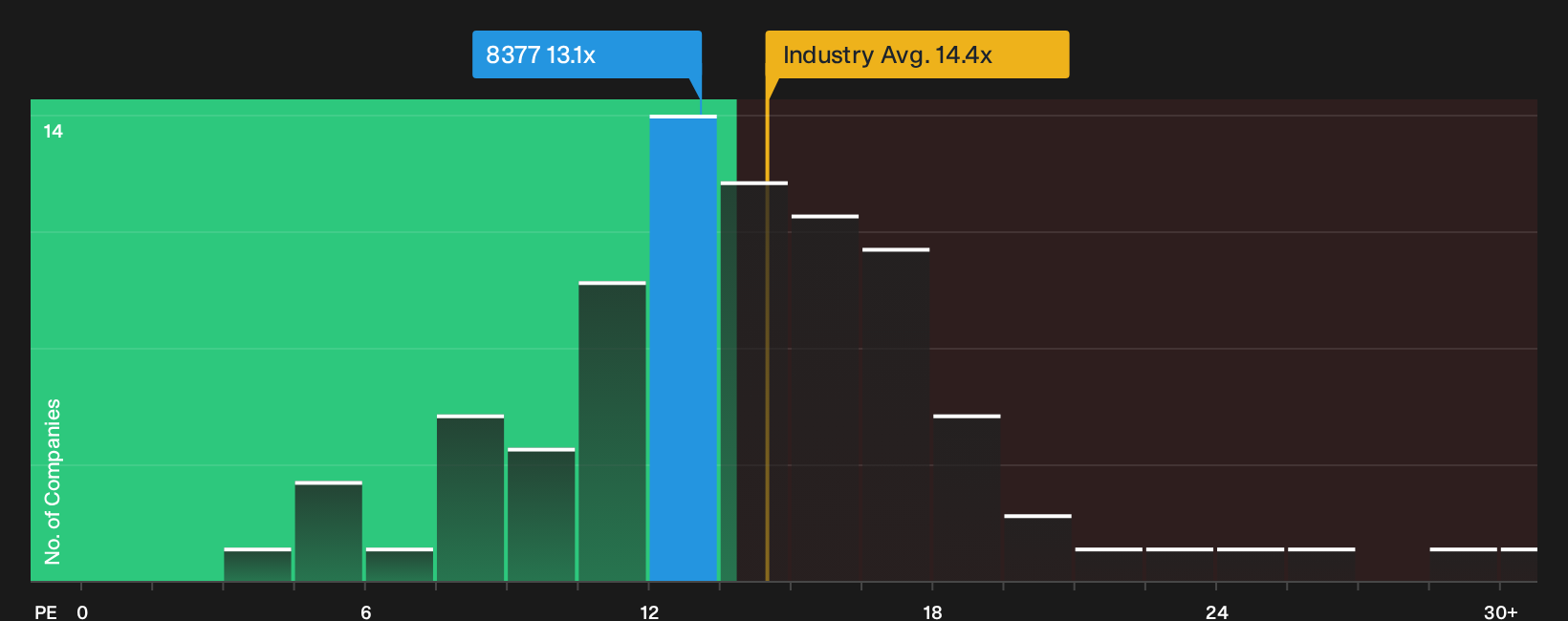
Hokuhoku Financial Group fits into the Japanese Financials screener, with a regional deposit base, a 2% dividend, and a P/E of 13.1x that sits below the wider market. Earnings forecasts and BOJ rate signals are currently described as supportive for interest income, although a single under-covered credit cushion could influence how much of that flows through to margins.
That credit cushion is exactly where the 5 key rewards and 2 important warning signs could reshape how you think about Hokuhoku Financial Group’s risk and upside potential.
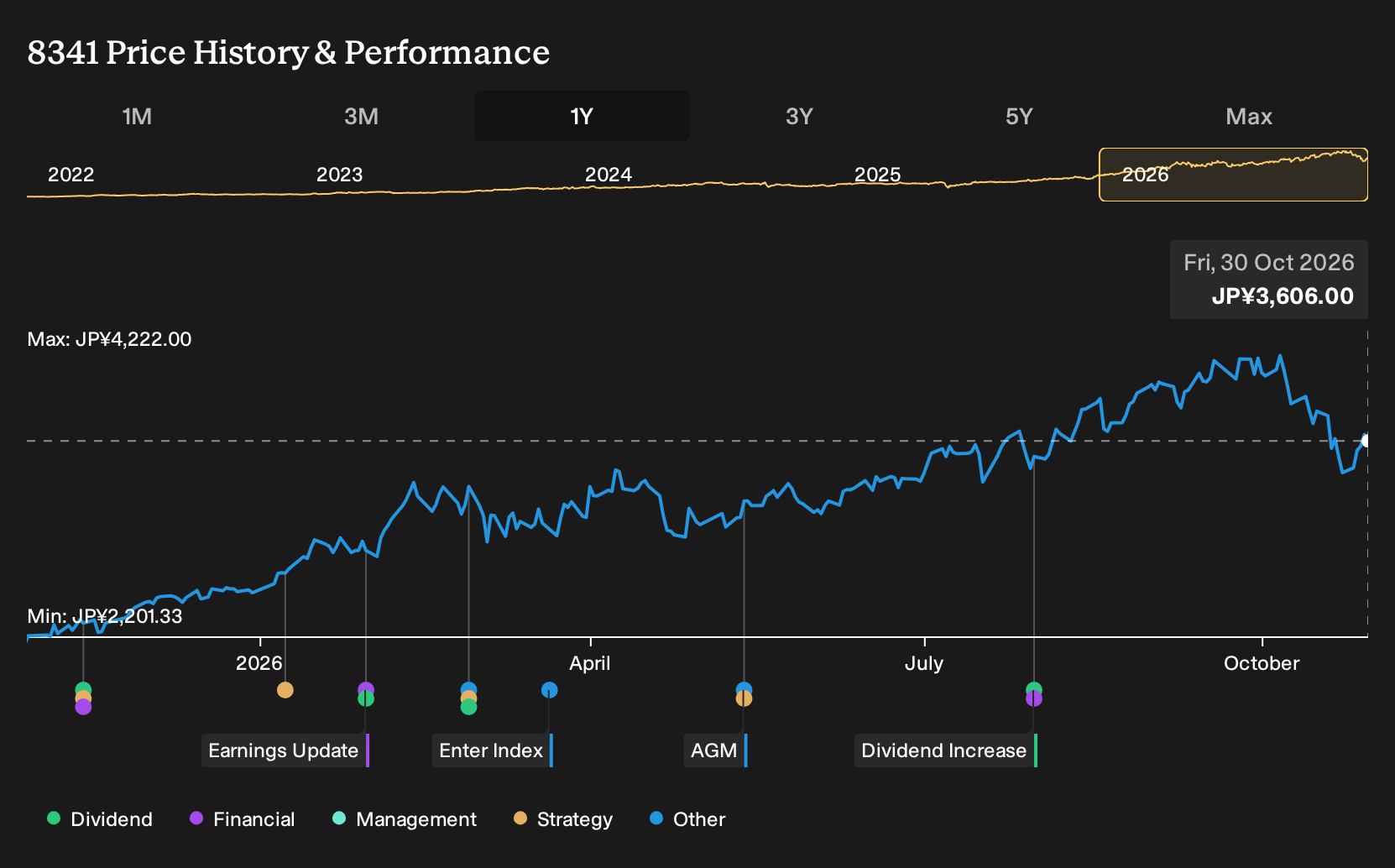
77 Bank (TSE:8341)
Overview: 77 Bank is a traditional regional lender in Sendai that provides loans, deposits and financial services to corporate and individual customers across Japan.
Market Cap: ¥815.4b
77 Bank sits squarely in the Japanese Financials theme, with a traditional loan and deposit book, a 12.6x P/E that is below the wider market, fast growing earnings and revenue forecasts, and a 2.88% dividend. However, the real story for margins and total return still hinges on how one unseen pressure responds to gradual BOJ rate normalization.
That unseen pressure on margins is exactly where the 6 key rewards and 1 important warning sign could reveal how 77 Bank’s rate sensitivity might quietly reshape its long term return profile.
Seeking Alternatives Before The Crowd?
Fresh opportunities do not wait. Breakout themes build momentum, quiet winners get caught, and stale ideas start dropping while it still matters. Scan what others miss and act now.
- Spot cash generative businesses before momentum really starts flying by running a focused pass through the 14 high quality undervalued stocks while the data is still under the radar for now.
- Track future facing infrastructure behind AI growth and sift through the 54 AI infrastructure stocks to find operators positioned while attention is still elsewhere.
- Position around structural demand for critical metals and review the curated 17 top copper producer stocks before the strongest balance sheets get fully priced.
Have feedback on this article? Concerned about the content? Get in touch with us directly. Alternatively, email editorial-team@simplywallst.com