


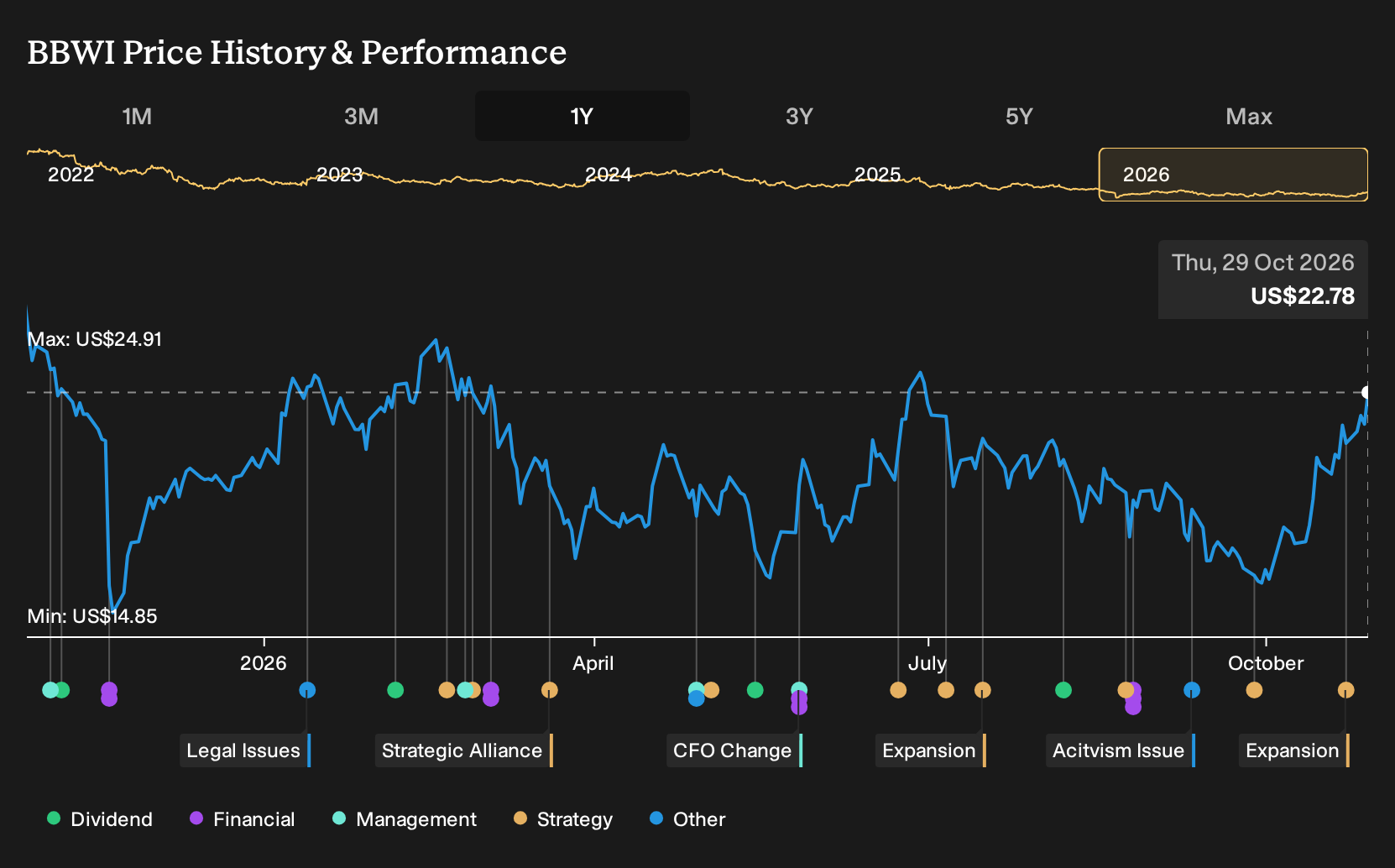
- Bath & Body Works opened its first Feel Good concept store in Charlotte in October 2026, with two more locations planned in Columbus and Miami that focus on clearer benefits, curated assortments and immersive fragrance testing.
- The Feel Good format reshapes store economics by concentrating on high impact hero franchises, streamlined layouts and digital tools that could influence how shoppers move between physical and online channels.
- We will look at how Bath & Body Works’ investment narrative is affected by this Feel Good concept rollout and its experiential testing.
Scan how Bath & Body Works’ Feel Good rollout compares with other retailers reshaping stores for experience driven sales by reviewing our hand picked 30 high quality undervalued stocks.
Bath & Body Works Investment Narrative Recap
Bath & Body Works still hinges on one big belief. The Consumer First Formula and heavier focus on hero products, digital and marketplaces need to offset pressure in body care, softer store traffic and a gross margin that already showed buying and occupancy deleverage on lower sales. The Feel Good concept fits that story, but a few test stores alone are unlikely to shift the near term picture.
The key near term catalyst remains evidence that body care and North American stores can stabilize, while newer channels such as owned digital, Amazon and Ulta keep building a larger base. The biggest risk is that physical locations continue to see mid single digit declines, which would keep fixed costs and high debt more visible in earnings and cash flow.
The Feel Good rollout plugs directly into the Consumer First Formula that management flagged as the multi year change in how Bath & Body Works runs its business. This year has been framed as an investment phase funded by roughly US$200 million of Fuel for Growth savings and about US$35 million in extra marketing. Concept stores are one of the more visible uses of that spend.
For investors, the link to catalysts is straightforward. If simplified layouts, curated assortments and tools such as the digital Fragrance Finder lift conversion and make stores work better with e commerce, that would support the idea of higher quality revenue over time. If shopper response underwhelms or store net sales keep declining despite the new format, it would highlight execution risk in the broader Consumer First playbook.
Bath & Body Works’ current analyst narrative points to revenues of US$7.6b and earnings of US$740.2m by 2029, based on a projected 1.6% yearly rise in sales and an earnings decline of about US$40.8m from US$781.0m today.
Uncover why Bath & Body Works' fair value indicates a 6% potential upside to its current price before the discount has a chance to shrink.
Exploring Other Perspectives
Some of the lowest Bath & Body Works forecasts lean into a different risk. They assume body care and stores stay pressured enough that earnings slide toward about US$594.8 million and US$7.2b of revenue by 2029, well below consensus. Those analysts read the same Feel Good news and may now rethink that cautious path.
Explore 5 other Bath & Body Works fair value estimates, including one that suggests as much as 25% downside from the current price.
Reach Your Own Conclusion
Don't just follow the ticker. Dig into the data and build a conviction that is truly your own.
- A great starting point for your Bath & Body Works research is our analysis highlighting 2 key rewards and 4 important warning signs that could impact your investment decision.
- See our latest analysis for Bath & Body Works. The report includes a comprehensive fundamental analysis summarized in a single visual, the Snowflake, making it easy to evaluate Bath & Body Works' overall financial health at a glance.
Looking for more Bath & Body Works style investment ideas?
If the Bath & Body Works story has sharpened your thinking about consumer brands and business quality, use that momentum to widen your watchlist with targeted screeners on Simply Wall St.
- For investors who care most about resilient balance sheets and fundamentals, start with a list of solid balance sheet and fundamentals (23 results) that match those priorities.
- If your focus is on stability and controlled risk, narrow the field using a 30 resilient stocks with low risk scores that align better with your comfort level.
- Readers looking for opportunities that sit off the beaten track can scan a 18 high quality undiscovered gems that still show strong underlying metrics.
Have feedback on this article? Concerned about the content? Get in touch with us directly. Alternatively, email editorial-team@simplywallst.com