


- John Wiley & Sons recently launched four open access journals in its Advanced Portfolio, expanding the collection to 36 titles across city systems, food, microbiome, and psychology research.
- This build out of the Advanced Portfolio gives Wiley more touchpoints with researchers across life, physical, and social sciences. This development could influence submission volumes, publishing mix, and long term content monetization.
- We will look at how Wiley's expanding open access Advanced Portfolio could reshape its investment narrative around research publishing scale.
John Wiley & Sons Investment Narrative Recap
To own John Wiley & Sons, you need to believe its research and learning engine can keep shifting toward higher value digital, open access, and data driven offerings while managing debt and funding cycles. The Advanced Portfolio expansion leans into that thesis, but on its own it does not change the near term story in a dramatic way.
In the short run, the key swing factor is how consistently Wiley converts research demand and AI or data partnerships into recurring revenue while offsetting pressure on traditional subscriptions. The biggest risk remains margin squeeze from open access economics, competition, and policy or funding shocks, especially with a balance sheet already carrying meaningful borrowing.
The launch of four new Advanced open access journals plugs directly into the existing catalyst around digital and OA publishing. Growth in submissions and article volume across titles like Advanced City and Advanced Microbiome can support the scale narrative that underpins expectations for 4.6% annual revenue growth and 5% forecast earnings growth.
Execution detail matters here. Each new journal must attract high quality research at sustainable article processing charge levels without eroding profitability from legacy subscriptions too quickly. For you as an investor, the operational question is whether Wiley can use this larger Advanced Portfolio to deepen institutional relationships and support its dividend and cash flow targets while containing the margin and funding risks already flagged.
What The Wiley Forecasts Are Asking You To Believe
Analysts sketch a fairly tight earnings bridge for John Wiley & Sons. Consensus assumes earnings move from $221.6 million today to $224.2 million by 2029, which is an increase of about $2.6 million, alongside revenue growing 4.7% per year and margins easing from 13.2% to 11.6% as the mix shifts further toward open access and digital.
John Wiley & Sons' current analyst narrative points to revenues of $1.9b and earnings of $224.2 million by 2029, built on 4.7% yearly revenue growth and an earnings increase of about $2.6 million from $221.6 million today.
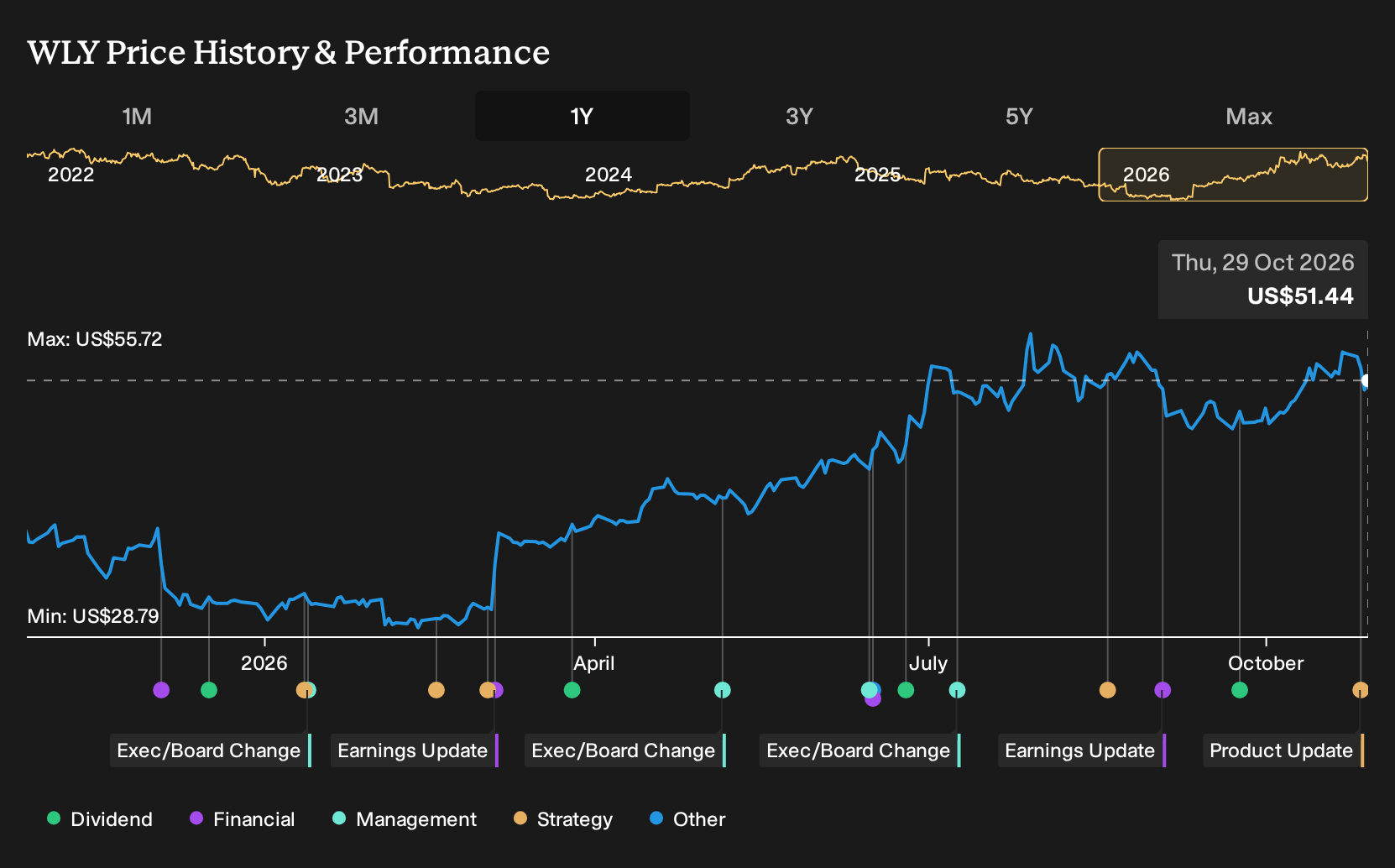
Uncover why John Wiley & Sons' fair value indicates a 32% potential upside to its current price that could narrow quickly.
Exploring Other Perspectives
Two fair value estimates from the Simply Wall St Community cluster between $68 and about $84.6 per share, which already shows how widely opinions on John Wiley & Sons can spread. Add in the fresh risk around unpredictable AI licensing income and open access margin pressure, and you get real reasons to compare several different viewpoints before deciding what this business is worth to you.
Explore another John Wiley & Sons fair value estimate, including one that suggests it could be worth just $68.00!
Decide For Yourself
Don't just follow the ticker; dig into the data and build a conviction that's truly your own.
- A great starting point for your John Wiley & Sons research is our analysis highlighting 5 key rewards and 2 important warning signs that could impact your investment decision.
- See our latest analysis for John Wiley & Sons. The report includes a comprehensive fundamental analysis summarized in a single visual, the Snowflake, making it easy to evaluate John Wiley & Sons' overall financial health at a glance.
Looking For More John Wiley & Sons Sized Ideas?
Once you have a view on John Wiley & Sons, it can help to line it up against a few other opportunities that share similar qualities in value, income potential, or balance sheet strength.
- If you want ideas where quality and valuation work together, start with a curated set of 30 high quality undervalued stocks that pair solid fundamentals with pricing that may leave room for upside.
- If reliable income is a priority, scan for companies in the 7 dividend fortresses that focus on higher yielding payouts supported by underlying business strength.
- If capital preservation matters most right now, compare John Wiley & Sons with a 30 resilient stocks with low risk scores that filters for resilient businesses with lower risk profiles.
Have feedback on this article? Concerned about the content? Get in touch with us directly. Alternatively, email editorial-team@simplywallst.com