


Real wages are slipping, energy costs are eating into paychecks, and households are leaning harder on overtime and credit cards just to keep spending. That squeeze can punish some corners of the market, while leaving everyday essentials in a very different position. This article unpacks that split and walks through three U.S. Consumer Staples and Essential Retail stocks most exposed to this news shock.
The three stocks that follow are a useful cross section, yet they only scratch the surface of what is happening across essential retail and consumer staples right now, because the broader screen surfaced 18 more companies with equally compelling narratives that are not covered below. To see the rest of that universe and cut it down to your highest conviction ideas, head straight to the U.S. Consumer Staples and Essential Retail screener to identify, filter, and analyze the businesses that best fit your own thesis.
Conagra Brands (CAG)
Conagra Brands plugs directly into the theme of everyday essentials on U.S. grocery shelves, with a portfolio of branded frozen meals, snacks, and pantry staples that link closely to non-discretionary supermarket spending when real wages are under strain.
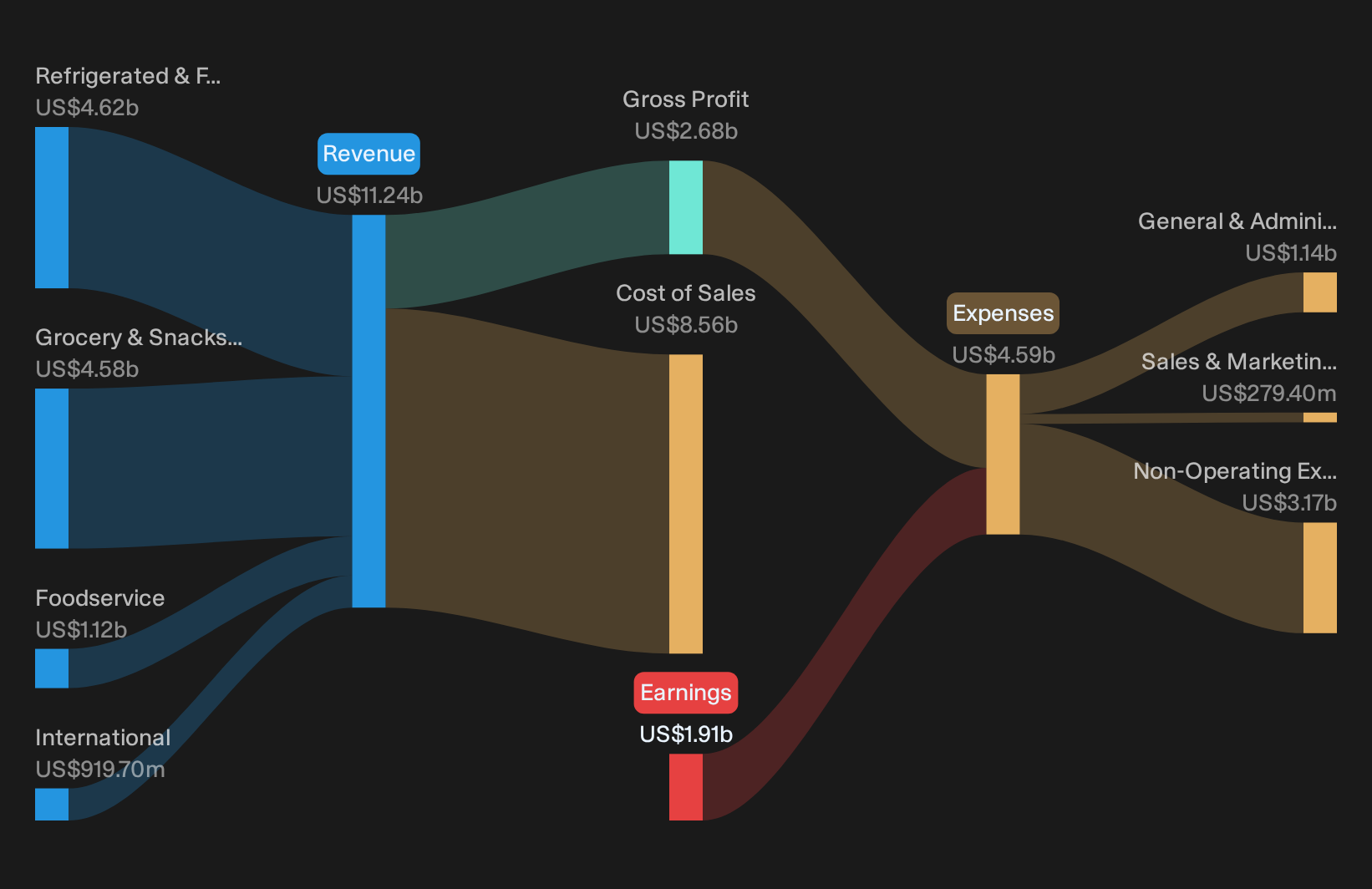
Conagra Brands runs a packaged foods business across Grocery & Snacks and Refrigerated & Frozen, each at about US$4.6b in annual sales, with Foodservice at roughly US$1.1b and International near US$900 million, and the stock carries a market value around US$6.6b.
At the center of Conagra Brands' push to stay relevant in essential food aisles is a quiet shift in how the company wants to run its operations and free up cash for its brands.
Project Catalyst, which applies new process and technology including AI to simplify work and reduce working capital, is being funded today, with most financial benefits expected from fiscal 2028 onward.
The real test comes from how one unresolved pressure around costs and pricing shapes the margin story that underpins this staples exposure.
That margin question is exactly where the story gets interesting, and the full narrative for Conagra Brands pulls together how pricing power, mix, and Project Catalyst could reshape the risk reward balance.
Spectrum Brands Holdings (SPB)
Spectrum Brands Holdings ties into the essentials theme through pet care, pest control, and everyday home products that consumers still reach for when budgets tighten. This puts more weight on how its mix shifts toward those repeat purchase categories.
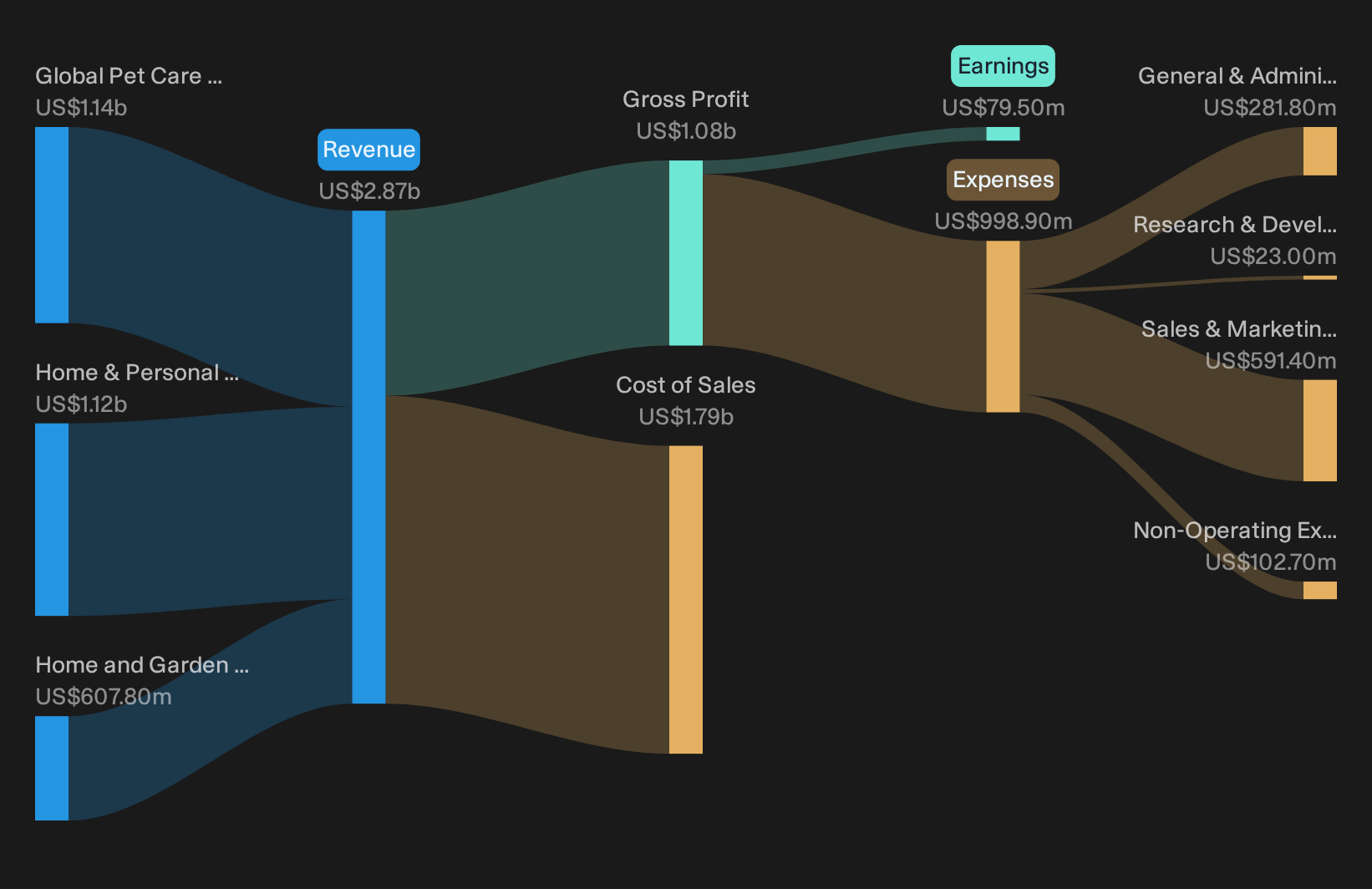
Spectrum Brands Holdings is a global home essentials group built around pet nutrition, grooming, small appliances, and home and garden care. Global Pet Care generates about US$1.1b in sales, Home & Personal Care about US$1.1b, and Home & Garden around US$600 million. The stock is valued at roughly US$1.8b.
The separation of the Home & Personal Care segment through the US$127 million Oaktree investment, structured as preferred equity and a term loan that are non recourse to Spectrum Brands Holdings, creates a clearer path toward a focused Global Pet Care and Home & Garden profile that could shift how investors value future revenue and earnings.
What happens to earnings power from here depends heavily on how one underappreciated pressure on profitability and cash generation plays out over the next few years.
That earnings squeeze is exactly where the rerate risk and upside start to collide, and the full narrative for Spectrum Brands Holdings shows how separating Home & Personal Care could be masking a cleaner cash engine.
Kimberly-Clark (KMB)
Kimberly-Clark is almost a pure play on everyday hygiene and personal care, which is exactly what many households protect when real wages shrink and energy bills climb. That focus on diapers, tissues, and bathroom basics sets the stage for how management is trying to tune profitability.
Continued innovation across premium and mid tier product lines, with mix in major markets already heavily skewed to premium offerings and 10 consecutive quarters of volume plus mix led performance, supports the view that further premiumization can help Kimberly-Clark lift net margins and operating profit even in relatively slow growing categories.
What happens to that margin story hinges on how one cost pressure interacts with the premium tilt that Kimberly-Clark is leaning into.
Kimberly-Clark is a US$36.6b personal care group built around diapers, tissues, and hygiene products that anchor consumer staples spending. The business generates about US$10.7b of sales from North America and roughly US$5.9b from International Personal Care, giving it a broad base in categories that households tend to treat as non negotiable essentials.
That cost factor is only half the story, and the full narrative for Kimberly-Clark shows how Kimberly-Clark’s premium tilt and margin levers could be quietly accelerating or stalling the whole thesis.

Seeking Alternatives Before The Crowd?
Fresh themes keep breaking out while the usual watchlists grow stale. Spot momentum early, identify mispriced stories while they stay under the radar for now, and consider your options.
- Explore potential trend shifts in income payers by scanning a curated set of dependable yield ideas through the 7 dividend fortresses.
- Look for mispriced quality where balance sheets appear robust and cash generation seems resilient using the focused 30 high quality undervalued stocks.
- See how the picks and shovels of the AI build out are evolving as capital moves into infrastructure through the targeted 54 AI infrastructure stocks.
Have feedback on this article? Concerned about the content? Get in touch with us directly. Alternatively, email editorial-team@simplywallst.com