


Why National Grid Stock Is Back On Radar
National Grid (LSE:NG.) just picked up Top Innovator of the Year at the 2026 Fortnightly Top Innovators Awards for its Good Carbon / Viridi Demand Flexibility Project, putting fresh attention on how the business tackles grid capacity and rising electricity demand.
For investors tracking National Grid, the award lands at a time when the share price has shown steady momentum, with a 30-day share price return of 9.52% and an 8.38% share price return year to date. The longer view looks even stronger, with a 1-year total shareholder return of 14.52% and a 5-year total shareholder return of 83.97%. This points to building confidence rather than fading interest in the stock.
Scan other grid and power infrastructure stocks that are showing similar momentum in tackling rising electricity demand with our hand picked 42 power grid technology and infrastructure stocks alongside National Grid.
After a strong run and fresh praise for its projects, National Grid still trades at a modest discount to both analyst targets and intrinsic estimates. Is that a margin of safety or a warning that the market’s caution is warranted?
Most Popular Narrative: 5% Undervalued
On the most followed narrative, National Grid is priced below an estimated fair value of £13.18, compared with the last close at £12.55, which puts the focus firmly on whether its long term investment plan can justify that gap.
National Grid now plans to invest at least £70bn over the five years to FY31, compared with the earlier plan for around £60bn. This supports around 10% annual asset growth and is guided to support 8 to 10% underlying EPS CAGR and dividend growth in line with UK CPIH. As a result, the larger capital plan remains a key potential driver of future revenue and earnings.
See why 142 investors see National Grid as 5% undervalued.
Result: Fair Value of £13.18 (UNDERVALUED)
Still, the National Grid story leans heavily on regulators allowing timely recovery of that £70b plus capex and on consumer bill pressure not forcing tighter returns.
Find out about the key risks to this National Grid narrative.
Another View On National Grid’s Valuation
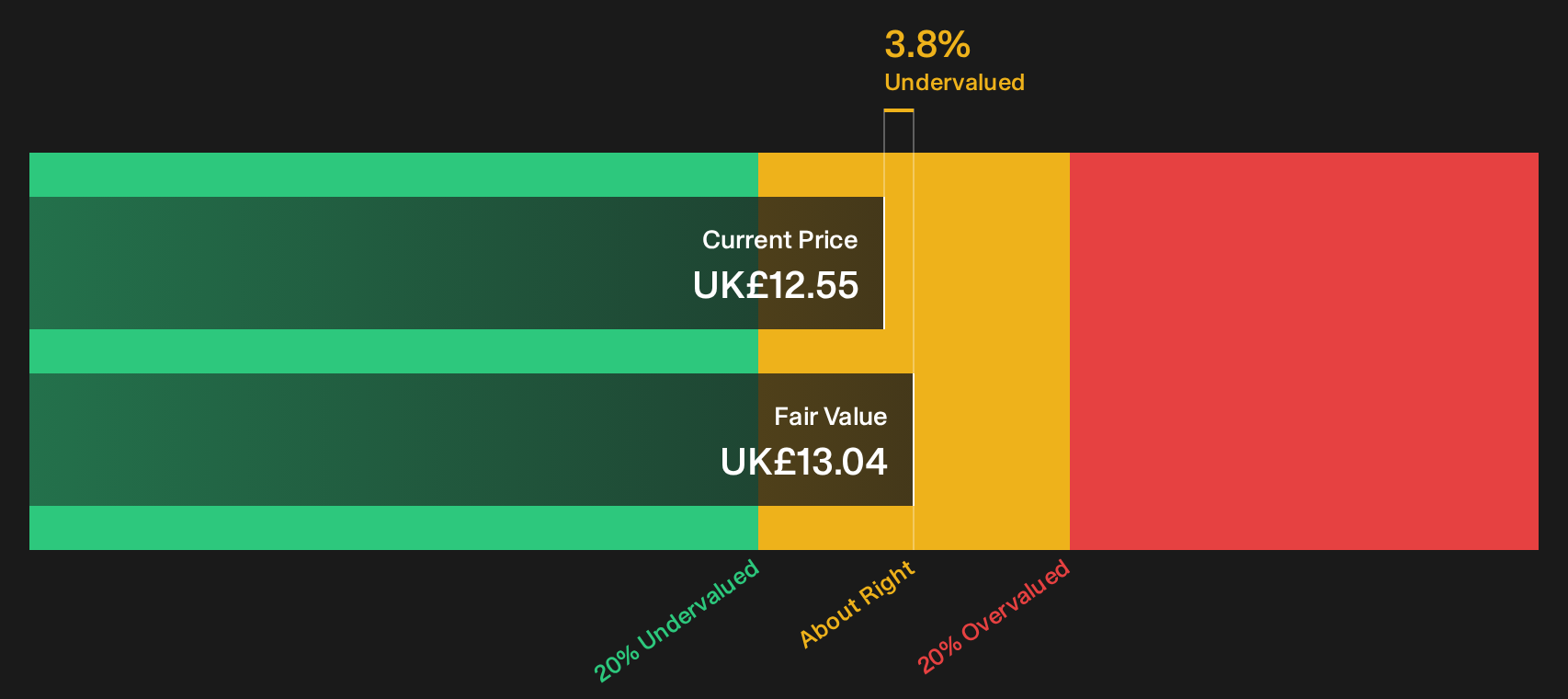
The SWS DCF model points to a fair value of about £13.04 per share, slightly above National Grid’s recent £12.55 price. This frames the stock as modestly undervalued on future cash flows. With that gap only around 4%, is this a small mispricing or just noise in the assumptions?
Look into how the SWS DCF model arrives at its fair value.
Next Steps
Mixed messages on National Grid’s value and risk profile. Review the same data, act promptly, and decide where you stand based on the 3 key rewards and 2 important warning signs.
Looking for more investment ideas beyond National Grid?
Do not stop at National Grid. Use the Simply Wall St screener to surface fresh opportunities that match your style before everyone else is talking about them.
- Target potential mispricings by scanning a curated 11 high quality undervalued stocks that combine quality fundamentals with prices that may not fully reflect their underlying strength.
- Lock in potential income ideas by reviewing a focused set of 5 dividend fortresses that aim to pair higher yields with sturdier payout histories.
- Prioritise durability by filtering for a 5 resilient stocks with low risk scores that score well on resilience and may better hold up when conditions get tougher.
Have feedback on this article? Concerned about the content? Get in touch with us directly. Alternatively, email editorial-team@simplywallst.com