


Eli Lilly walked into its Q3 2026 release priced for perfection after a powerful run, then added another 3.1% in a single session as traders rushed to own the story. The hook was simple enough. Quarterly revenue reached about US$24.4b and non GAAP earnings per share guidance for 2026 moved up to US$35 to US$36. The market loved the headline upgrade. The real question for you is whether that one day surge reflects a cold reading of the numbers or an emotional chase after the strongest earnings trend in large cap pharma.
Impressed by Eli Lilly's earnings surge but unsure if you are paying too much for that kind of momentum story at this stage of the cycle? Compare it with other high quality large caps with resilient balance sheets and strong fundamentals using the list of solid balance sheet and fundamentals stocks (25 results).
Q3 2026 Earnings Summary
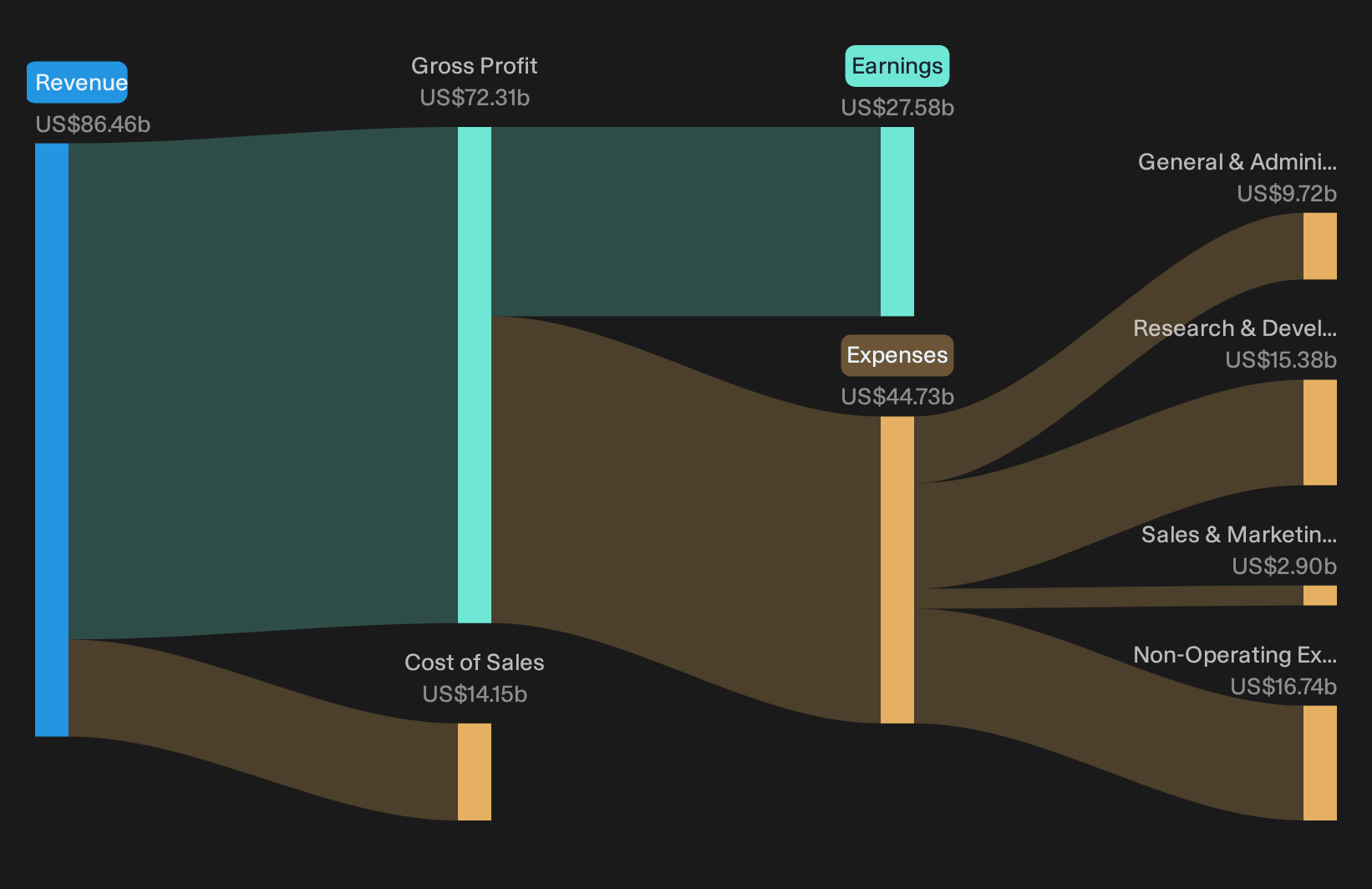
- Revenue (Q3 2026 vs. Q3 2025): US$24,397m vs. US$17,600.8m (up 38.6%)
- Net Income (Excl. Extra Items, Q3 2026 vs. Q3 2025): US$6,451m vs. US$5,582.5m (up 15.6%)
- Basic EPS (Q3 2026 vs. Q3 2025): US$7.22 vs. US$6.22 (up 16.0%)
- Gross Margin (Q3 2026 vs. Q3 2025): 84.4% vs. 83.6% (up 0.8 percentage points)
Incretin and obesity drugs just added about $6B in a year. Ask Charlie what is powering Eli Lilly’s cardiometabolic surge.
Eli Lilly hits key access and execution markers
For the bullish view on Eli Lilly to hold, management needs to turn big cardiometabolic science into reliable global access and capacity.
"The main requirement is that Eli Lilly successfully executes global access and capacity expansion for its incretin therapies while its newer oncology, neuroscience, vaccine and genetic medicine assets continue to build as additional revenue pillars."
Q3 volume driven cardiometabolic revenue above US$16b, 32% growth in U.S. incretin prescriptions and 53% international incretin sales growth all point to real traction on access. The Medicare Bridge program, covering roughly 20m seniors and hundreds of thousands of prescriptions, shows payer reach improving. Oncology, immunology and neuroscience products are contributing, yet remain smaller, so diversification is progressing but not fully proven.
One Narrative has put a figure on that disagreement. → See the Narrative with its lower Fair Value, assumptions and all.
Eli Lilly’s Pricing Fears Meet Margin Reality
Bearish investors argue Eli Lilly’s premium obesity exposure risks turning into a margin story rather than a pure growth story.
"U.S. net price pressure is already visible, with overall U.S. price down 9% year on year in Q2 2026 excluding rebate adjustments and largely driven by Zepbound and Mounjaro."
Q3 results do not dismiss that concern. Realized U.S. pricing again moved lower while cardiometabolic volume powered revenue above US$24b. Gross margin at 84.4% and a 590 basis point improvement in non GAAP performance margin indicate that discounting has not yet translated into margin compression. The risk is timing, as the fixed cost build out and rising legal matters remain largely ahead of the P&L, not in it.
Hunt Quiet Earnings Dislocations
Eli Lilly highlights how quickly sentiment can change when an earnings story captures market attention. The real opportunity is identifying stocks that could be undervalued before expectations adjust.
- Company 1 - 48% below our estimate - converts a swelling backlog of complex data center and modular build projects into higher utilization and a richer service mix.
- Company 2 - 47% below our estimate - channels intensive AI infrastructure spending into advertising tools and business messaging products that deepen advertiser dependence on its targeting engine.
- Company 3 - 35% below our estimate - ties high margin GPUs to a proprietary AI software stack that keeps data center customers closely aligned with its upgrade cycle.
Those are three of them. See all 30 potentially undervalued companies →
Have feedback on this article? Concerned about the content? Get in touch with us directly. Alternatively, email editorial-team@simplywallst.com