


Cullen/Frost Bankers slipped just 0.2% today to about US$157.60, barely flinching after posting another solid quarter. For Q3 2026, the Texas lender delivered basic earnings per share of US$2.87 and net income of US$178.5m, both firmly profitable. Return on tangible common equity was 16.16%. The stock has drifted down over the past three months. The key focus for investors now is the longer view, where a steady earnings run rate and a premium P/E lead them to weigh quality against price.
Like the quality and profitability Cullen/Frost Bankers is posting but worried about paying up for a premium P/E on a stock that has been drifting? Compare this quarter against a broader list of resilient, high quality balance sheet plays in our list of solid balance sheet and fundamentals stocks (25 results)
Q3 2026 Earnings Summary
- Total Revenue (Q3 2026 vs Q3 2025): US$591.7m vs. US$560.5m (up about 6%)
- Net Income excl. Extra Items (Q3 2026 vs Q3 2025): US$178.5m vs. US$171.0m (up about 4%)
- Basic EPS (Q3 2026 vs Q3 2025): US$2.87 vs. US$2.67 (up about 8%)
- Net Interest Margin, NIM (Q3 2026 vs Q3 2025): 3.78% vs. 3.69% (improved by 9 bps)
Loan growth beat guidance on broad-based expansion this quarter. Ask Charlie which new markets drove Cullen/Frost Bankers’ loan surge.
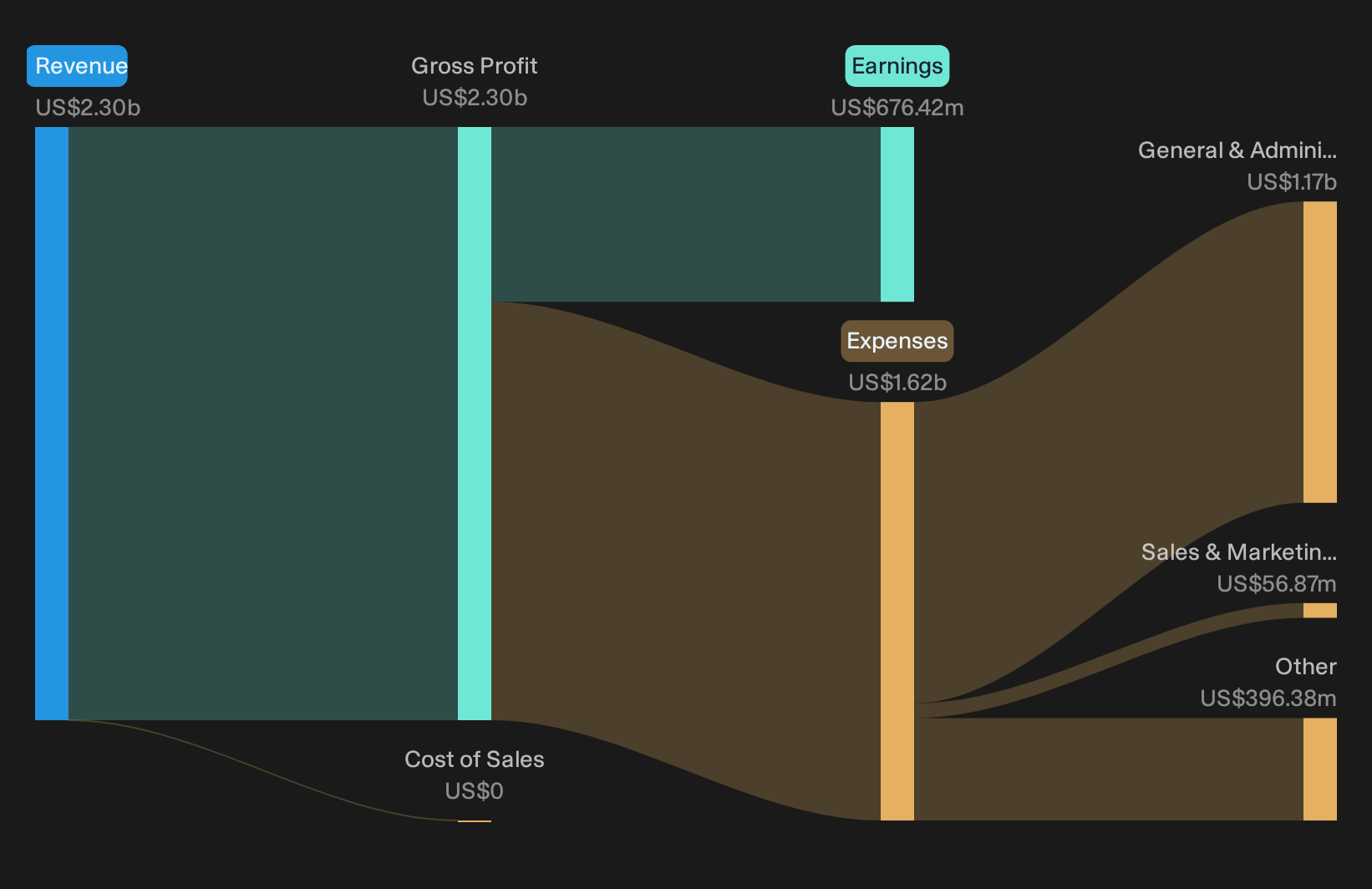
Cullen/Frost growth engine vs. hard numbers
Supporters argue Cullen/Frost can turn its branch and mortgage push into durable relationship growth.
"Ongoing organic customer acquisition, including five consecutive quarters with more than 1,000 new commercial relationships and consumer checking household growth that management characterizes as among the best in the industry, is set to widen Cullen/Frost Bankers’ relationship base and support future fee income and net interest income."
Q3 shows that thesis still on track. Average loans rose 9% and deposits 3.6%, helped by expansion branches contributing US$0.22 of EPS in the quarter and US$0.51 year to date. Mortgage balances above US$1b, with nearly half of borrowers new to Frost and many adding extra products, signal the customer engine is translating into balance sheet growth.
Texas risk and margin worries under the microscope
The bear case leans on Texas concentration and the cost of a branch heavy model in a more digital world.
"The relationship led, branch heavy growth model requires ongoing spending on expansion locations and technology, and management is still planning to open 12 to 15 new branches per year while also investing in areas such as AI and core systems. If customer behaviour shifts faster toward digital only banking or if these investments do not translate into efficiency gains, operating costs could remain high relative to revenue and hold back net margins."
Recent figures partly counter that concern. Net interest margin (NIM) ticked up to 3.78%, while guidance now calls for 5.0% to 5.5% NII growth and 8.5% to 9% noninterest income growth against roughly 5% expense growth. That still leaves limited room for error if marketing, incentive pay and new branches stop pulling in incremental business at the current pace.
Not everyone reads the same price the same way. → See the higher figure this Narrative lands on, and how it gets there.
Hunt Quiet Dislocations Now
Cullen/Frost Bankers shows how a solid quarter can still leave investors debating price versus quality. The real opportunity sits in finding stocks that could be undervalued before the market corrects them.
- Company 1 - 21% below our estimate - use expanded manufacturing capacity to take on higher value photonics packaging work for demanding data center customers.
- Company 2 - 38% below our estimate - ramp engine and power system capacity aimed at long-duration data center contracts and related high horsepower demand.
- Company 3 - 46% below our estimate - convert a large backlog of complex infrastructure projects into cash while resolving costly legacy disputes.
That is three of the list. See all 29 potentially undervalued companies →
Have feedback on this article? Concerned about the content? Get in touch with us directly. Alternatively, email editorial-team@simplywallst.com