


Some investors rely on dividends for growing their wealth, and if you're one of those dividend sleuths, you might be intrigued to know that Caixa Seguridade Participações S.A. (BVMF:CXSE3) is about to go ex-dividend in just 3 days. The ex-dividend date is two business days before a company's record date in most cases, which is the date on which the company determines which shareholders are entitled to receive a dividend. The ex-dividend date is important because any transaction on a stock needs to have been settled before the record date in order to be eligible for a dividend. In other words, investors can purchase Caixa Seguridade Participações' shares before the 4th of November in order to be eligible for the dividend, which will be paid on the 17th of November.
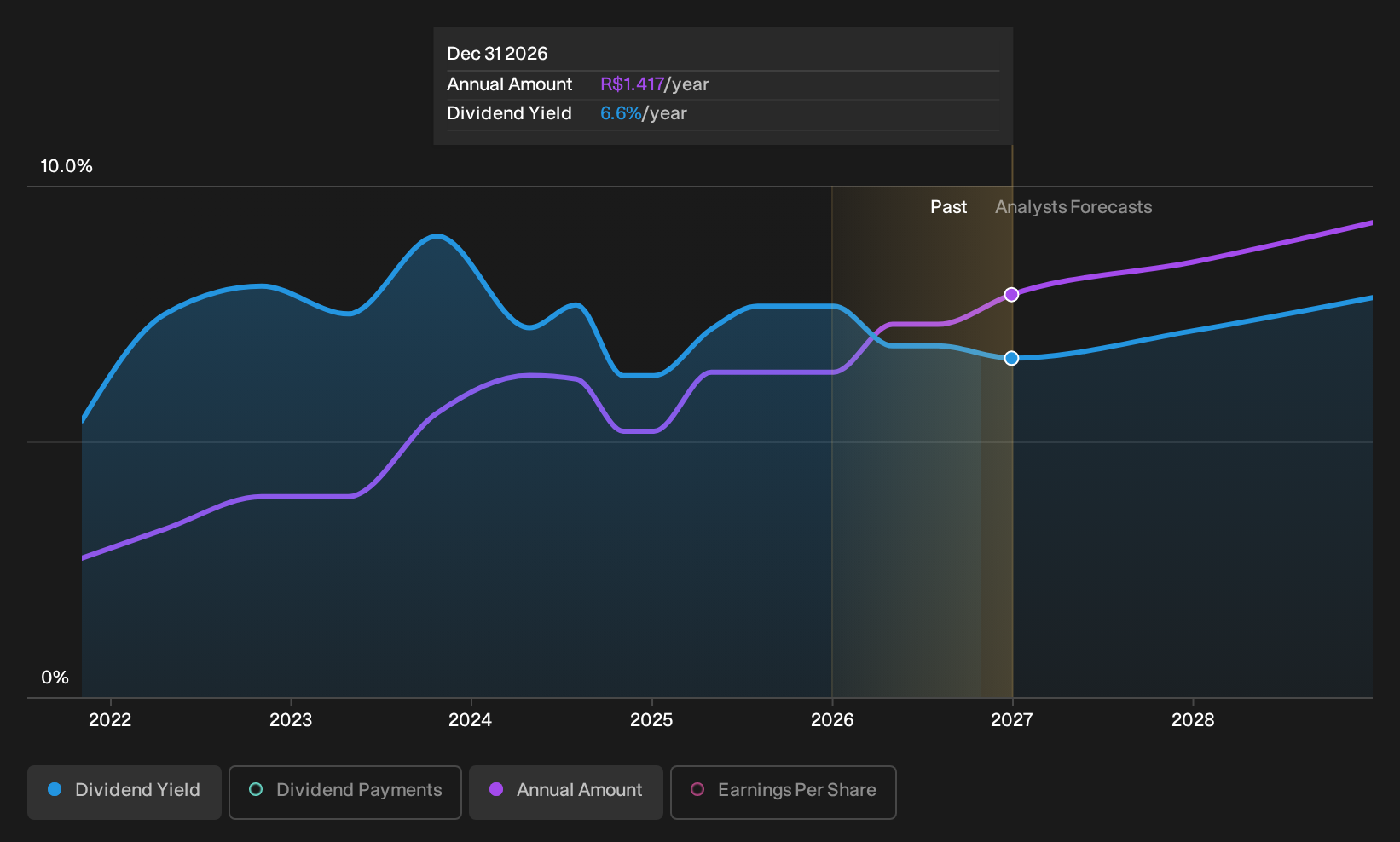
The company's upcoming dividend is R$0.35 a share, following on from the last 12 months, when the company distributed a total of R$1.31 per share to shareholders. Calculating the last year's worth of payments shows that Caixa Seguridade Participações has a trailing yield of 6.1% on the current share price of R$21.38. If you buy this business for its dividend, you should have an idea of whether Caixa Seguridade Participações's dividend is reliable and sustainable. As a result, readers should always check whether Caixa Seguridade Participações has been able to grow its dividends, or if the dividend might be cut.
If a company pays out more in dividends than it earned, then the dividend might become unsustainable - hardly an ideal situation. That's why it's good to see Caixa Seguridade Participações paying out a modest 45% of its earnings.
Generally speaking, the lower a company's payout ratios, the more resilient its dividend usually is.
Check out our latest analysis for Caixa Seguridade Participações
Click here to see the company's payout ratio, plus analyst estimates of its future dividends.
Have Earnings And Dividends Been Growing?
Stocks in companies that generate sustainable earnings growth often make the best dividend prospects, as it is easier to lift the dividend when earnings are rising. If earnings fall far enough, the company could be forced to cut its dividend. It's encouraging to see Caixa Seguridade Participações has grown its earnings rapidly, up 21% a year for the past five years.
The main way most investors will assess a company's dividend prospects is by checking the historical rate of dividend growth. In the past five years, Caixa Seguridade Participações has increased its dividend at approximately 22% a year on average. It's great to see earnings per share growing rapidly over several years, and dividends per share growing right along with it.
To Sum It Up
From a dividend perspective, should investors buy or avoid Caixa Seguridade Participações? Typically, companies that are growing rapidly and paying out a low fraction of earnings are keeping the profits for reinvestment in the business. This is one of the most attractive investment combinations under this analysis, as it can create substantial value for investors over the long run. In summary, Caixa Seguridade Participações appears to have some promise as a dividend stock, and we'd suggest taking a closer look at it.
On that note, you'll want to research what risks Caixa Seguridade Participações is facing. Our analysis shows 1 warning sign for Caixa Seguridade Participações and you should be aware of it before buying any shares.
A common investing mistake is buying the first interesting stock you see. Here you can find a full list of high-yield dividend stocks.
Have feedback on this article? Concerned about the content? Get in touch with us directly. Alternatively, email editorial-team (at) simplywallst.com.