


With Fitch putting France’s A+ rating on negative outlook and French bond yields at 24‑year highs, investors are being forced to rethink where to seek relative safety in Europe. Market stress in Paris can push capital toward core Eurozone debt and high-quality financials that many investors still overlook. This article explains that shift and introduces three stocks from our screener that are closely tied to this story.
The three stocks below are just a sample from this idea. The full screen surfaced seven more core Eurozone financials with equally compelling narratives that are not covered in this article. To see the broader opportunity set, head into the Core Eurozone Safe-Haven Government Bonds and High-Quality Financials screener to identify, filter and analyze the potential highest conviction plays.
Commerzbank (XTRA:CBK)
Overview: Commerzbank is a large German bank headquartered in Frankfurt that offers everyday banking, lending, capital markets and wealth services for retail, business and institutional clients, giving investors direct exposure to Germany’s perceived safe-haven status within the Eurozone.
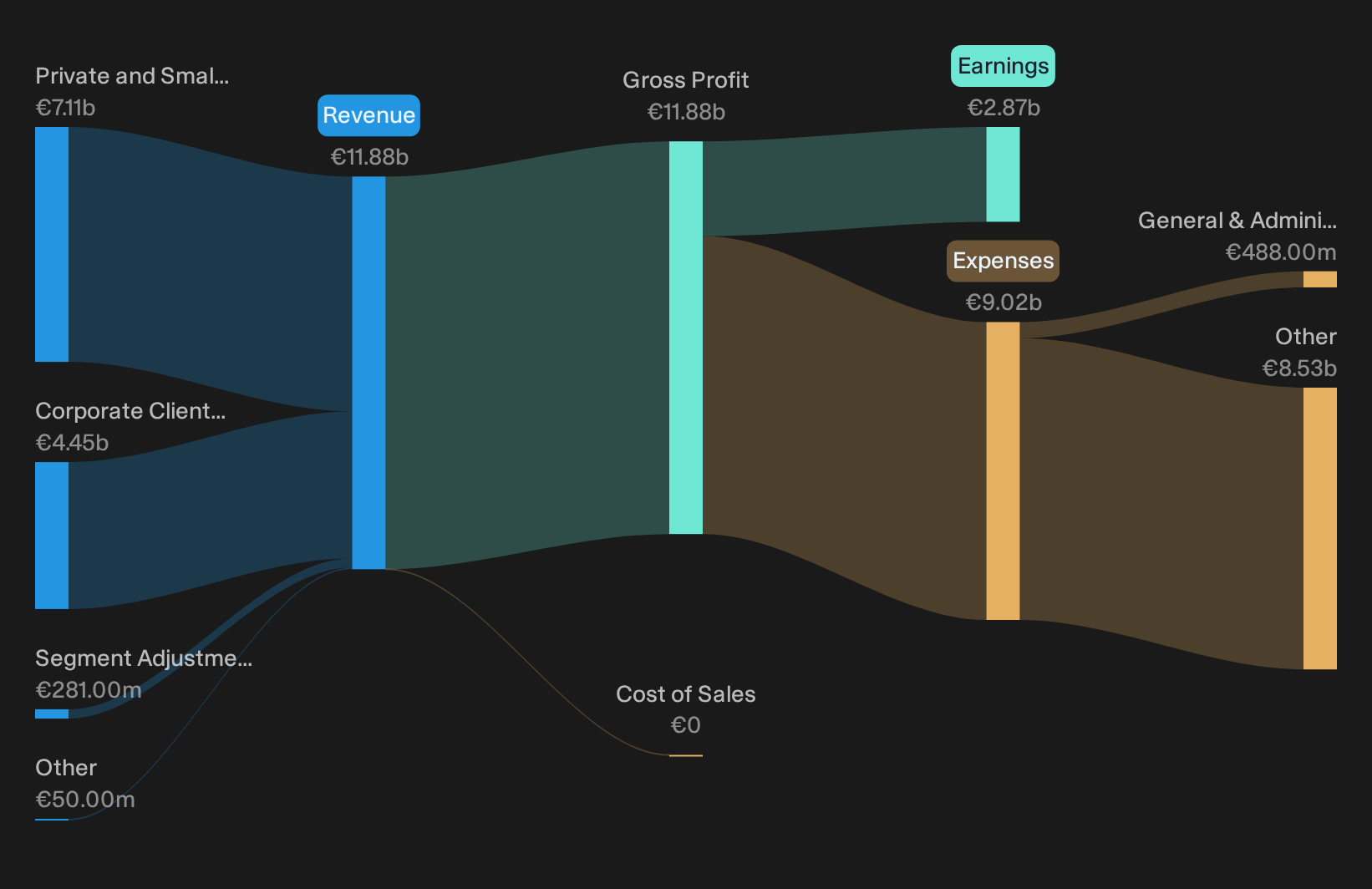
Operations: Commerzbank generates about €7.1b of revenue from Private and Small-Business Customers and €4.4b from Corporate Clients, with a smaller €0.3b segment adjustment.
Market Cap: €40.8b
As pressure builds on riskier sovereigns, Commerzbank sits on the side of German-safe assets. In that context, funding credibility can become a real competitive edge for a universal bank.
"Although Commerzbank points to a sizeable model deposit replication portfolio that is expected to add between €400m and €600m of net interest income per year until 2030, management is holding to a group deposit beta of about 41% for 2026 and up to 45% longer term while refusing to match 4% call money offers."
What happens to Commerzbank’s earnings power if a single pressure point in customer pricing reshapes how sticky those low cost deposits really are?
If that deposit mix matters to your thesis, read the full narrative for Commerzbank to see how Commerzbank’s funding model could accelerate or stall from here.
ING Groep (ENXTAM:INGA)
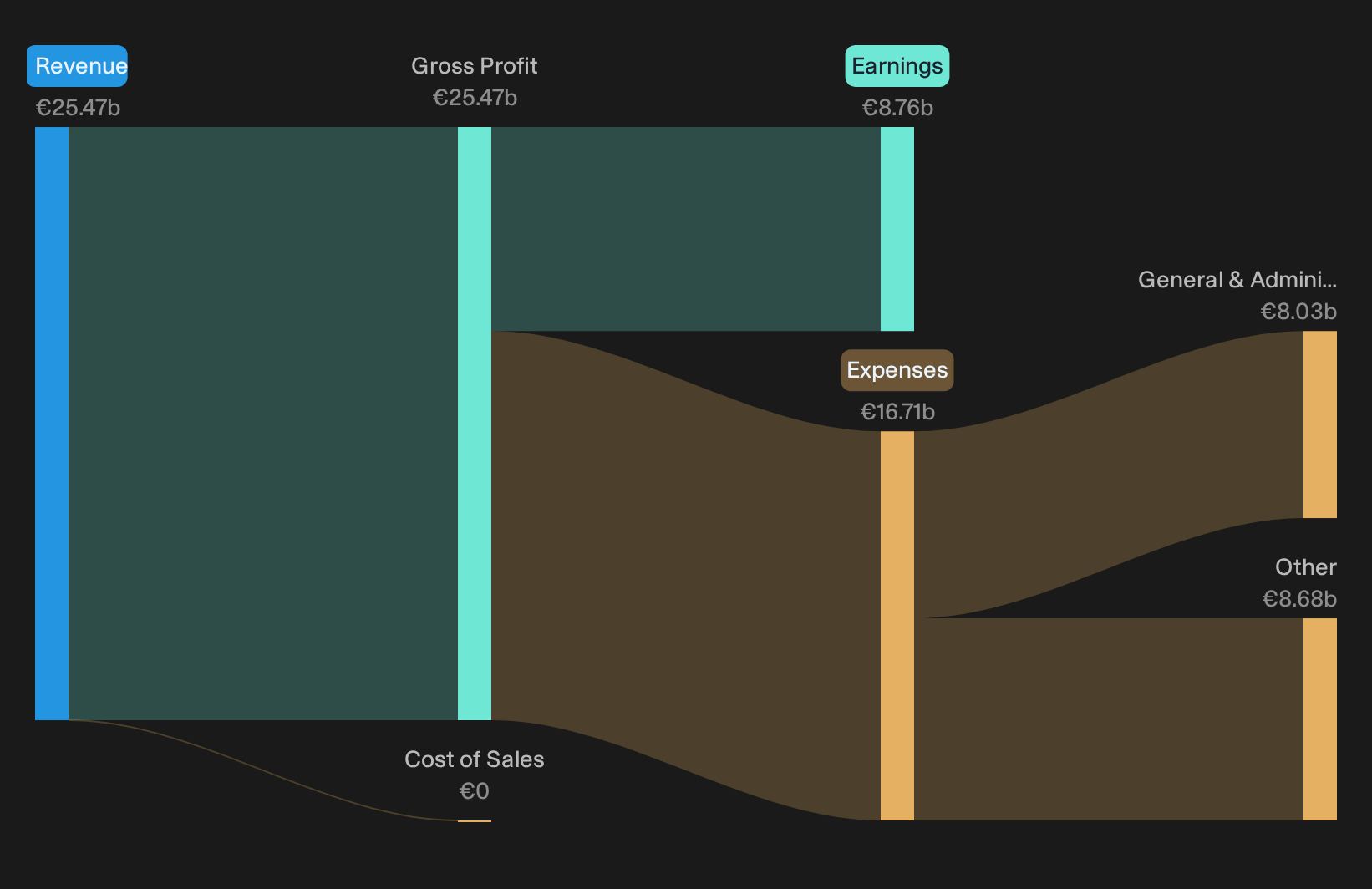
Overview: ING Groep is a large Dutch bank that provides everyday retail banking, mortgages, business lending and wholesale banking services across Europe and globally.
Market Cap: €80.2b
ING Groep fits the core Eurozone safe-haven theme as a large Dutch lender that can attract capital when investors look away from higher risk markets and toward better capitalised, liquid banks in countries like the Netherlands.
"First, there is the pan-European drive among governments to invest heavily in public infrastructure that is screaming out for repairs and refurbishment after decades of neglect. Public Investment, in turn, is one of the key stimulants of economic activity, providing banks with more and better opportunities to lend, while steepening the rate curve at the same time, thus enhancing NII."
What happens if a single shift in how that funding wave interacts with ING Groep’s balance sheet quietly redraws its earnings mix?
That quiet redraw starts with understanding how full narrative for ING Groep frames ING Groep’s deposit stickiness, lending shift and the risks that could be masking a stronger earnings engine.
ABN AMRO Bank (ENXTAM:ABN)
Overview: ABN AMRO Bank is a large Dutch lender offering everyday banking, lending, wealth and corporate services across the Netherlands and wider Europe.
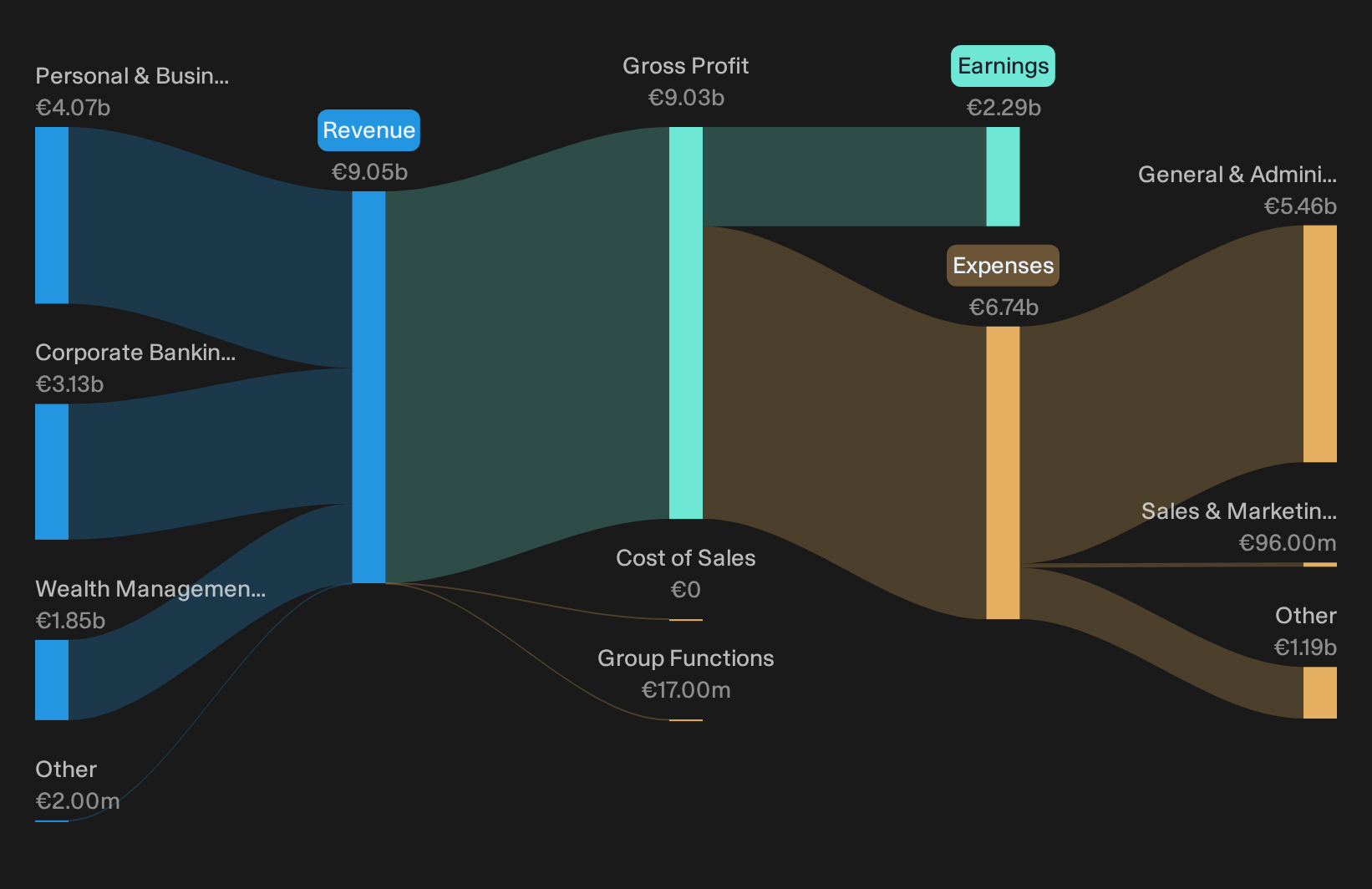
Operations: ABN AMRO Bank generates about €4.1b from Personal & Business Banking, €3.1b from Corporate Banking, €1.8b from Wealth Management, with minor Group Functions.
Market Cap: €32.3b
ABN AMRO Bank provides core Dutch exposure at a time when money is already edging away from higher risk markets toward perceived safe harbors.
"Rising commercial NII guidance to around €6.8b for 2026, supported by higher liability margins and a growing Dutch deposit base that management assumes will fully reprice on interest bearing accounts, points to further contribution from liability driven income to revenue and earnings."
The question for investors is what happens to that earnings engine if a single unresolved pressure in the cost program quietly reshapes how much of those extra euros drop through.
That pressure makes the full narrative for ABN AMRO Bank essential reading for understanding how ABN AMRO Bank’s cost program, capital return and risks could be quietly accelerating or stalling the story.
Seeking Alternatives Before The Crowd Moves
Fresh ideas can move fast when momentum builds. By the time headlines catch up, ideal entry points may already be dropping out of reach, so consider acting early.
- Spot potential breakout opportunities in smaller companies before they get widely covered by analysts through the 126 elite penny stocks with strong financials that filters for financial strength and staying power.
- Ride the momentum behind real-world AI adoption by scanning the 39 profitable AI stocks that aren't just burning cash focused on businesses already turning algorithms into cash instead of burning capital.
- Target resilient portfolios that aim to hold up when volatility bites by zeroing in on the 218 resilient stocks with low risk scores curated for stronger balance sheets and lower risk scores.
Have feedback on this article? Concerned about the content? Get in touch with us directly. Alternatively, email editorial-team@simplywallst.com