


- Duke Energy is approaching its early November 2026 quarterly earnings report, with Wall Street expecting higher earnings per share and revenue compared with the prior year.
- Forecasts for stronger profitability arrive as Duke Energy pursues a large regulated capital program tied to data center and large-load demand, which puts execution and cost recovery in sharper focus.
- We will now look at how Duke Energy's upcoming earnings release may influence the longer term investment narrative built around its capital plan.
Scan beyond Duke Energy's earnings buzz and line up other regulated utilities that could potentially benefit from large-load and grid investment tailwinds with the 39 power grid technology and infrastructure stocks
Duke Energy Investment Narrative Recap
To own Duke Energy, you need to be comfortable with a large, regulated utility pursuing a substantial buildout of grid and generation assets tied to growing data center and large load demand. The near term story turns on whether upcoming quarters confirm that this capital plan is translating into steady earnings and manageable bill impacts for customers.
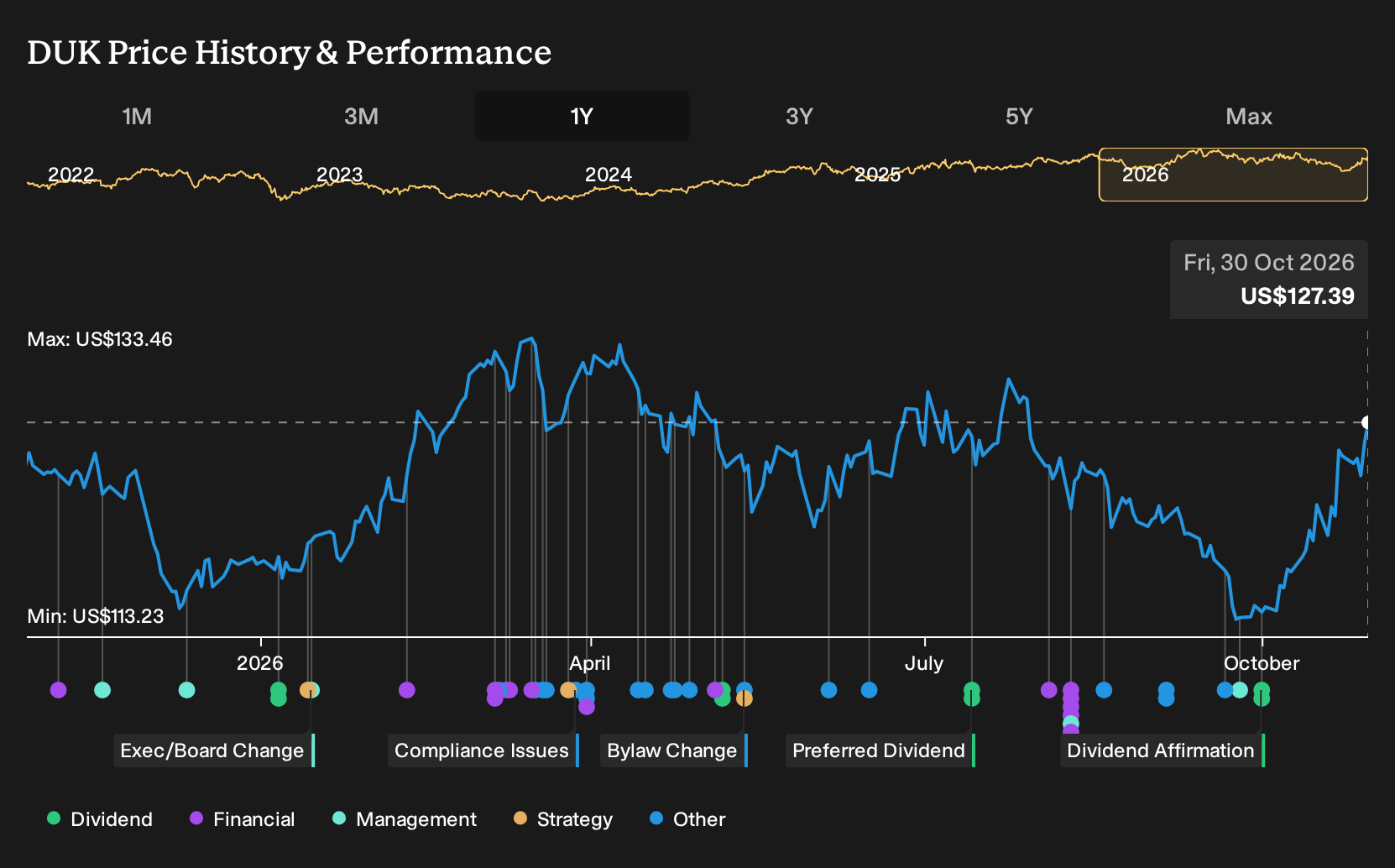
The 1.89% share price move ahead of the November 5 earnings call keeps attention squarely on that near term catalyst. The biggest risk stays the same. A funding mix that includes sizeable equity issuance and meaningful interest costs could pressure returns if regulators or load growth do not fully support the spending.
The upcoming September quarter earnings release is the announcement that matters most here. Forecasts point to higher EPS and revenue, which will provide a fresh read on how Duke Energy is converting its 7.6 to 7.8 GW of executed large load agreements and late stage pipeline into actual financial results.
There is also a direct link to balance sheet quality. Management has flagged plans for about US$10b of common equity issuance between 2027 and 2030, and interest payments are not well covered by earnings. The call will help investors assess whether progress on grid investment, rate cases and asset mix is offsetting those funding pressures.
Duke Energy Earnings Assumptions In Focus
Duke Energy's consensus story hinges on analysts expecting revenue to grow by 5.3% a year over the next three years while profit margins expand from 15.8% today to 17.0% by 2029. That higher margin profile underpins forecasts for earnings to move from US$5.2b today to US$6.5b by about 2029, an increase of roughly US$1.3b in annual profit. Those same models assume the share count creeps higher at about 0.26% per year, so the heavier lifting is meant to come from the size of the regulated asset base and the return on that capital rather than from financial engineering.
Duke Energy's narrative projects US$38.3b revenue and US$6.5b earnings by 2029. This rests on 5.3% yearly revenue growth and about US$1.3b earnings increase from US$5.2b today.
For readers, the key link is between those earnings targets and the long term capital build tied to data centers and other large users. If construction stays on schedule and regulators continue to support a roughly 9.8% allowed return in major jurisdictions, the consensus path toward higher margins and larger profit pools appears internally consistent with the current capital agenda. However, if project timing slips or allowed returns reset lower, the same 5.3% top line growth and 17.0% margin in 2029 become harder to reconcile with the balance sheet strain already flagged by management.
Discover how Duke Energy's fair value identifies a 5% potential upside to its current price before the market closes the gap.
Exploring Other Perspectives
Four fair value estimates from the Simply Wall St Community cluster between about US$101 and US$134, with the widest gap at the top end hinting at some investors seeing Duke Energy as materially undervalued. Others flag equity issuance plans, large capex needs and the November 5 earnings release as reasons to stress test these views and compare several perspectives.
Explore 3 other Duke Energy fair value estimates, including one that suggests as much as 5% upside from the current price.
The Verdict Is Yours
Disagree with existing narratives? Extraordinary investment returns rarely come from following the herd, so go with your instincts.
- A great starting point for your Duke Energy research is our analysis highlighting 4 key rewards and 2 important warning signs that could impact your investment decision.
- See our latest analysis for Duke Energy. The report includes a comprehensive fundamental analysis summarized in a single visual, the Snowflake, making it easy to evaluate Duke Energy's overall financial health at a glance.
Looking for more Duke Energy style investment ideas?
If the Duke Energy story has sharpened your thinking and you want to cast a wider net, use the Simply Wall St screener to line up other companies that fit the kind of portfolio you are building.
- If resilience matters most to you, start with a focused set of 30 resilient stocks with low risk scores that have historically scored well on business stability and financial risk.
- If income is a priority, shortlist dependable payers by scanning our universe of 5 dividend fortresses that could support a steady yield profile.
- If you prefer to get in earlier on quality, filter for fundamentals first and see what rises to the top in our 18 high quality undiscovered gems before they are widely followed.
Have feedback on this article? Concerned about the content? Get in touch with us directly. Alternatively, email editorial-team@simplywallst.com