


- Ryman Healthcare has reported lower net losses alongside an operational reset, with recent updates pointing to margin improvements and a push toward lower capital intensity and stronger recurring cash generation.
- The effort to shift the business model toward less capital-heavy growth and more dependable operating cash flow marks a meaningful change in how Ryman Healthcare is trying to fund and scale its retirement village and aged care portfolio.
- This analysis examines how Ryman Healthcare’s investment narrative is influenced by margin recovery progress and the push toward lower capital intensity.
Scan Ryman Healthcare’s reset against other capital-light operators by jumping into 603 high quality undiscovered gems that may be quietly rebuilding earnings power away from heavy development spend.
Ryman Healthcare Investment Narrative Recap
To own Ryman Healthcare, you need to believe the reset can turn an unprofitable operator with heavy development needs into a more cash generative, lower capital model. The recent update showed smaller net losses and some margin progress, which supports that reset but does not resolve it. The key short term catalyst is further visible improvement in recurring operating cash flow.
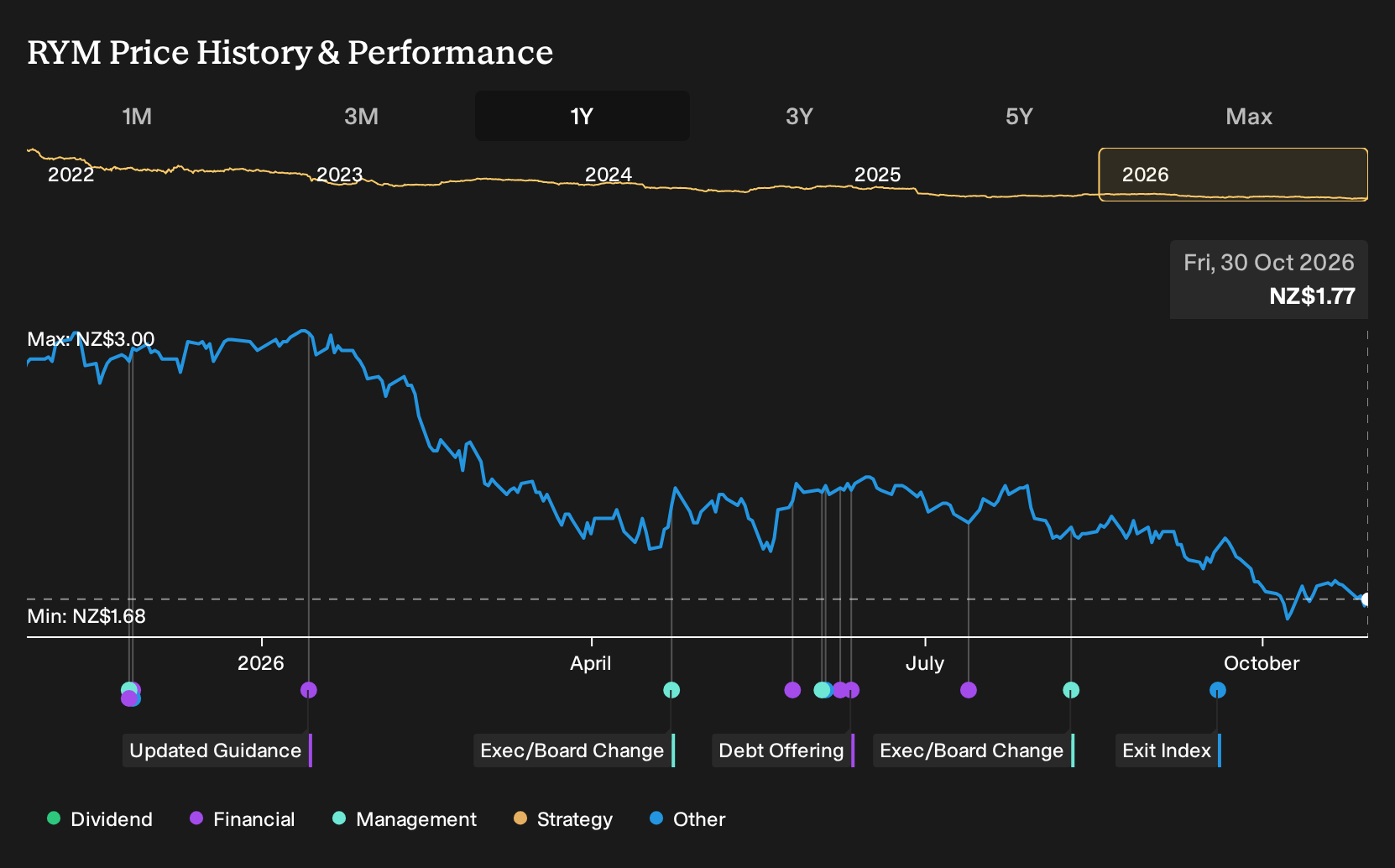
The biggest risk remains the combination of high debt of about NZ$2.56b and an unprofitable base business in a softer property market. If sales slow or settlements lag, interest costs and negative cash flow from existing operations could bite harder, and the share price fall of around 39.7% this year illustrates how quickly sentiment can change.
The most relevant announcement around this news is the operational reset that targets lower capital intensity and higher recurring cash generation. That reset sits alongside cost initiatives that management expects to produce NZ$18m in annualised savings, as well as a pricing structure aimed at lifting revenue per unit over time. Together, these moves define how the business is trying to repair margins.
For you, the question is whether that reset can offset the risks from leverage, regulatory uncertainty and an unprofitable earnings base in New Zealand and Australia. Execution on the reorganisation, delivery of new units and care beds, and the new leadership team’s ability to rebuild trust are likely to influence how Ryman Healthcare narrows the gap between its operational story and its share price performance.
Ryman Healthcare's narrative projects NZ$1.1b revenue and NZ$672.2m earnings by 2029. This implies 8.1% yearly revenue growth and a very large earnings increase from a loss of NZ$171.3m today to the forecast consensus earnings level.
Uncover why Ryman Healthcare's fair value indicates a 70% potential upside to its current price, before that gap starts to close.
Exploring Other Perspectives
One alternate angle on Ryman Healthcare focuses on resale risk. Bullish analysts were comfortable assuming revenue could climb to about NZ$1.3b and earnings to NZ$463.2m by 2029, despite roughly NZ$281m of vacant resale stock. You can treat this as a reminder that opinions vary widely, and that this latest update may reshape those forecasts.
Explore 3 other Ryman Healthcare fair value estimates, including one that suggests as much as 98% potential increase from the current price.
Decide For Yourself
Disagree with existing narratives? Extraordinary investment returns rarely come from following the herd, so go with your instincts.
- A great starting point for your Ryman Healthcare research is our analysis highlighting 3 key rewards that could impact your investment decision.
- See our latest analysis for Ryman Healthcare. The report includes a comprehensive fundamental analysis summarized in a single visual, the Snowflake, making it easy to evaluate Ryman Healthcare's overall financial health at a glance.
Looking For More Ideas Beyond Ryman Healthcare?
If the Ryman Healthcare story has sharpened your focus on risk, balance sheets and cash generation, it can help to line that up against a broader watchlist built from other listed companies.
The Simply Wall St Screener lets you filter for the kind of traits you care about most, whether that is balance sheet strength, income reliability or underappreciated quality.
- If capital preservation is front of mind, sort for sturdier businesses by scanning a 216 resilient stocks with low risk scores that keep risk scores in check.
- For investors hunting quality at a reasonable entry point, compare Ryman Healthcare against a 194 high quality undervalued stocks based on strong fundamentals and pricing signals.
- If you want payout potential as part of your total return mix, focus on income opportunities through a 224 dividend fortresses that concentrates on higher yielding payers.
Have feedback on this article? Concerned about the content? Get in touch with us directly. Alternatively, email editorial-team@simplywallst.com