


- DoorDash (NasdaqGS:DASH) is part of a new US Federal Trade Commission inquiry into algorithmic pricing and worker pay practices.
- The FTC is examining how food delivery platforms customize consumer prices and adjust courier compensation using automated systems.
- Regulators are focusing on whether these pricing and pay algorithms are transparent and fair for both customers and gig workers.
- The FTC probe into DoorDash's algorithmic pricing and variable pay is an important development to weigh against our other findings. Check out 1 warning sign that DoorDash investors should know about.
For a broader view on how heavy data use is reshaping business models, it is worth looking at companies building the underlying infrastructure too. 54 AI infrastructure stocks.
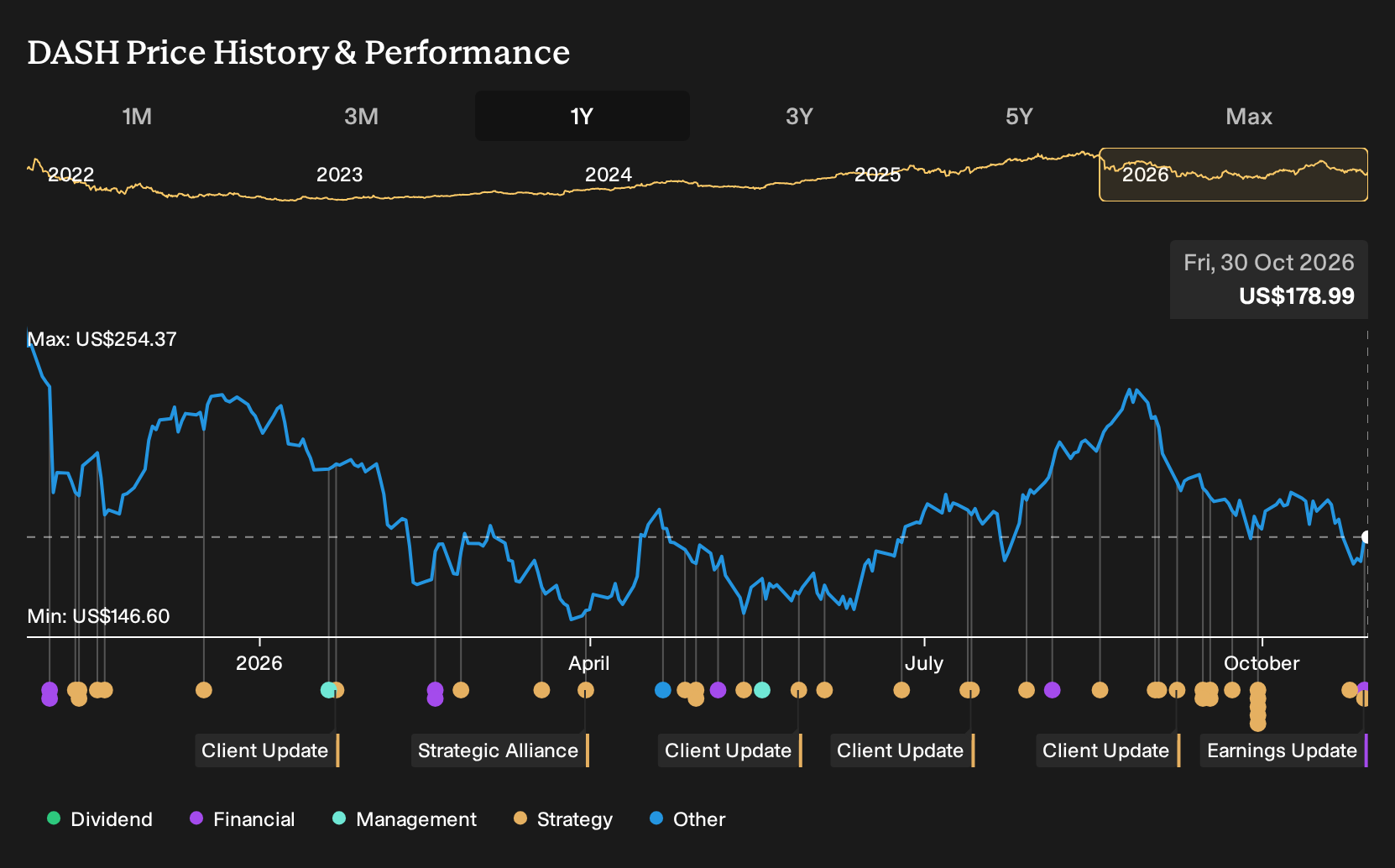
DoorDash runs a large commerce platform that links restaurants and other merchants with consumers and gig workers in the US and abroad, so its use of data driven pricing and pay systems is tightly tied to how orders flow across that network each day.
See how DoorDash's balance sheet measures up.
How could the FTC inquiry into algorithmic pricing affect DoorDash’s earnings profile?
Regulators are asking how DoorDash uses data to set customer prices and courier pay, which goes straight to the economics of each order. If the FTC pushes for simpler pricing or stricter rules on variable pay, the firm could face higher compliance costs or less flexibility in how it balances subsidies, incentives, and take rates.
Does this FTC action change the DoorDash Narrative around higher margin growth?
The Narrative leans heavily on subscriptions, advertising and automation lifting margins, while regulatory pressure on worker pay is already flagged as a risk. An FTC review of algorithms used for Dasher compensation and customer pricing directly tests that risk channel and may influence how much of the profit pool comes from squeezing fees versus higher margin services.
See how these catalysts shape DoorDash's path to a $256 fair value.
What should DoorDash investors watch for next from this probe?
The key marker is the FTC’s first formal output on this inquiry, whether that is a public report, consent order or fines that reference specific pricing and pay practices. Any requirement to change algorithms or back pay workers would give a clearer sense of the potential financial drag and timing of any impact.
The quiet DoorDash check most holders never make
Share moves grab attention, but there is a quieter yardstick that maps DoorDash’s underlying cash generation to an estimated business value you can compare with today’s trading price. Find out exactly what DoorDash is worth today based on its cash flows.
Have feedback on this article? Concerned about the content? Get in touch with us directly. Alternatively, email editorial-team@simplywallst.com