


Wall Street is bracing for an October jobs report that could nudge the Federal Reserve toward another rate hike, and that is exactly the kind of moment when rate sensitive dividend stocks can quietly reshape portfolios. While headlines focus on hiring and inflation, the real story is how higher for longer borrowing costs may filter through to cash flows and payouts. This article walks through three stocks from our US Rate Sensitive Defensive Dividend Stocks screener that appear especially exposed to this latest jobs and rates twist, and explains what that could mean for an income-focused strategy.
The three examples in this article are only a starting sample from this rate sensitive dividend idea, and the full screen surfaced 11 more large, profitable defensive stocks with equally compelling stories that are not covered here. To go deeper into the full US Rate Sensitive Defensive Dividend Stocks list, analyze trade offs, and identify which tickers best fit your own income brief, head straight to the US Rate-Sensitive Defensive Dividend Stocks screener.
Del Monte (DMC)
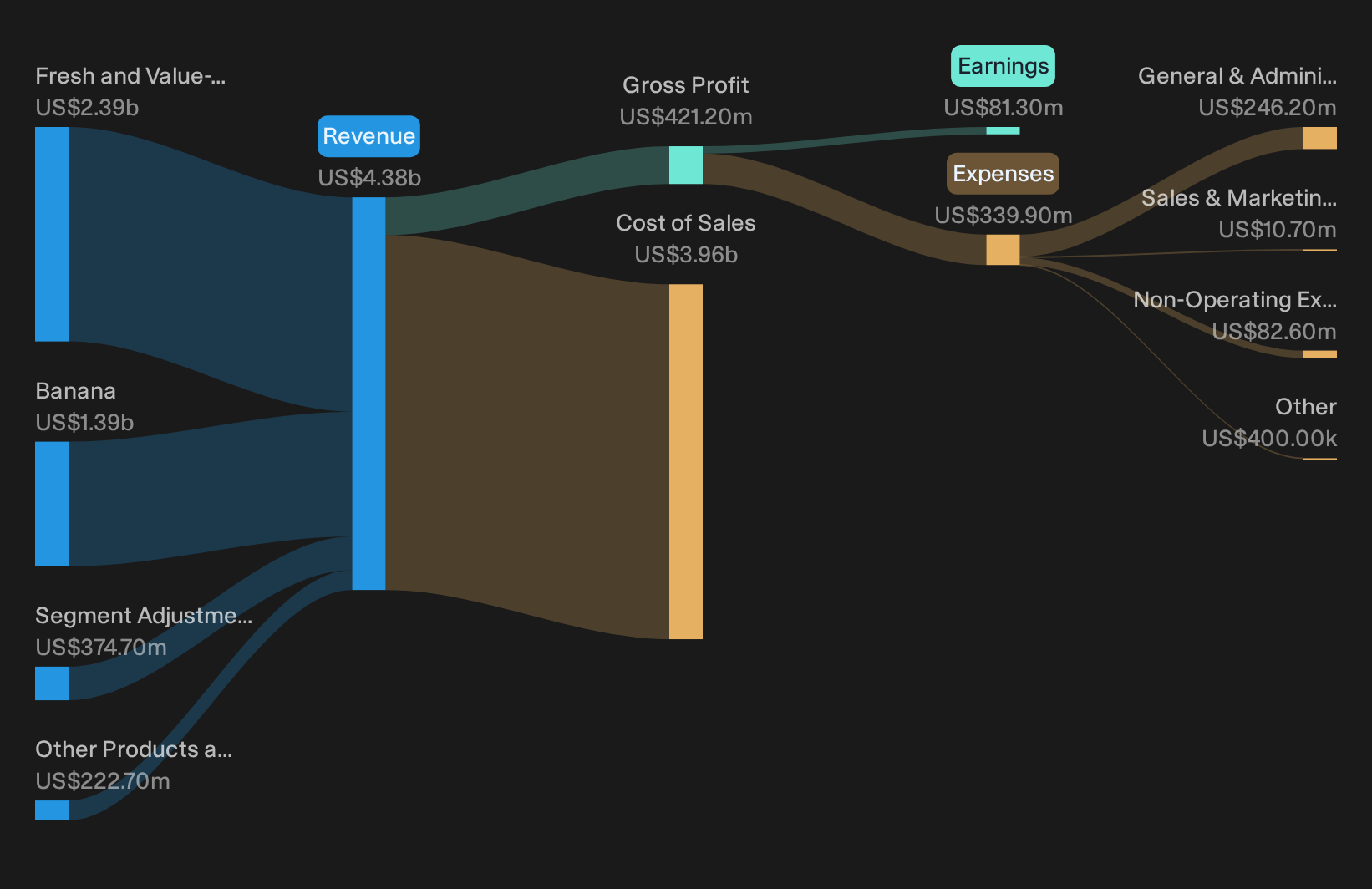
Overview: Del Monte Corporation produces and sells branded fresh and prepared fruits, vegetables, salads, and related food products to retailers and foodservice customers worldwide.
Operations: Del Monte generates about US$2.4b from Fresh and Value-Added Products, US$1.4b from Bananas, and US$223 million from Other Products and Services.
Market Cap: US$1.3b
For income investors watching the Fed’s next move, Del Monte fits this defensive dividend theme because it serves basic food demand that tends to hold up even when borrowing costs rise.
"Integration of Del Monte Foods into a single, unified Del Monte brand creates a larger prepared foods platform that is expected to contribute about US$625 million of net sales and US$35 million of adjusted EBITDA in 2026, which could support a higher mix of branded, higher-margin earnings."
The real swing factor for Del Monte is how one lingering cost and pricing pressure ultimately feeds through to those higher-margin earnings.
Those cross currents are exactly why it pays to read the full narrative for Del Monte, which explains how integration, pricing power, and rate pressure could be quietly reshaping Del Monte’s income story.
Tyson Foods (TSN)
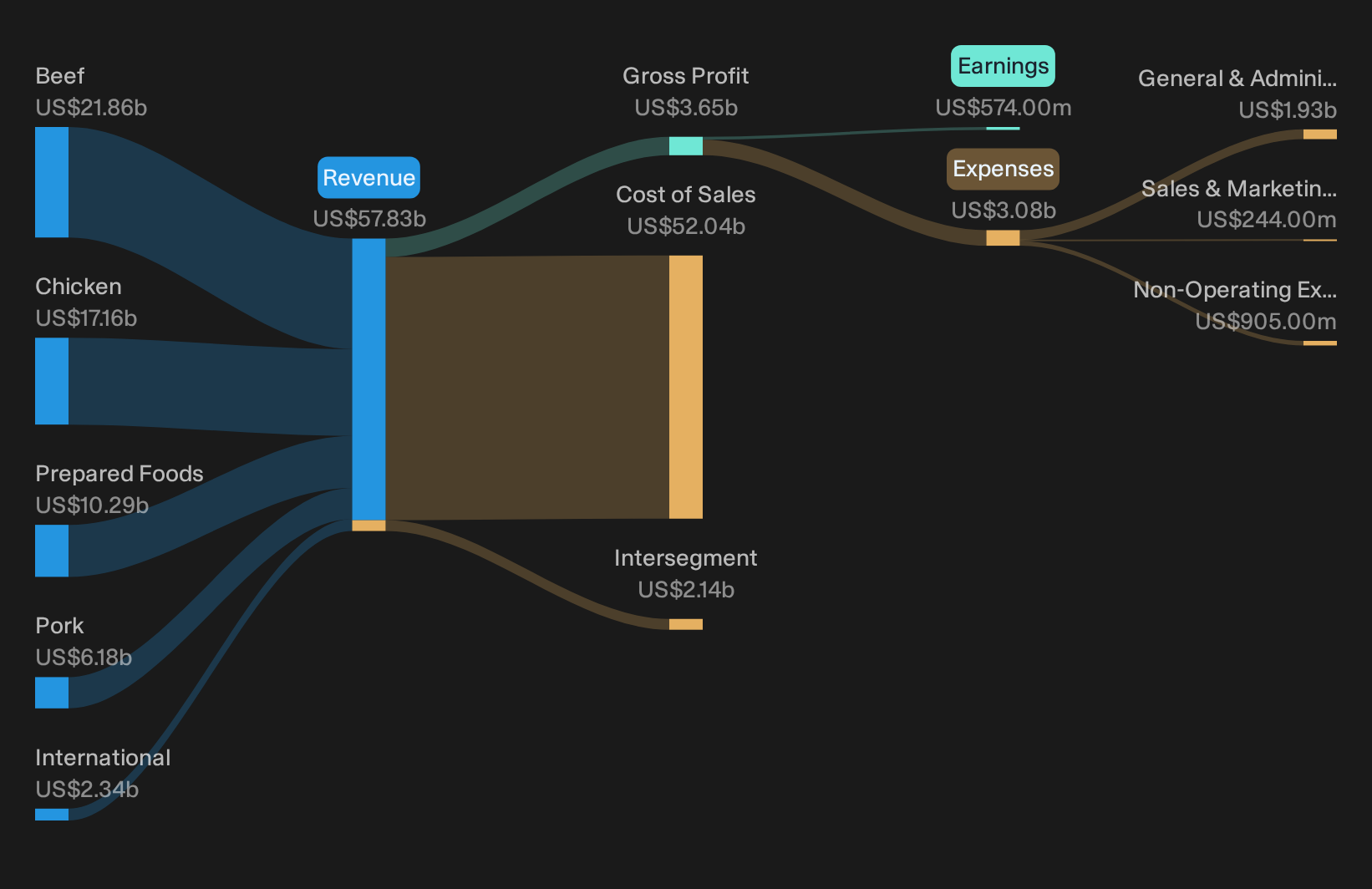
Overview: Tyson Foods produces beef, pork, chicken and prepared foods products under brands like Tyson and Jimmy Dean for retailers and foodservice customers worldwide.
Operations: Tyson Foods generates about US$21.9b from Beef, US$6.2b from Pork, US$17.2b from Chicken, and US$10.3b from Prepared Foods, partly offset by intersegment eliminations and international revenue of US$2.3b.
Market Cap: US$20.0b
Tyson Foods fits this rate sensitive defensive dividend screen as a large consumer staples producer whose cash flows hinge on everyday protein demand rather than big swings in hiring data. This puts extra weight on how its mix of higher value products behaves when borrowing costs stay elevated.
"Continued mix shift at Tyson Foods toward branded and value-added Prepared Foods and Chicken, supported by multiple quarters of segment volume and sales growth and higher-margin pull-driven contracts, can further lift consolidated net margins and earnings stability."
What happens if one stubborn cost pressure cuts into that carefully built mix will matter a lot for Tyson Foods’ income story.
That mix risk is exactly why reading the full narrative for Tyson Foods can clarify how Tyson Foods’ pricing power, contracts, and balance sheet interact if rates stay higher for longer.
Kraft Heinz (KHC)
Overview: Kraft Heinz is a global packaged food group that sells everyday pantry staples and meal brands. It anchors the screener’s defensive income theme.
Operations: Kraft Heinz generates about US$18.4b in North America, US$3.5b in International Developed Markets, and US$2.9b in Emerging Markets.
Market Cap: US$28.9b
Kraft Heinz plugs into the rate sensitive defensive dividend idea as a household brands giant whose ketchup, cheese, and ready meals often stay on shopping lists even when higher borrowing costs start to pinch consumer budgets.
"The company continues to emphasize productivity, cash generation, debt reduction, and leverage discipline, with net leverage expected to be no higher than 3.3x this year and a stated path back to target within roughly two years."
The key issue now is how one unresolved squeeze on earnings quality interacts with that discipline if pricing power or demand softens further.
If that squeeze on earnings quality is on your mind, read the full narrative for Kraft Heinz to see how Kraft Heinz’s discipline could be masking underappreciated resilience.

Seeking Alternatives Before The Crowd
Fresh opportunities move fast. Some tickers are building breakout momentum while they are still flying under the radar for now. Do your homework while it matters and consider acting while ideas are still early.
- Look at cash rich businesses that still appear overlooked by filtering for companies in the 33 high quality undervalued stocks instead of waiting until others are chasing the move.
- Identify early leaders in automation and next gen hardware by scanning the curated group inside the 95 robotics and automation stocks while interest in the theme is still emerging.
- Review companies in the 41 power grid technology and infrastructure stocks that focus on grid upgrades to explore potential infrastructure-related opportunities while they remain less widely followed.
Have feedback on this article? Concerned about the content? Get in touch with us directly. Alternatively, email editorial-team@simplywallst.com