


Tech earnings have shaken confidence, but they have also pushed investors to look harder at quieter corners of the market where cash flows can be steadier and headlines less dramatic. As traders reposition around Nvidia and other AI stories, capital is shifting into defensive stocks that sit closer to 52 week lows. This article walks through three US large cap companies exposed to that rotation, and explains why each might deserve a closer look.
The three stocks below are just a starting sample from this defensive theme, and the full screen surfaced 24 more US large cap non tech companies with equally compelling narratives that are not covered here. If you want to move straight from idea to action, head into the US Large-Cap Non-Tech Defensive Stocks screener to identify candidates, analyze resilience, and focus on the highest conviction defensive plays.
Tractor Supply (TSCO)
Tractor Supply gives this defensive screen a very down to earth anchor, with rural, needs based spending that tends to be steadier than big ticket tech stories when markets get volatile.
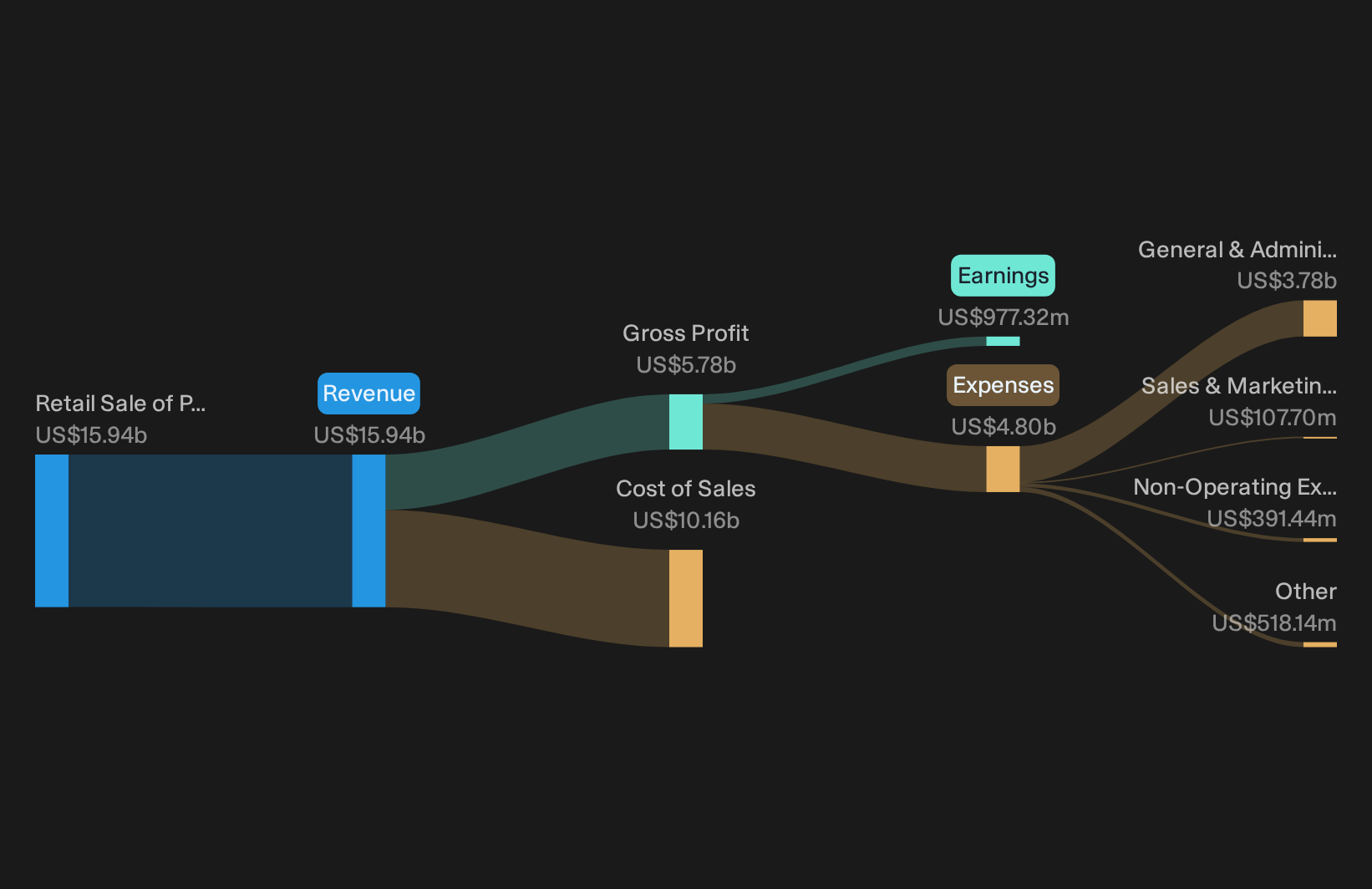
Tractor Supply runs rural lifestyle stores and e commerce sites selling farm, pet, hardware and seasonal goods, generating about US$15.9b from retail product sales in the United States and carrying a market value near US$17.7b.
"The new automated distribution center in Nampa, Idaho, which is expected to support more than 200 stores over time and is targeted to add about 20 basis points to gross margin in late 2026, could provide ongoing net margin benefits as supply chain efficiencies scale."
The real swing factor is how one quiet shift in the cost base feeds through to pricing power, earnings quality and long term resilience.
That shift in earnings quality is the thread running through the full narrative for Tractor Supply, which maps how Tractor Supply’s cost base, pricing power and risk profile may be quietly decoupling.
Ross Stores (ROST)
Ross Stores offers a non tech, consumer focused way to participate in the current rotation into defensives. Its off price model often appeals when shoppers grow more price sensitive and tech volatility pushes investors toward steadier spending categories.
Ross Stores runs off price Ross Dress for Less and dd’s DISCOUNTS outlets across the United States, generating about US$24.5b from off price retailing and carrying a market value near US$74.2b.
"Recessions simultaneously push shoppers toward value and flood the closeout market with distressed branded goods, which is why the business generated record free cash flow in the COVID year on collapsed earnings."
What happens to Ross Stores’ margins if a single pressure on that closeout supply chain shifts direction?
If that pressure point matters to you, read the full narrative for Ross Stores to see how Ross Stores’ off price engine could accelerate or stall under different retail cycles.

Hormel Foods (HRL)
Hormel Foods brings a classic consumer staples angle to this defensive screen, with a broad mix of branded meats, snacks and meal solutions that often attract capital when investors pull risk out of volatile tech stories.
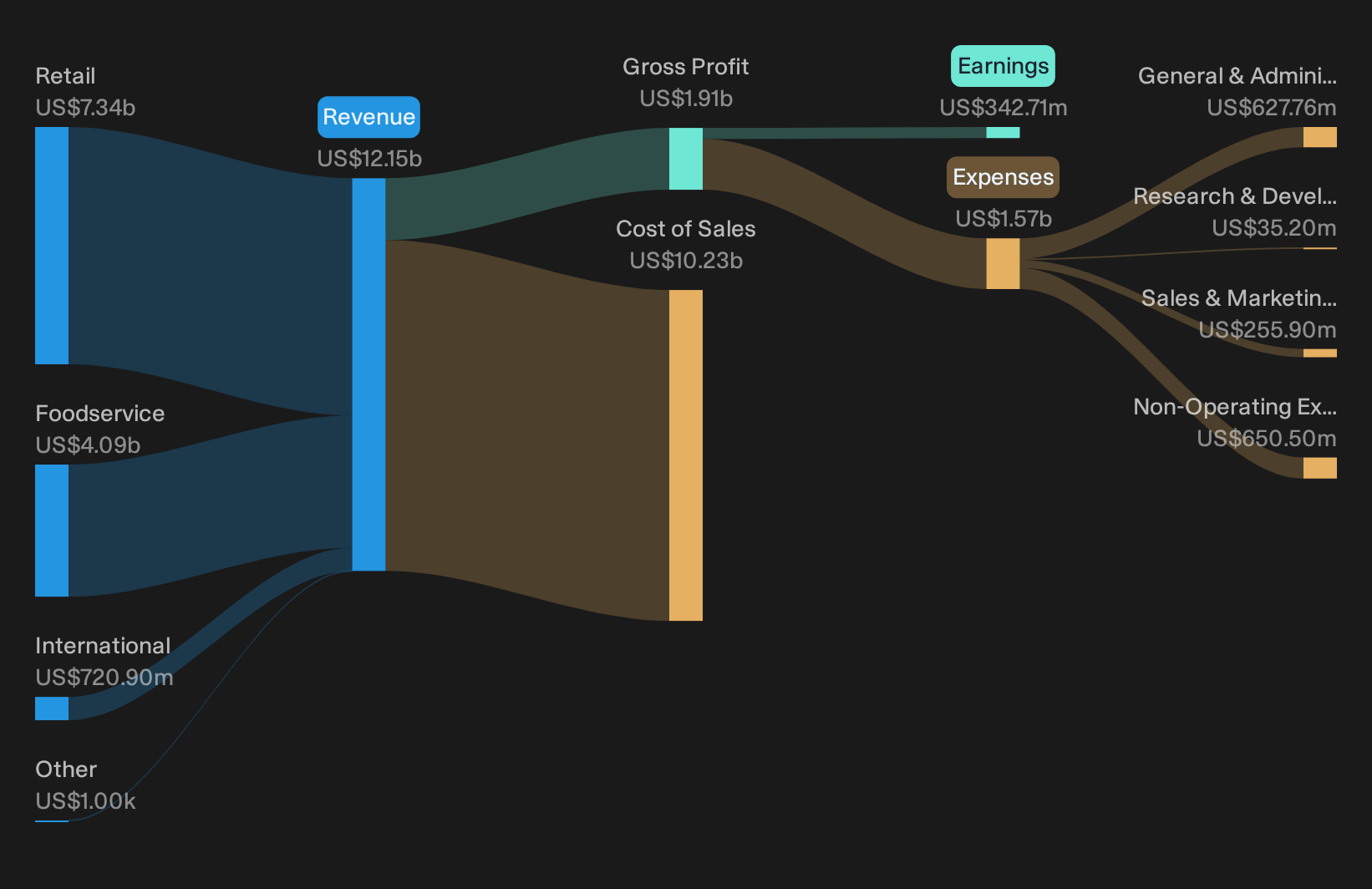
Hormel Foods develops and sells branded meat, nut and packaged foods across retail, foodservice and international channels, generating about US$7.3b from Retail, US$4.1b from Foodservice and US$700 million from International, and carries a market value near US$11.7b.
"Hormel Foods is expanding its value added protein and foodservice reach through the planned Brakebush Brothers acquisition. This transaction is expected to add about US$1.2b of net sales in calendar 2026 and lift higher margin chicken exposure toward 13% of the protein portfolio. The ongoing simplification of Hormel Foods' portfolio, including exits from whole bird turkey, Brazil operations, a majority stake in Justin’s, private label snack nuts and certain contract manufacturing, is removing roughly US$300m of lower margin and more volatile annual sales."
What this rotation into higher value protein and foodservice really means for Hormel Foods depends on how one unseen margin pressure ultimately resolves.
That unseen pressure is exactly what the full narrative for Hormel Foods unpacks, showing where Hormel Foods’ margin mix could be quietly accelerating or masking bigger shifts in resilience.
Seeking Alternatives Before Momentum Flies Past?
Fresh ideas do not wait. Breakout stories gain momentum, quiet compounders stop flying under the radar, and dropping valuations reset fast. Scan new opportunities before the crowd, then act now.
- Spot income workhorses while yields stay elevated by running the 5 dividend fortresses and pinpointing companies built to keep paying when conditions get tougher.
- Track the next efficiency wave early as factories, warehouses and grids automate with the 95 robotics and automation stocks to surface operators already turning automation into real cash flows.
- Ride the infrastructure buildout before it gets fully priced by scanning the 41 power grid technology and infrastructure stocks and focusing on suppliers positioned for long contracts and steady demand.
Have feedback on this article? Concerned about the content? Get in touch with us directly. Alternatively, email editorial-team@simplywallst.com