


- BILL Holdings has rolled out new AI-driven finance tools and a live pilot with Visa and Billtrust that lets authenticated AI agents complete approved invoice payments end to end through supplier portals, replacing manual keying while preserving supplier controls.
- The new risk intelligence engine flagged on average US$138,000 of unusual or mistaken invoices per customer in just two months, highlighting that BILL’s AI focus targets specific finance pain points rather than generic automation.
- We will now see how BILL Holdings' push into authenticated AI payment agents could reshape the existing investment narrative around its AI-native platform.
BILL Holdings Investment Narrative Recap
For you to stay interested in BILL Holdings, you need to believe its AI centric financial operations platform can keep pulling more small and midsize businesses onto digital workflows and deepen usage with mid market customers. The live pilot with Visa and Billtrust lines up neatly with that story, but on its own it does not remove growth headwinds from pruning legacy relationships.
The near term swing factor remains whether AI agents, risk tools and embedded payments can support stable transaction volumes while SMB spend stays mixed and active contract pruning weighs on top line progress. The biggest risk is that payment volumes or average revenue per user soften, which would make profitability improvement slower than investors expect.
The joint pilot with Visa and Billtrust looks most tied to BILL Holdings’ key catalysts because it applies AI directly to payments that previously required manual portal entry. That fits with the thesis that practical automation and embedded finance can deepen adoption and potentially support transaction based revenue over time if customers push more invoice flows through the platform.
This same initiative speaks to risk as well. Execution missteps, low supplier acceptance or slower buyer adoption would limit the benefit and leave existing growth pressures from Spend & Expense pruning and bank channel changes more exposed. For you as an investor, the focus is on whether this authenticated agent model scales cleanly across more portals without adding new fraud, compliance or reliability issues.
What The Current BILL Holdings Forecasts Are Asking You To Believe
BILL Holdings' narrative projects US$2.1b revenue and US$404.7 million earnings by 2029. Analysts are building that view on 8.5% yearly revenue growth and an earnings swing of roughly US$416 million from an earnings loss of US$11.2 million today.
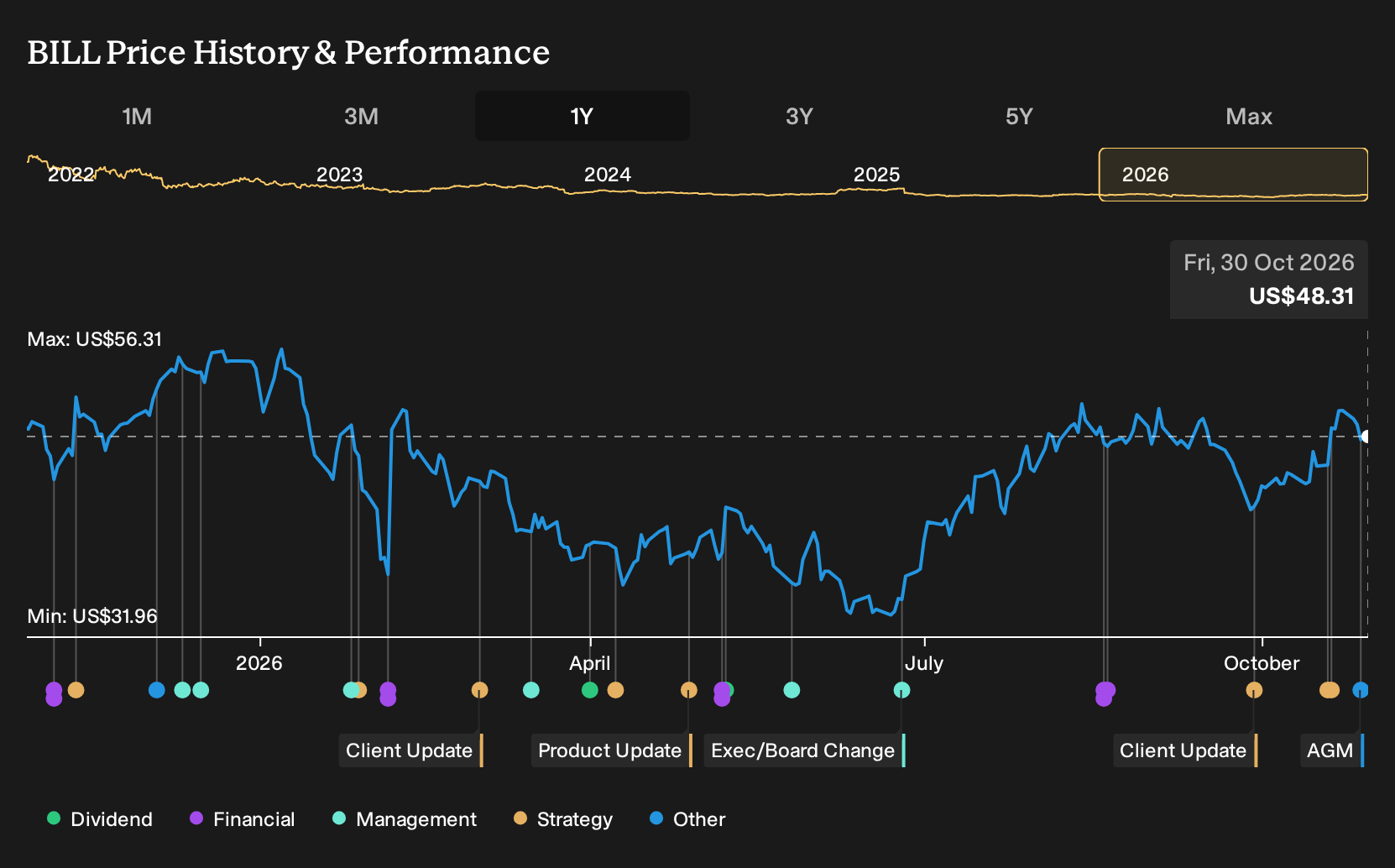
Uncover why BILL Holdings' fair value indicates an 18% potential upside to its current price that could close faster than many investors expect.
Exploring Other Perspectives
One alternate angle you might consider is the bearish take that BILL Holdings’ new AI agents and Visa pilot could still leave top line progress relatively muted. The most pessimistic analysts were working off revenue of about US$1.8b and earnings of US$366.0 million by 2029. That is a tighter outlook than the consensus US$2.1b and US$404.7 million. Those projections were set before this AI payments rollout, so this provides a live test case to watch and decide which story feels closer to reality.
Explore 4 other BILL Holdings fair value estimates, including one that suggests as much as 11% downside from the current price.
Reach Your Own Conclusion
Disagree with existing narratives? Extraordinary investment returns rarely come from following the herd, so go with your instincts.
- A great starting point for your BILL Holdings research is our analysis highlighting 3 key rewards that could impact your investment decision.
- See our latest analysis for BILL Holdings. The report includes a comprehensive fundamental analysis summarized in a single visual, the Snowflake, making it easy to evaluate BILL Holdings' overall financial health at a glance.
Looking For More Investment Ideas Beyond BILL Holdings?
If the BILL Holdings story has sharpened your thinking about where AI, cash flow and balance sheet strength really matter, it can help to compare it with other listed businesses. The Simply Wall St Screener lets you filter for the traits you care about so you can build a watchlist that matches your own risk and return preferences.
- Prefer steadier journeys over sharp swings and surprises? Start with companies that show resilient profiles using the 29 resilient stocks with low risk scores.
- Want to focus on firms with room for sentiment to catch up to fundamentals? Scan for mispriced opportunities through the 36 high quality undervalued stocks.
- Care most about resilience and financial footing before anything else? Shortlist candidates that pass balance sheet and fundamentals checks with the list of solid balance sheet and fundamentals (24 results).
Have feedback on this article? Concerned about the content? Get in touch with us directly. Alternatively, email editorial-team@simplywallst.com